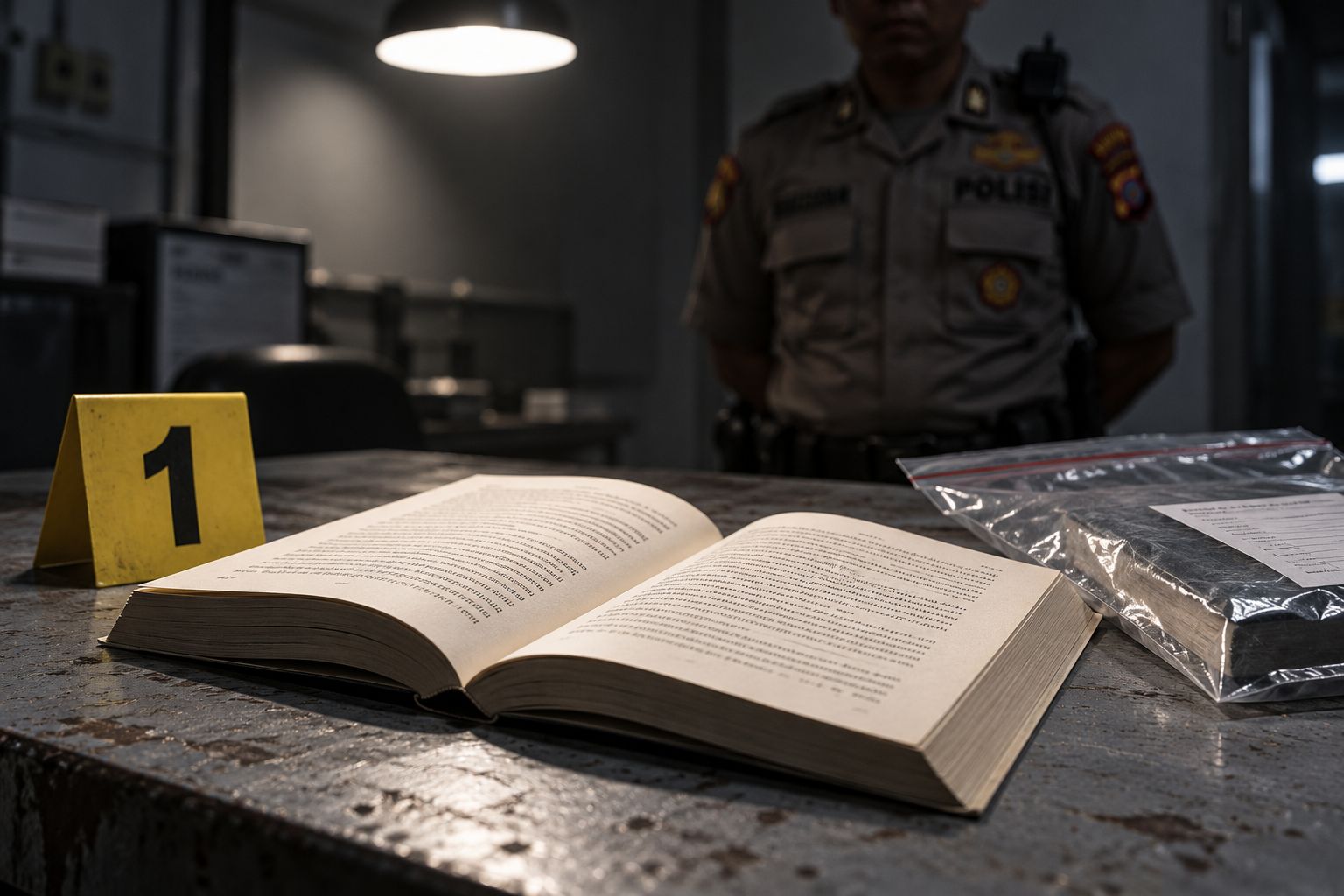
A writer publishes stories about religion. Opponents accuse her of blasphemy. A literary discussion is canceled under pressure, and police announce they will examine the allegations.
That is the situation facing Indonesian author Feby Indirani, whose short-story collection Memburu Muhammad, or Hunting for Muhammad, has become the target of religious outrage. On September 24, Jakarta Metropolitan Police said they would look into accusations circulating online about the book. That announcement establishes police scrutiny—not that Indirani has been charged or convicted.
The distinction matters. So does the larger question: why should a work of fiction become a police matter because some readers consider it offensive?
A literary discussion silenced
Indirani was scheduled to appear at Bogor Literary Week on September 20. According to Human Rights Watch, organizers canceled the discussion after the Islamic Brotherhood Front, known as FPI, threatened to disrupt it. Asked about its involvement, an FPI representative neither confirmed nor denied responsibility, while emphasizing respect for religious values.
The pressure extended beyond the event. Human Rights Watch reported sexualized online harassment against Indirani and women who supported her. Indonesia’s Ministry of Religious Affairs subsequently described the book as containing material that could offend believers.
This creates a dangerous incentive. Threatening a discussion can succeed in shutting it down, while the writer whose appearance was disrupted becomes the subject of official scrutiny. Other authors and organizers can see the lesson without receiving a threat themselves.
Fiction is not a confession
Memburu Muhammad contains 19 stories using fantasy, humor, and religious imagery to examine everyday religious life. In the title story, Abu Jahal appears in modern Indonesia and searches for someone named Muhammad. The premise explores the distance between religious names or symbols and the behavior of those who carry them.
Indirani has explained that she writes from within the Muslim community. Her stories draw on her upbringing, observations, and the diversity of Islamic interpretation. She has urged readers to consider the works themselves rather than judging them through titles and selectively circulated passages.
Her explanation deserves to be heard. But her freedom to write should not depend on demonstrating religious sincerity.
A Muslim examining her own tradition, an atheist rejecting its claims, and a novelist imagining an irreverent encounter should all enjoy freedom of expression. Protection that depends on proving sufficient reverence leaves the authorities—or the loudest complainants—to decide which forms of thought are acceptable.
Nor does a fictional character’s behavior establish the author’s beliefs. Literature routinely depicts cruelty, fanaticism, hypocrisy, and doubt. Treating those depictions as confessions would make much of literature impossible.
Offense does not justify criminal punishment
Human Rights Watch reports that Indonesia’s revised criminal code retains offenses concerning hostility toward religions or beliefs, carrying penalties of up to five years in prison. It has called on authorities to protect Indirani’s expression and investigate the harassment surrounding the controversy.
Readers have every right to criticize a book. They can dispute its interpretation, condemn its arguments, write responses, or refuse to buy it. None of those freedoms requires giving religious objections the force of criminal law.
Threats and incitement to violence warrant a fundamentally different response from satire, theological disagreement, or wounded religious feelings. Collapsing those categories allows the language of public protection to become a mechanism for suppressing debate.
It also harms believers. Religious communities contain disagreements about scripture, authority, morality, and tradition. When the state polices religious offense, people challenging dominant interpretations within their own faith can become targets alongside those who reject religion altogether.
Protect the writer’s freedom
Freethinkers International opposes using blasphemy accusations to intimidate writers or restrict peaceful expression. Indonesian authorities should protect Indirani and those organizing literary discussions, investigate credible threats, and ensure that religious offense alone does not become grounds for prosecution.
No reader is obliged to admire her fiction. No religious institution is obliged to endorse it.
But a writer should not need their permission to publish.