A film festival should not require political courage simply to open its doors. In Beijing, an event giving LGBTQ+ people space to tell their stories has been canceled following reported harassment by the authorities.
A festival canceled under pressure
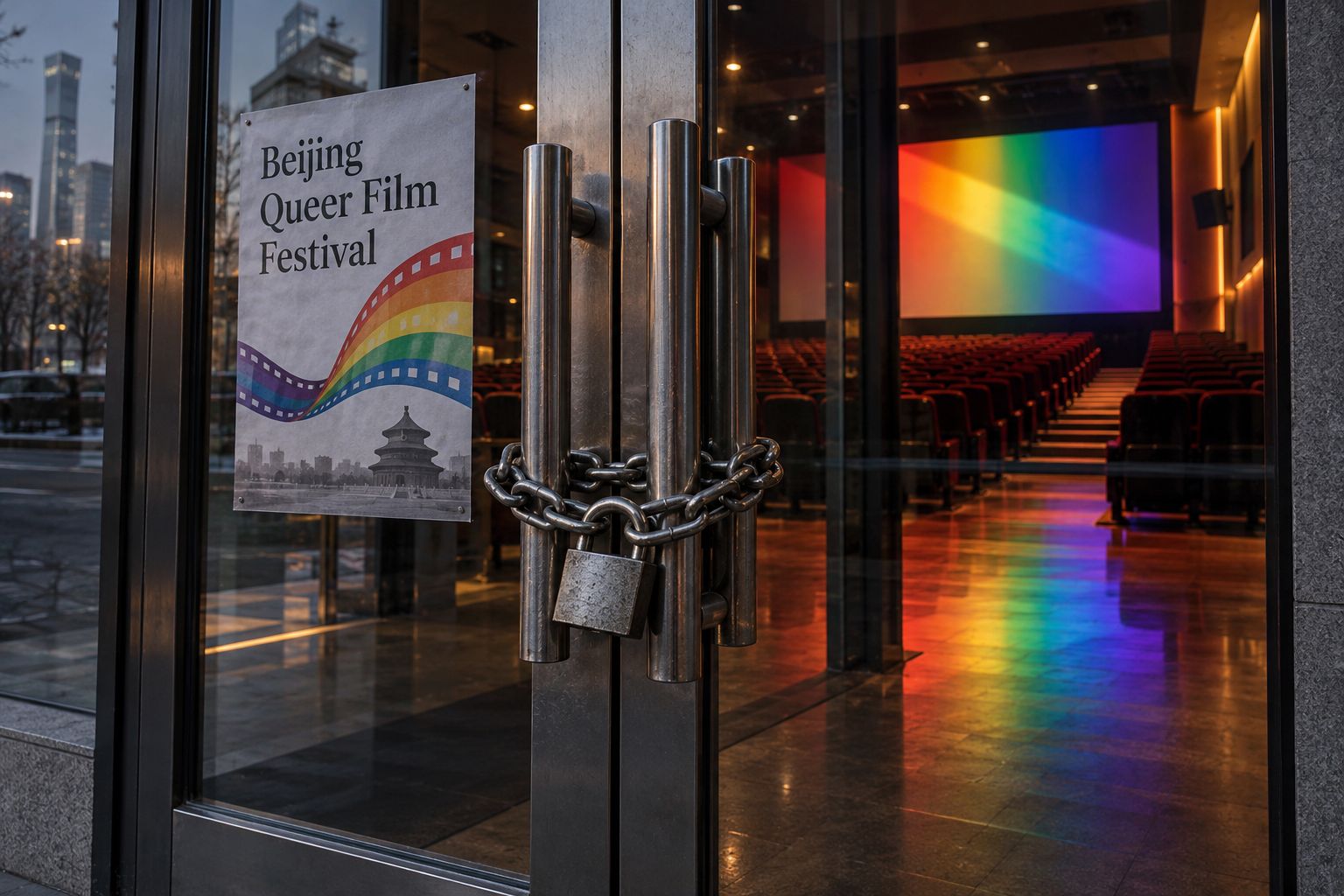
The Beijing Queer Film Festival, also known as Love Queer Film Week, was scheduled to begin on October 30. Organizers announced its cancellation the previous evening. Reports describe repeated police phone calls in the weeks before the event.
Founded in 2001 by students at Peking University, the festival provided a place for queer cinema and public discussion. Its cancellation takes away an opportunity for people to see their lives represented and meet others with similar experiences.
The available reporting describes pressure preceding the cancellation, rather than a publicly issued prohibition. That distinction matters. Censorship can operate through intimidation that makes an event increasingly difficult to hold, leaving organizers to announce the outcome themselves.
For an audience facing that uncertainty, the effect is straightforward: the screening does not happen.
How intimidation silences culture
A government does not need to imprison every filmmaker or formally outlaw every gathering to discourage independent cultural life. When organizing an event brings unwanted official attention, people must weigh participation against possible consequences. A venue may hesitate. A volunteer may withdraw. A filmmaker may decide that showing their work is too risky.
These are precisely the choices people should not have to make merely to share a film.
The right to see yourself on screen
For LGBTQ+ audiences, cultural freedom has particular significance. A story can show relationships, conflicts, pleasures, and ordinary routines that public discussion otherwise excludes. It can allow someone to recognize themselves without being treated as a problem to solve or a subject to suppress.
Denying that space reinforces a damaging message: your life may exist, but its public expression remains conditional.
Secular government does not guarantee freedom
Humanists should be unequivocal about this. Freedom of expression, association, and equal treatment belong to people regardless of sexual orientation or gender identity. Those principles apply whether restrictions are justified through religion, nationalism, political ideology, or appeals to social order.
A government’s secular identity offers no guarantee that it respects individual freedom. The relevant question is whether people can think, speak, create, and gather without intimidation. Opposition to religious censorship must be matched by opposition to censorship imposed by a ruling party.
Visibility should not require permission
Nor should criticism of the Chinese authorities erase the people who built and sustained this festival. Their work demonstrates that Chinese society contains voices, ambitions, and communities that cannot be reduced to the preferences of its government.
The canceled event leaves a simple demand: let people screen their films, discuss their lives, and build their communities. LGBTQ+ visibility should never depend on whether officials find it politically convenient.