A police operation that leaves 122 people dead demands more than official assurances that officers were fighting crime. It demands evidence, independent scrutiny, and answers for the families left behind.
A Human Rights Watch investigation published on October 28, 2026, raises serious questions about the operation carried out a year earlier in Rio de Janeiro. Researchers documented body-camera tampering, failures to preserve evidence, and indications that police may have intentionally killed people.
The findings do not establish the circumstances of every death. They establish why accepting the authorities’ account without a thorough investigation would be indefensible.
A devastating operation
Operation Containment targeted the Red Command criminal organization in Rio’s low-income communities. Its death toll ultimately reached 122, including two children and five police officers, one of whom later died from his wounds.
Police have a responsibility to protect communities from organized crime. Residents living under the power of armed gangs deserve safety, functioning public services, and protection from intimidation.
But that responsibility does not grant officers permission to execute suspects, assault detainees, or conceal their actions. Alleged gang membership does not eliminate a person’s rights. A criminal accusation is not a death sentence.
The deaths of police officers also deserve full investigation. Accountability should establish what happened to everyone killed and examine the decisions that exposed residents and officers to such extraordinary danger.
Cameras without accountability
Body cameras are supposed to make police conduct easier to scrutinize. During this operation, researchers found evidence that officers obstructed that scrutiny.
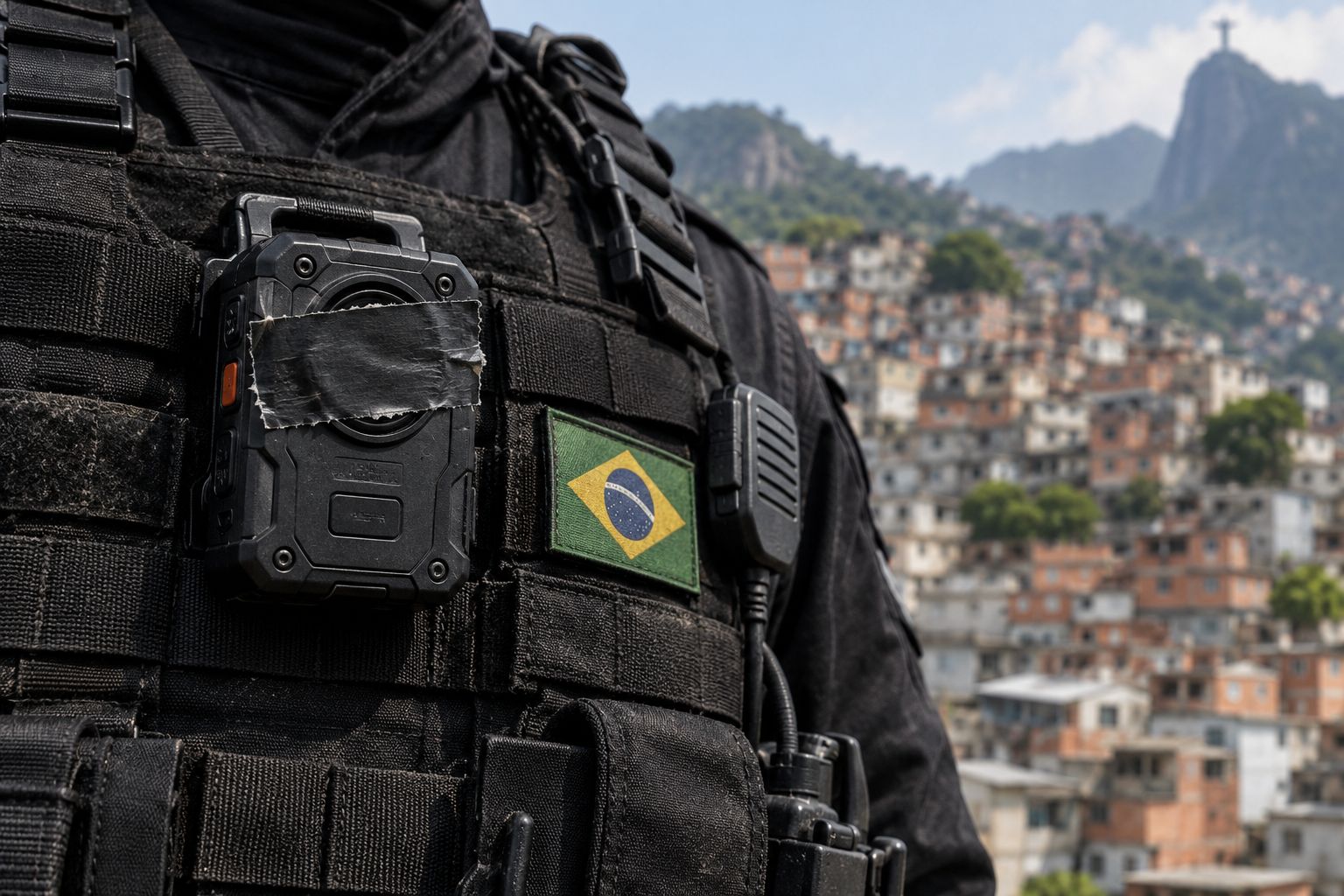
According to Human Rights Watch, cameras were covered, positioned where they could not capture officers’ actions, left in vehicles, or allowed to drain their batteries before the operation. Obstruction repeatedly occurred during consequential moments, including arrests, gunfire, and entry into homes.
None of the killings appeared in the thousands of hours of footage supplied for review.
That absence does not, by itself, prove that every death was unlawful. But documented interference with recording equipment makes it essential to investigate what was concealed, who was responsible, and whether commanders tolerated or directed the conduct.
Buying cameras cannot deliver accountability if officers can defeat their purpose without consequences.
Technology helped investigators examine the evidence
The investigation also demonstrates a constructive use of artificial intelligence.
Human Rights Watch used machine-learning tools to help analyze approximately 4,400 hours of footage, identify gunshots and possible camera obstruction, and connect recordings from different officers. Researchers then manually reviewed and assessed the flagged material.
This was technology assisting human judgment, with conclusions still requiring verification.
Such tools can make large collections of evidence more manageable for investigators. Their value lies in helping people identify events that deserve closer examination—not in turning automated outputs into unquestionable verdicts.
Public safety requires lawful policing
The broader political temptation is familiar: present a large death toll as proof of decisive action, then portray demands for scrutiny as sympathy for criminals.
That argument evades the question. Effective policing must be judged by whether it protects people, reduces violence, and brings offenders before a credible justice system. The number of bodies left behind cannot answer those questions.
Residents of poor neighborhoods should not have to choose between domination by criminal groups and unchecked violence by the state. They are entitled to protection from both.
Abusive policing can also undermine the cooperation that investigations depend on. People who fear that officers will assault them, fabricate accounts, or retaliate against witnesses have powerful reasons to remain silent.
The investigation must reach those in command
Brazilian authorities need to establish responsibility for individual acts of violence, interference with cameras, and failures to preserve evidence. They must also examine the planning and command decisions behind the operation.
Witnesses and relatives need protection. Investigators need access to complete records. Where evidence supports criminal charges, rank and institutional loyalty must not prevent prosecution.
The standard should be straightforward: nobody loses their rights because they live in a favela, and nobody gains immunity because they wear a uniform.
Public safety depends on a state that can confront violence without placing itself above the law.