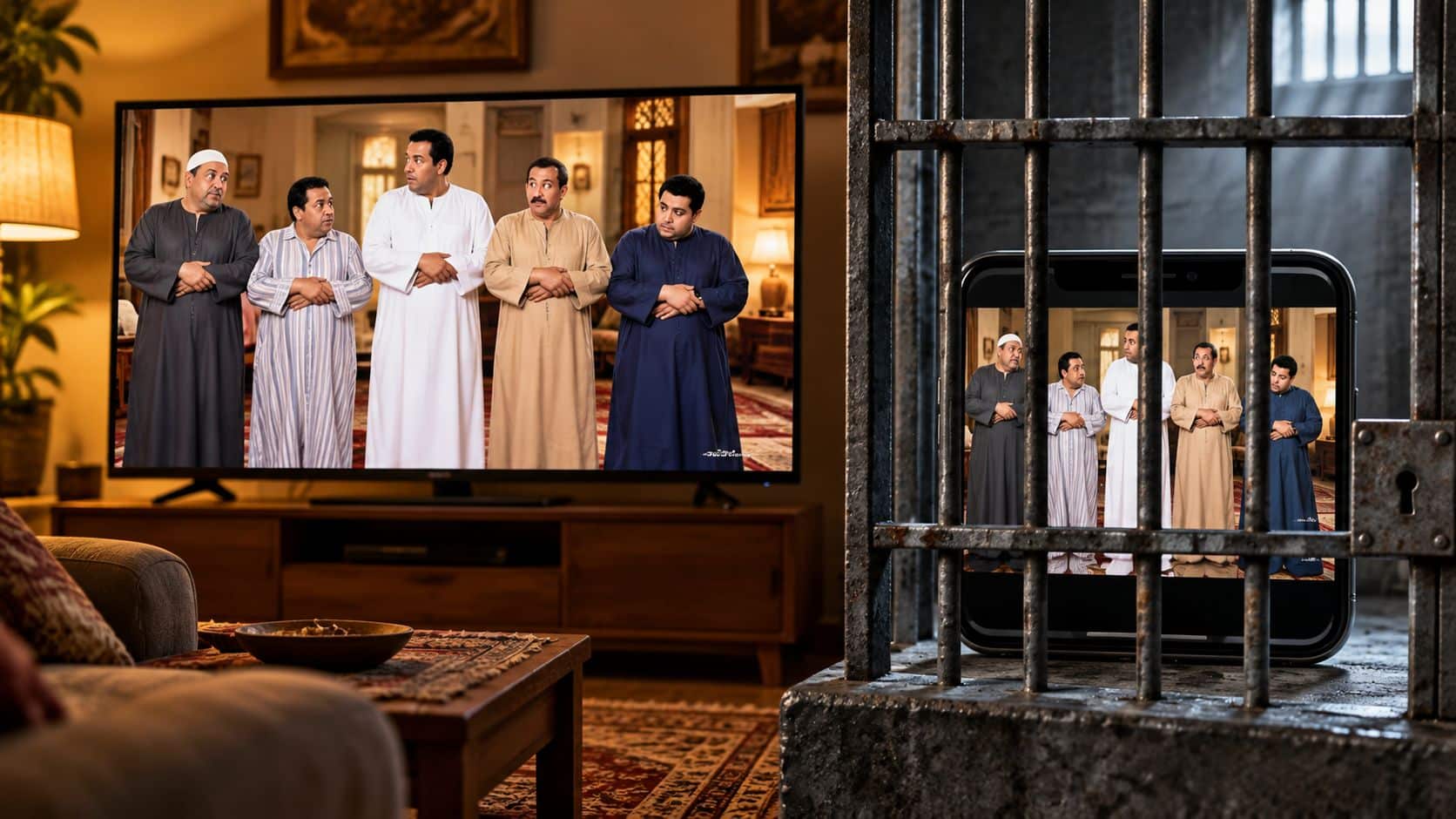
A comedy film can air on Egyptian television, yet young Christians who recreate one of its scenes can face blasphemy accusations. Six young people, including a minor, have been detained over a TikTok video inspired by the Egyptian film Khalawis. Their case raises an uncomfortable question: how does an approved piece of entertainment become a matter for state security when ordinary citizens perform it?
According to an October 12 statement from the Egyptian Initiative for Personal Rights (EIPR), the six come from Ezbet Tanious in Egypt’s Minya governorate. They recreated a scene involving prisoners who prepare to pray but cannot recall the Quranic verses they need. The film reached Egyptian cinemas in 2018, and EIPR says it received censorship approval and continues to appear on satellite television.
From a movie joke to detention
Defense lawyer Hazem Salah told Al Manassa that the six denied intending to offend Muslims. They said they removed the video approximately four hours after posting it, following objections from Muslim friends. Their explanation was straightforward: they had copied a mainstream comedy scene that other TikTok users had also recreated.
Nevertheless, prosecutors accused them of exploiting religion to promote extremist ideas and insulting a publicly practiced religion. Salah argued that the original joke concerns the prisoners’ ignorance of prayer, rather than ridicule of the prayer ritual itself. These remain accusations under investigation, not a criminal conviction.
That distinction matters. However, defending freedom of expression should not depend entirely on proving that a joke contains no religious criticism. Even deliberate mockery of a belief should not automatically become grounds for imprisonment. People deserve protection from violence and discrimination; their religious ideas should remain open to criticism, parody and laughter.
When outrage becomes leverage
EIPR says another village resident reposted the deleted video with condemnatory comments. Threats subsequently targeted the young people and their families. According to accounts gathered by the organization, families and church representatives handed five of them to police after receiving assurances that they would be released once tensions eased.
Instead, the case reached the Supreme State Security Prosecution. EIPR reported that a judge extended their detention by 15 days on October 11. The organization also warned that appeasing powerful local groups at the expense of individual rights reinforces unequal treatment.
The danger in that approach is clear. If threats help turn a comedy video into a prosecution, intimidation gains practical value. Those who generate outrage can discover that pressure works, while those targeted learn that surrendering their freedom may become the price of restoring calm.
Authorities should protect people facing threats and investigate those responsible for inciting violence. Detaining the targets over their expression sends a profoundly different message.
Freedom cannot depend on who tells the joke
The contrast between an approved film and the treatment of these young Christians raises a serious question about equal citizenship. It does not, by itself, prove every official’s motive. However, authorities should have to explain why recreating this scene warrants detention when the original remains available to viewers.
More fundamentally, censorship approval should never be the foundation of a person’s freedom to joke. An unapproved comedy scene should not justify imprisonment either. Otherwise, the defense of expression shrinks into a request for permission to repeat whatever the authorities have already tolerated.
Nobody has to enjoy the video. Religious believers may criticize it, reject it or explain why they find it offensive. But offense does not justify taking away someone’s liberty. These six young people should be released, and a comedy performance should never have become a state security case.