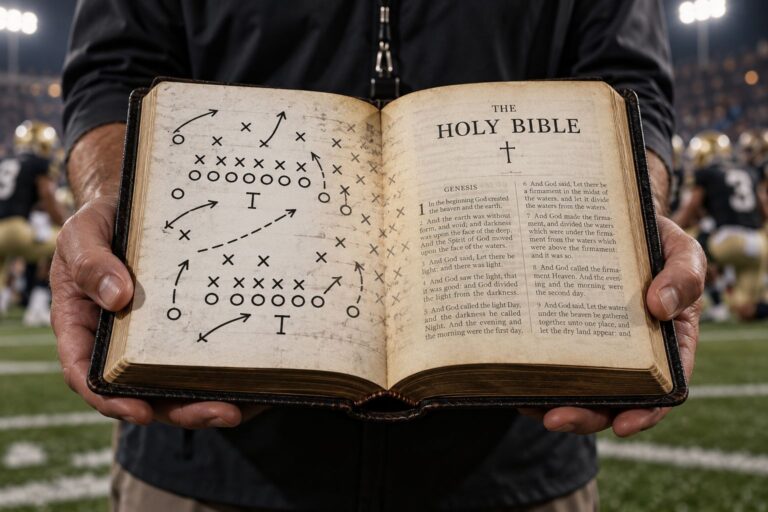
A Christian describes feeling Jesus during prayer. A Muslim describes finding certainty in the Quran. A Hindu recounts an experience understood as the presence of a deity. Each may speak sincerely, with conviction and emotion. Yet sincerity alone cannot tell us which interpretation, if any, is correct.
The question is simple: would you accept the same argument if someone offered it for another religion? If an experience proves your faith, what happens when a similar experience convinces someone that an incompatible faith is true?
This does not establish that every religion is false. However, it exposes a problem that religious arguments often leave unresolved. A method that supports contradictory conclusions needs more scrutiny before we trust it.
Personal certainty is not public proof
Religious experiences can feel overwhelmingly real. Someone may experience comfort, a presence, forgiveness, or a sudden sense of purpose. Dismissing that person as dishonest would miss the point. The experience itself and the explanation attached to it are different claims.
A person might accurately report feeling a presence without correctly identifying its cause. Likewise, a powerful emotional response to prayer does not establish who, if anyone, answered. The intensity of an experience cannot settle its theological meaning.
Consider how you would respond to someone from another faith. Would their certainty persuade you to adopt their beliefs? If you would ask for independent evidence, you should expect the same question when presenting your own experience.
That standard does not belittle personal experience. It recognizes that other people need a reason to accept your interpretation rather than one of its competitors.
Sacred texts cannot simply certify themselves
A believer may argue that a sacred text comes from God because the text says so. However, that reasoning gives the reader no independent way to distinguish revelation from a human claim to revelation. Any author could assert divine authority.
Followers of competing religions can make comparable appeals. Their scriptures may contain declarations of truth, warnings against disbelief, or promises of spiritual understanding. Those declarations remain part of what needs examination.
A text could contain genuine historical information without being divinely inspired. It could also offer moral insight without making every supernatural claim within it true. Accuracy in one area does not automatically establish authority in another.
If you reject another religion’s scripture as proof of itself, consistency requires more than quoting your own. You need to explain why someone who does not already share your faith should accept its authority.
Miracles need consistent standards
Imagine hearing that a member of another religion recovered from an illness after prayer. You might ask about the diagnosis, treatment, medical records, and expected course of the condition. You might also want to know how many people prayed without recovering.
Those are reasonable questions. They remain reasonable when the person praying belongs to your religion.
An unexpected recovery does not identify its cause merely because someone prayed beforehand. Even an event that lacks a satisfactory explanation would not, by itself, establish which deity acted or which religious teachings are correct.
The same principle applies to miracle stories from the distant past. Before accepting one, we should examine when the account appeared, who recorded it, and whether apparently separate reports depend on a common source. Familiarity with a story should not lower the standard of evidence.
Different miracle claims may have different evidential strengths. Fair scrutiny does not require treating them as identical. It requires evaluating those differences rather than assuming that your tradition’s miracles deserve belief while everyone else’s deserve suspicion.
Changed lives do not settle competing beliefs
Religion can give people purpose, community, and motivation. A believer might stop drinking, repair relationships, or begin helping others. Those changes matter, and criticism of religious truth claims should not require denying them.
However, people also report profound changes through other religions, secular communities, therapy, and personal commitments. A beneficial transformation does not uniquely identify the beliefs that produced it as true.
There is a crucial distinction between saying that a belief helped someone and saying that its account of reality is accurate. A story can inspire courage without describing an actual event. A community can provide belonging without possessing supernatural knowledge.
Would another person’s improved life persuade you that their gods exist? If not, your own improvement cannot reasonably function as decisive proof for everyone else.
Suffering for a belief does not make it true
Another argument appeals to sacrifice. People have endured persecution, imprisonment, and death rather than abandon their convictions. Such commitment can provide evidence of sincerity, but sincerity and truth are separate questions.
Someone can believe something deeply and still be mistaken. This applies to religious convictions as much as political or personal ones.
Claims about witnesses who supposedly died rather than deny events they personally observed require further investigation. What did they actually claim? What circumstances led to their deaths? What evidence shows that they could have escaped by recanting?
Those questions should apply across traditions. Admiration for someone’s courage cannot substitute for examining the belief itself.
Familiarity can disguise a double standard
Beliefs learned in childhood can feel like the natural background of reality. Other people’s beliefs arrive later, already marked as unfamiliar claims requiring explanation. That difference in familiarity can influence how we judge them.
Your own tradition may sound profound while another sounds implausible. A familiar ritual may feel sacred while an unfamiliar ritual seems strange. Neither reaction establishes what is true.
The useful question is whether the evidence would remain persuasive without the familiar names and symbols. Would you accept the reasoning if a different religion supplied the conclusion?
This challenge also applies to atheists. A fabricated quotation, misleading historical claim, or weak argument does not become acceptable because it makes religion look bad. Consistent standards must constrain the conclusions we prefer as well as those we oppose.
Disagreement does not prove that everyone is wrong
Religious diversity alone does not disprove religion. People disagree about many questions that have correct answers. One tradition could be right about a particular claim even if others reject it.
Nor does every religious disagreement involve a direct contradiction. Traditions contain internal differences, and some teachings overlap. A careful critique should identify the specific claims in conflict rather than treating every believer as holding the same position.
Nevertheless, incompatible claims create a genuine burden of explanation. If people use similar experiences and arguments to reach conflicting conclusions, we need a way to distinguish between them. Repeating that your own conviction feels stronger does not provide that method.
A believer may offer additional evidence to make the distinction. That evidence deserves examination. But the standards should remain the same regardless of whose religion benefits.
Give your own beliefs the scrutiny you give others
Before presenting a religious argument, imagine hearing it from someone whose theology you reject. Ask what evidence you would request and what alternative explanations you would consider. Then apply those questions to yourself.
You do not have to abandon a belief merely because someone challenges it. However, you should be willing to explain why the argument supporting it succeeds where a comparable argument fails.
If you would dismiss another person’s revelation, miracle story, or sacred text without independent support, do not demand that others accept yours on trust. Your religion deserves the same scrutiny you already know how to give theirs.