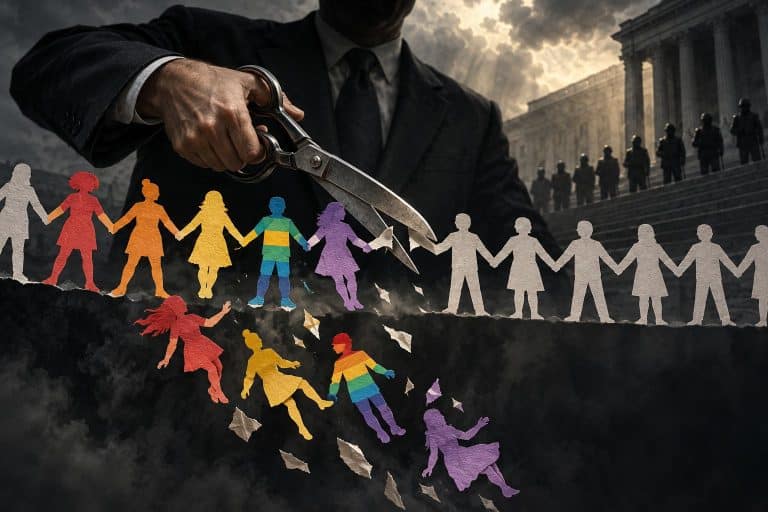
For three nights, a 28-year-old man from Accra was reportedly tied to a tree at a prayer camp. According to testimony presented by researcher Solomon Atsuvia, the purpose was to “burn the gay spirit out of him.” His family had taken him there.
The man, identified by the pseudonym Kwame, described an ordeal of hunger, fear, and humiliation. His account appeared in October 22 reporting on a conference at Stellenbosch University, where Atsuvia, a University of Pretoria doctoral student, discussed his fieldwork in Ghana.
That research, conducted the previous year, also uncovered accounts of assaults, forced fasting, confinement at home, and prolonged kneeling in prayer imposed on people suspected of being gay. These are reported research testimonies, rather than findings from a criminal trial. Nevertheless, they raise an urgent question: who protects someone when their family treats abuse as salvation?
When cruelty becomes a religious duty
The premise behind this treatment deserves scrutiny. Once homosexuality becomes evidence of an invading spirit, the person’s own understanding of their life loses authority. Their objections can become further evidence that the supposed spirit resists removal.
Within that logic, almost any suffering can acquire a sacred justification. Hunger becomes purification. Restraint becomes protection. Submission becomes proof that the treatment is working. The victim must satisfy the beliefs of the people controlling them before those people will consider letting them go.
Calling this process deliverance does not make it compassionate. A person tied to a tree cannot meaningfully withdraw consent, leave the session, or choose another form of support. Religious language changes none of those realities.
There is no illness to cure
Homosexuality is not a disease, and attempts to force a change in sexual orientation rest on a false premise. A United Nations independent expert has warned that so-called conversion practices inflict severe suffering and can amount to torture or other cruel, inhuman, or degrading treatment.
Nor does coerced compliance demonstrate a change in orientation. Someone may say whatever will persuade their captors to release them. Silence, a declaration of repentance, or a promise to enter a heterosexual relationship cannot establish that abuse has achieved a therapeutic result.
The moral failure begins before anyone reaches for a rope. It begins with the assumption that another person’s harmless sexuality creates a right to control their body.
An older failure of protection
Ghana’s prayer camps have previously faced scrutiny over a separate issue: the treatment of people with mental health conditions. In 2023, Human Rights Watch reported that shackling continued despite a 2017 ban and criticized inadequate monitoring and enforcement. Homosexuality must not be confused with mental illness, but that earlier reporting exposes a relevant failure to protect people held in religious settings.
Authorities should investigate the specific allegations of conversion abuse and establish who ordered, carried out, or enabled it. Survivors need safe accommodation and access to independent support. Returning someone to relatives who arranged their confinement may expose them to the same danger again.
Oversight must also reach places that describe themselves as spiritual rather than medical institutions. Otherwise, a change of vocabulary becomes a route around accountability.
Faith cannot replace consent
Religious freedom should protect people’s ability to believe, worship, question, and leave. It should never give a family or religious leader ownership of another adult’s freedom. A belief does not become a defense of coercion merely because its holder considers it sacred.
The same principle applies to appeals to culture and tradition. A society contains the people harmed by its customs as well as those who defend them. Treating only the latter as authentic representatives erases the very people whose rights need protection.
Kwame’s reported experience demands an investigation, not a theological debate about whether his captors chose the correct ritual. Nobody should have to renounce their sexuality to earn release from a tree.