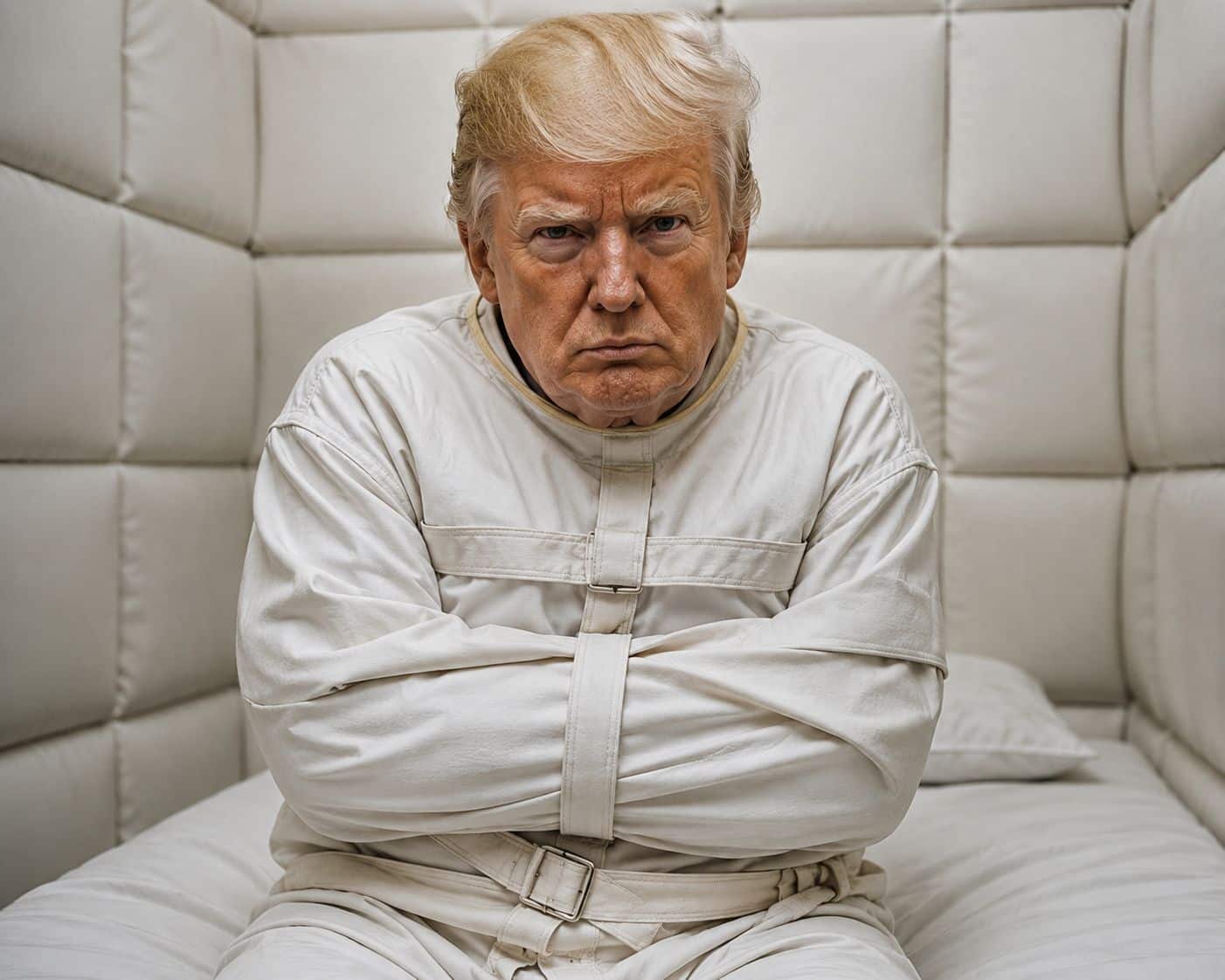
I used to view Donald Trump differently from many of his critics. I saw an unconventional politician who often behaved in surprising ways. I assumed there was a rational manager behind the public image. I believed he could separate emotion from decision-making when the office required it. Over time, I came to a different conclusion.
The presidency demands far more than political instincts. It demands professionalism. The president must act as the nation’s top manager. It demands emotional discipline. It demands the ability to place the interests of the country above personal emotions. No president is perfect. Every president has weaknesses. The important question is whether those weaknesses remain in control or whether the president learns to control them.
I believe that every human being possesses a unique combination of intelligence (IQ – “g factor”), talents, and specific mental strategies connected to your IQ. People also develop habitual ways of thinking. Some naturally analyze problems from several perspectives. Others rely on instinct. Some remain calm under pressure. Others react emotionally. These mental strategies shape how people make decisions throughout their lives.
None of those traits are completely fixed. People can change them. They can recognize their weaknesses and deliberately compensate for them. They can train themselves to react differently when circumstances demand it. This process requires effort, discipline, and self-awareness.
TV personality or manager
That is especially true in politics.
A president cannot behave like an ordinary businessman, television personality, or opposition politician. The office carries enormous responsibility. Decisions affect millions of people. Foreign governments study every statement (Iran used Trump’s psychological profile successfully against him). Financial markets react within seconds. Military commanders may adjust their plans after a single presidential remark. The higher the office, the greater the need for self-control.
This is why I believe personality matters as much as policy.
A politician should not simply rely on natural instincts. He should work to improve his own decision-making. He should identify his weaknesses and reduce their influence. Professionalism is not only about knowledge. It is also about mastering one’s own temperament.
Former Czech Prime Minister Bohuslav Sobotka illustrates this idea in my view. Many people regarded him as cautious and reluctant to take risks. Yet politics forced him into situations that demanded greater determination. Whether one agreed with his decisions or not, he appeared willing to adapt his political style instead of remaining trapped by his original temperament. That transformation required conscious effort. It showed that politicians are capable of changing when they understand that the office demands it.
For me, that example highlights an important principle. Leadership is not simply about using the personality one already has. Leadership also means reshaping that personality when circumstances require it.
This is where my assessment of Donald Trump changed.
Emotions instead of rationality
I increasingly came to believe that he relied too heavily on instinct and emotion. I often saw rapid reactions where I expected careful deliberation. I often saw personal disputes become public confrontations. I often felt that immediate emotional responses overshadowed long-term strategic thinking.
Supporters may see those traits differently. They often argue that Trump communicates directly, rejects political convention, and refuses to hide his emotions behind carefully prepared speeches. They consider that authenticity rather than impulsiveness.
I understand that argument.
I simply do not share it.
The presidency requires restraint. Not every criticism deserves an immediate response. Not every provocation requires retaliation. Sometimes the strongest decision is to remain silent, gather information, and act later.
Foreign policy especially rewards patience.
Governments around the world constantly evaluate the personalities of foreign leaders. They study negotiating styles. They observe emotional reactions. They try to predict future behavior. In my opinion, a leader who reacts predictably to personal provocation may make that task easier for geopolitical rivals.
All presidents without Trump
Political symbolism also matters.
When the Barack Obama Presidential Center held a major opening event, former presidents gathered to participate. Donald Trump did not attend. People interpret that fact in different ways. Some view it as another example of political polarization. Others see it as evidence of his strained relationships with many figures in the American political establishment. Whatever conclusion one reaches, the episode reflects the extraordinary divisions that continue to surround his presidency.
None of this means that Donald Trump lacks political talent. He demonstrated remarkable abilities as a campaigner. He built a loyal political movement. He reshaped the internal politics of his party in ways that few observers predicted. Those achievements required considerable political skill.
My criticism lies elsewhere.
Political success alone does not automatically translate into presidential leadership. The two require overlapping but different qualities. Winning elections rewards confrontation, bold messaging, and relentless campaigning. Governing a country rewards patience, discipline, compromise, and emotional control.
In my view, the presidency requires a deliberate effort to rise above one’s natural impulses. Every president enters office with strengths and weaknesses. The best leaders recognize both. They develop habits that reduce the influence of their own shortcomings. They understand that holding immense power demands greater self-restraint, not less.
That is ultimately why my opinion of Donald Trump changed. I once believed that beneath the unconventional public persona stood a disciplined executive who could separate emotion from responsibility. I no longer believe that. I now think his personality often remained too influential in moments when the office demanded greater distance, greater patience, and greater professionalism.
That is not merely a question of style. In my view, it is one of the defining qualities by which every president should be judged.
Trump, the dictator?
Donald Trump has repeatedly displayed authoritarian instincts. He has often portrayed independent institutions not as constitutional safeguards, but as obstacles to his own power. Courts, civil servants, and the media exist to limit every president. A democratic leader should respect those limits, even when they stand in his way.
Democracy does not end with winning an election. Electoral victory gives a president the right to govern, not the right to dominate every institution. When a leader demands personal loyalty above institutional independence, democracy begins to weaken. In my opinion, that is one of the most troubling aspects of Trump’s political style.
Strong leadership should strengthen democratic institutions rather than concentrate power in one individual. A president should never view constitutional checks and balances as enemies. Those limits protect citizens from every leader, including the one they elected.
The final word is this: This man has the nuclear launch briefcase and can start a world war.