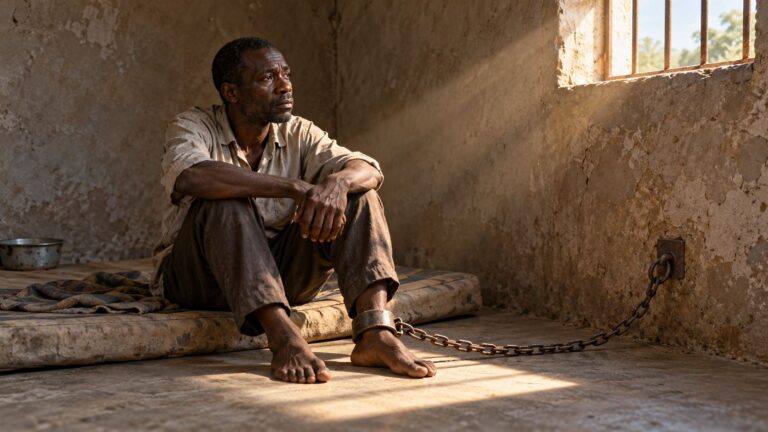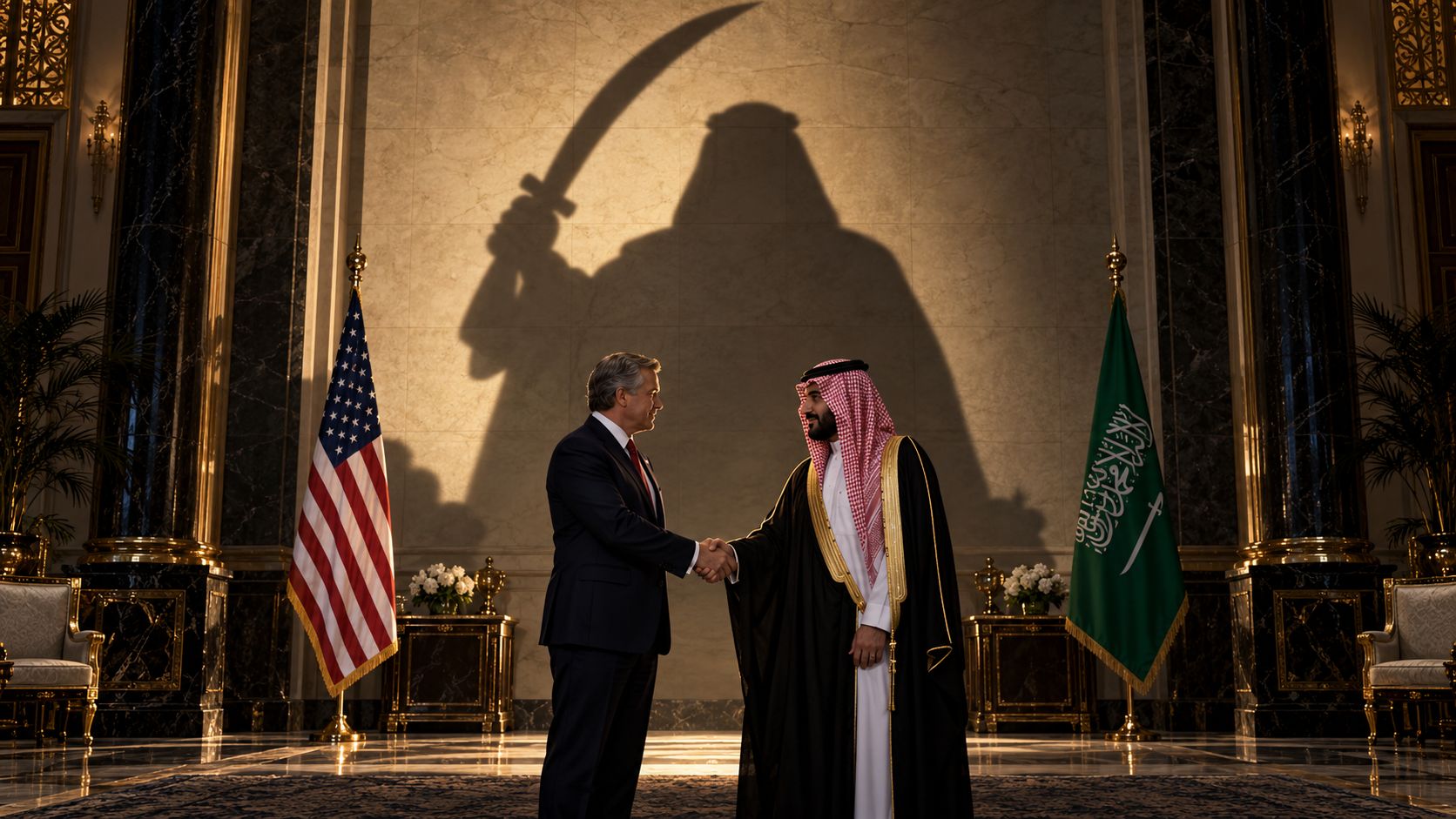
Washington has plenty to teach the world about human rights. Its Saudi ally apparently has other priorities. Youssef al-Manasif faces execution over alleged offenses dating to his teenage years, while the United States continues to strengthen its partnership with the government threatening to kill him.
On October 16, The Guardian reported that Saudi Arabia’s Supreme Court had reportedly upheld his death sentence. Human rights groups warn that he faces imminent execution. His case concerns alleged conduct from when he was between 15 and 17, including attending demonstrations and funerals.
This is the relationship Americans should examine whenever their government presents itself as the world’s moral instructor. What does a commitment to human dignity mean when a strategically useful monarchy can threaten such an execution and remain a valued partner?
A teenager’s past becomes a death sentence
Saudi authorities arrested al-Manasif in April 2017. MENA Rights Group says his prosecution involved participation in demonstrations against the treatment of the country’s Shia minority and attendance at funerals for people killed by government forces. Some allegations concerned activities when he was just 15 or 16.
The organization reports severe torture, solitary confinement and prolonged restrictions on communication. It also records the UN Working Group on Arbitrary Detention’s finding that his detention was arbitrary and violated fundamental rights. The working group called for his immediate release.
Saudi prosecutors brought additional accusations, including joining a terrorist cell and financing terrorism. Those allegations should be reported accurately. However, labeling a defendant a terrorist does not settle questions about evidence, torture or a fair trial. Nor does it erase his age at the time of alleged offenses.
The United States Commission on International Religious Freedom documents al-Manasif’s case itself. It describes his imprisonment and death sentence as connected to his religious identity and advocacy, and records torture, a forced confession and inadequate access to legal counsel. An American federal commission has therefore already documented the persecution at the heart of this case.
Washington knows how to reward its friends
Meanwhile, the partnership has concrete benefits for Riyadh. In November 2025, the White House announced a strategic defense agreement with Saudi Arabia, approval of a defense package including future F-35 deliveries, and an agreement for the kingdom to purchase nearly 300 American tanks.
The same announcement celebrated Saudi investment commitments approaching $1 trillion. These were commitments, not proof that the money had already arrived. Nevertheless, the administration proudly presented deeper military and economic cooperation as a major achievement.
The contrast is bitter. One American institution documents a man’s persecution. Another celebrates an expanding partnership with the state responsible. The victim receives a database entry; the government holding him receives agreements, weapons commitments and prestige.
This does not establish that American weapons caused his prosecution, or that Washington controls Saudi courts. It establishes something simpler: the United States possesses a consequential relationship with Riyadh and makes choices about how to use it. Expanding that relationship while grave abuses persist deserves scrutiny, especially from a government accustomed to scrutinizing everyone else.
Human rights with an exception for valuable customers
Diplomacy requires dealing with abusive governments. However, maintaining contact does not require celebrating their rulers, deepening military cooperation without meaningful human-rights conditions, or treating commercial promises as an answer to political repression.
An alliance should create opportunities to demand change. When it instead becomes a standing excuse for avoiding pressure, the language of human rights begins to sound like a sales pitch with carefully concealed exclusions.
America’s criticism of abuses elsewhere can still be correct. Saudi repression does not excuse repression in Iran, China or Russia. But the standard must survive a change of flag. Otherwise, Washington teaches the world that the decisive distinction is whether an abusive government is useful to the United States.
That lesson damages the people who need consistent international pressure most. A prisoner cannot cash an investment pledge. His family cannot protect him with a speech about shared strategic interests.
Is this the leadership we want?
Al-Manasif’s case demands a clear public call to halt his execution, address the documented violations and secure his release in line with the UN working group’s recommendation. Washington should make human-rights demands part of the substance of its Saudi relationship, with consequences for continued abuses.
Nobody can guarantee that American pressure will save him. But uncertainty about success is a poor excuse for treating an alliance as more precious than the people harmed by an ally.
Is this what we want from a country that schools the world on human rights? A government that can identify persecution, document it and then celebrate business with the persecutor?
If Washington wants its moral lectures taken seriously, it should begin by confronting its friends. Human dignity cannot remain a principle for speeches and an inconvenience at the negotiating table.