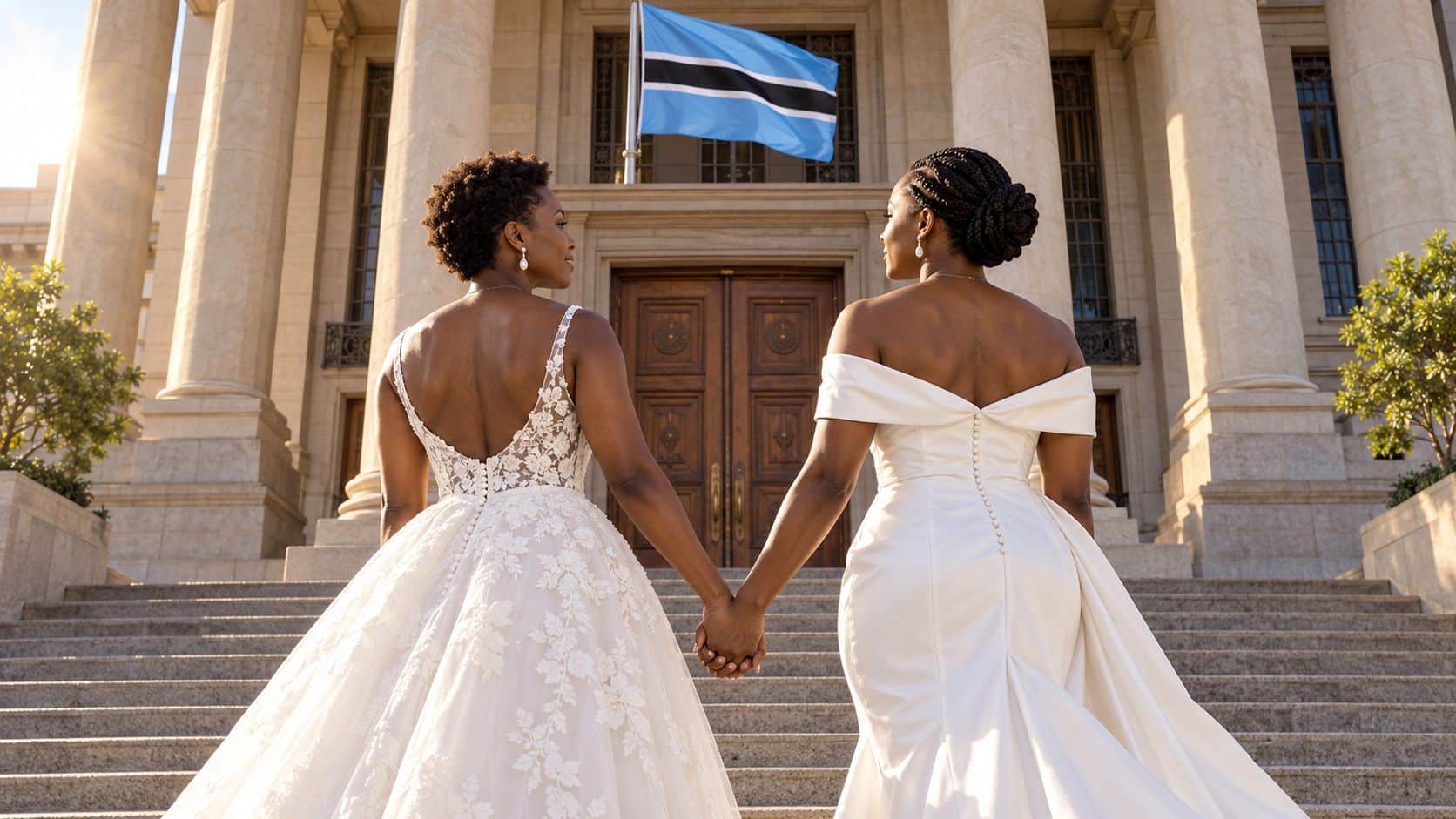
Two women in Botswana want to marry. To obtain the recognition that heterosexual couples can take for granted, they have had to take their government to court. Their challenge could make Botswana only the second African country to legalize same-sex marriage, following South Africa.
Bonolo Selelo and Tsholofelo Kumile are challenging their exclusion from civil marriage. The main hearing is scheduled for October 22 and 23 at the High Court in Gaborone. These are hearing dates, not a promised date for a judgment, and the outcome remains uncertain. Nevertheless, the case presents an opportunity for a historic advance in equality.
Two women seeking equal recognition
The couple argues that Botswana’s Marriage Act discriminates against them by failing to recognize same-sex civil marriages. In September, the court allowed LGBTQI+ rights organization LEGABIBO to join them as a third applicant. Its participation brings the wider community’s interest in equal treatment directly into the proceedings.
However, opponents have also joined the case. The court admitted the Botswana House of Prayer and Transformation, the Dingwetsi Association and the Evangelical Fellowship of Botswana as respondents alongside the government. Human rights scholar Dr. Onthatile Olerile Moeti will participate as a friend of the court.
Behind these procedural developments lies a straightforward question: should two consenting adults receive different treatment from the state because they are both women? Their relationship does not become less meaningful because others disapprove of it. Nor should public recognition depend on whether their neighbors share their understanding of love.
Religious opposition meets civil rights
Representatives of groups opposing the challenge have invoked the protection of Setswana culture. Reporting on the preliminary proceedings, The Voice described their position as a defense of traditional values. Meanwhile, LGBTQI+ advocate Tshepo Kgositau argued that Botswana should protect minority rights and challenged the idea that two consenting adults should have to fight for their relationship.
Religious and cultural organizations have the right to express their views and participate in public debate. However, that right should not give them control over the civil status of people who do not share their beliefs. A religious objection deserves a hearing as an opinion. It should not automatically become a restriction imposed on everyone.
Civil marriage belongs to the legal system. The relevant question is whether the state can justify excluding a group of citizens, rather than whether a religious organization approves of their relationships. Equal citizenship becomes fragile when it requires the consent of those most determined to withhold it.
Furthermore, culture does not speak with a single voice. LGBTQI+ people belong to their societies too. Their lives, families and aspirations form part of Botswana’s present, and they deserve a place in its future.
More than permission to hold a wedding
Marriage equality concerns public recognition as well as the legal protections attached to a relationship. Exclusion tells a couple that the state regards their partnership as less deserving. Even when others tolerate their private lives, that unequal status remains.
Consequently, describing this case as a demand for special treatment gets the issue backward. The couple seeks access to an institution already available to others. Extending that access would allow more people to participate without diminishing the marriages that already exist.
South Africa legalized same-sex marriage in 2006. Botswana now has an opportunity to follow, although the court has yet to decide whether the couple’s challenge will succeed. A favorable outcome would carry significance well beyond the country’s borders.
A chance to move forward
For now, the hearing offers a possibility rather than a victory. The judges will consider the competing arguments, and the eventual ruling will determine what comes next. Supporters of equality should recognize the importance of this moment without announcing an outcome that has not happened.
Still, the moral case is clear. Two women should not have to persuade religious opponents that their relationship deserves recognition before their own government treats them equally. Botswana could take a historic step by affirming that citizenship carries the same dignity regardless of whom a person loves.