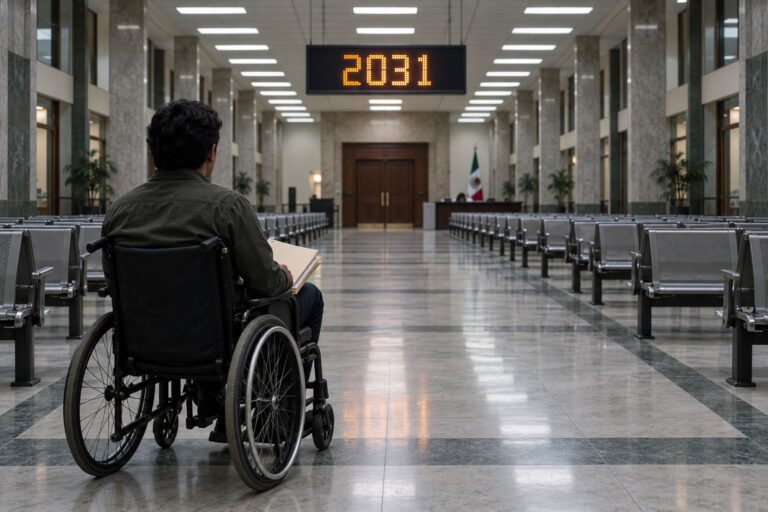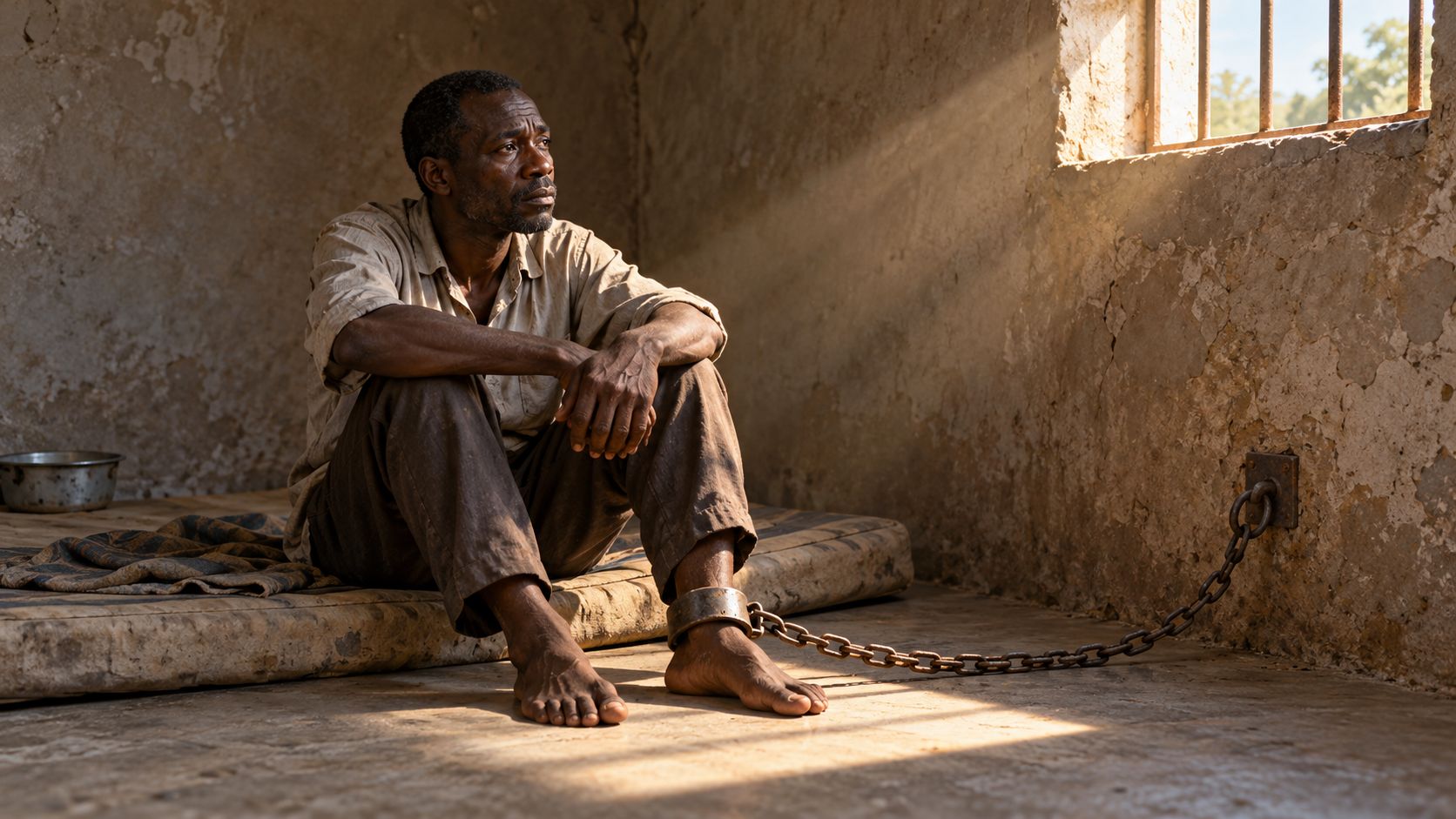
Julien’s family believed he was possessed. For months, rusty chains bound his ankles while he lived in isolation, enduring hunger and thirst. He was experiencing a mental health condition. The people around him responded by taking away his freedom.
His story appears in an October 23 World Health Organization feature on mental healthcare in Africa. Now 39, Julien recalls losing his sense of time during his confinement. Help eventually arrived through Grégoire Ahongbonon, founder of the Saint Camille Association, who persuaded his family to let him receive care.
What happened to Julien should provoke outrage. Yet it belongs to a much wider pattern in which people experiencing mental distress face chains, confinement, and humiliation. Their suffering becomes an excuse to strip them of the rights they need most.
A widespread abuse across poorer countries
Chaining people with mental health conditions is a widespread, documented problem across many developing countries. It occurs in family homes, traditional and religious healing centers, and institutions. Poverty, stigma, supernatural explanations of illness, and inadequate services can combine to leave people trapped for months or years.
Human Rights Watch’s 2020 investigation documented shackling in approximately 60 countries across several continents. Its research included countries such as Ghana, Nigeria, Indonesia, and Cambodia. The organization’s continuing campaign describes hundreds of thousands of people worldwide who have experienced shackling or confinement at some point in their lives.
These findings establish a widespread abuse, although they do not provide a precise current count of everyone living in chains. Nor does every developing country have the same practices or level of provision. Abuses also occur outside poorer countries, including in institutions that present themselves as modern healthcare facilities.
Nevertheless, dismissing Julien’s experience as an isolated incident would conceal the scale of the problem. Too many people lose their liberty because their communities misunderstand their condition and their governments fail to provide accessible support.
When superstition becomes permission to harm
Beliefs about possession, curses, and spiritual punishment can turn a person’s distress into supposed evidence of supernatural wrongdoing. Once that explanation takes hold, the response may focus on controlling the person or driving out an imagined entity. The individual’s pain becomes secondary to the belief imposed on them.
Human Rights Watch has documented forced fasting, physical and sexual abuse, and involuntary treatment in facilities where people with mental health conditions are confined. Some must eat, sleep, and use the toilet within the same cramped space. Such conditions expose the brutality hidden behind claims of healing.
Religious conviction cannot establish a diagnosis. Neither tradition nor sincerity gives anyone permission to abuse another person. A family or healer may believe that suffering serves a spiritual purpose, but the person enduring it still has a right to protection.
This criticism should remain focused on harmful conduct. People of faith can provide compassionate care, just as secular institutions can mistreat patients. Every provider should face the same test: whether their practices respect the person’s dignity, autonomy, and wellbeing.
Poverty leaves families without support
Superstition is only part of the explanation. Families may have nowhere affordable to seek help, little information about mental health, and no practical support during a crisis. Some become overwhelmed and resort to confinement because they cannot imagine another option.
That desperation does not justify chaining. However, governments cannot end the practice simply by condemning families and leaving them in the same circumstances. Prevention requires services people can actually reach and afford.
WHO’s Mental Health Atlas 2024, published in 2025, exposes the gulf in resources. Among countries reporting expenditure data, median annual government spending on mental health was approximately four US cents per person in low-income countries, compared with about $66 in high-income countries. Severe workforce shortages further restrict access to care.
Those figures describe a political failure as well as an economic one. Mental healthcare remains easy to neglect when the people who need it have little influence and face intense stigma. Families absorb the consequences, while the most vulnerable individuals bear the greatest harm.
Freedom must come with lasting care
Removing chains is essential, but it cannot be the end of the response. Someone released from confinement may need healthcare, safe housing, help rebuilding relationships, and support returning to everyday life. Without those foundations, the circumstances that enabled the abuse may remain.
Governments should prohibit shackling, inspect facilities, investigate complaints, and hold perpetrators accountable. They should also expand community services and provide families with practical assistance. People receiving care must have a meaningful voice in decisions affecting them.
Moving someone from a locked room into an abusive institution would merely change the location of their suffering. Treatment should help restore control over life. It should never become a convenient label for indefinite confinement or humiliation.
The man in chains became a caregiver
Julien’s story did not end in the room where his family confined him. After receiving care through Saint Camille, he eventually became a caregiver himself. Today, he welcomes and supports other people experiencing mental health difficulties.
WHO’s account describes an approach that includes listening, rehabilitation, and social reintegration alongside treatment. Julien’s experience shows what becomes possible when someone receives support instead of rejection. His history now helps him understand the people arriving for care.
His later contribution does not make the original abuse more wrong. He deserved freedom and dignity even if he had never recovered enough to work, help others, or tell his story. Human rights do not depend on usefulness.
They called him possessed and chained him for months. What he needed was care, safety, and people willing to recognize his humanity. Others remain confined because those basic protections have still not reached them.