It’s a widespread belief that moral values and principles are inextricably tied to religious doctrines. But as human life is older than religion, is this the whole picture? Are morals exclusively a product of religious beliefs, or do our biological roots play a significant role?
The Science of Morality:
Recent studies have started to peel back the layers of our moral fabric, revealing a complex interplay between biology and culture. Marc Hauser, a renowned psychologist and biologist, argues in his book “Moral Minds” that our moral judgments and behaviors are wired into our brains. This innate ‘moral instinct’, as he calls it, suggests that our sense of right and wrong isn’t just a religious or cultural construct but a part of our biological makeup.
Morality in the Animal Kingdom:
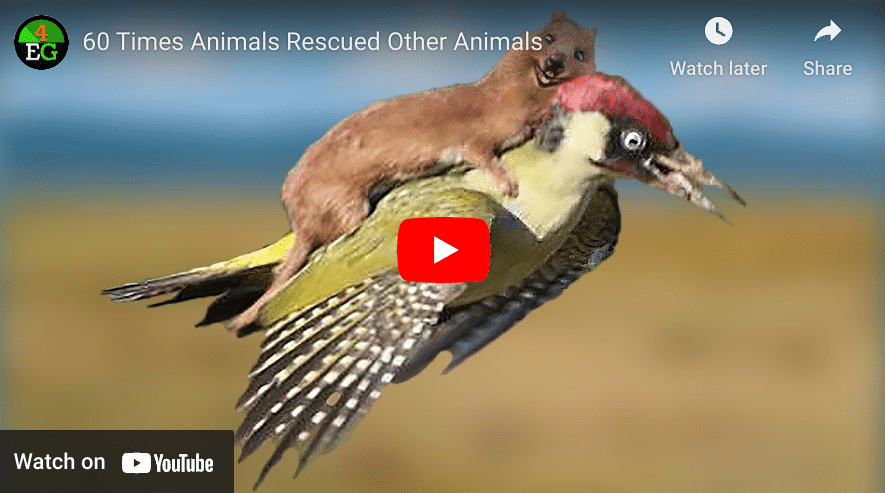
The idea that morality might be biological isn’t confined to human beings alone. Frans de Waal, a primatologist, has observed behaviors in primates and other animals that closely resemble human moral conduct. From empathy to fairness, these animals demonstrate that the seeds of morality can exist independently of human society and religious teachings. This observation begs the question: If animals exhibit moral-like behaviors, can morality truly be said to belong to humans, let alone religious humans?
The Evolution of Morality:
Delving into the depths of our evolutionary past offers more clues. Evolutionary psychologist Robert Wright, in his book “The Moral Animal,” discusses how our moral instincts may have evolved to enhance survival and social cohesion. Cooperation, altruism, and fair play – traits considered moral – could have been advantageous in our ancestral environments. This evolutionary perspective challenges the notion that morality is a divine gift, framing it instead as a product of natural selection.
Conclusion:
In conclusion, morality does not find its roots in religion but in our evolution and biology. The moral stands in religions are the consequence of our brains being wired for moral behavior. The moral standards in our societies nowadays are a tapestry woven from various threads – biological, evolutionary, and cultural. While religious teachings have undoubtedly shaped and refined some of our moral understanding, they are not its origin. Morality, in its most fundamental form, is a universal aspect of the human experience, transcending religious and cultural boundaries.
References for Further Reading:
- Hauser, M. (2006). Moral Minds: How Nature Designed Our Universal Sense of Right and Wrong. Ecco/HarperCollins.
- De Waal, F. (2006). Primates and Philosophers: How Morality Evolved. Princeton University Press.
- Wright, R. (1994). The Moral Animal: Why We Are the Way We Are: The New Science of Evolutionary Psychology. Pantheon.
- Henrich, J., et al. (2005). “Economic Man” in Cross-cultural Perspective: Behavioral Experiments in 15 Small-scale Societies. Behavioral and Brain Sciences.