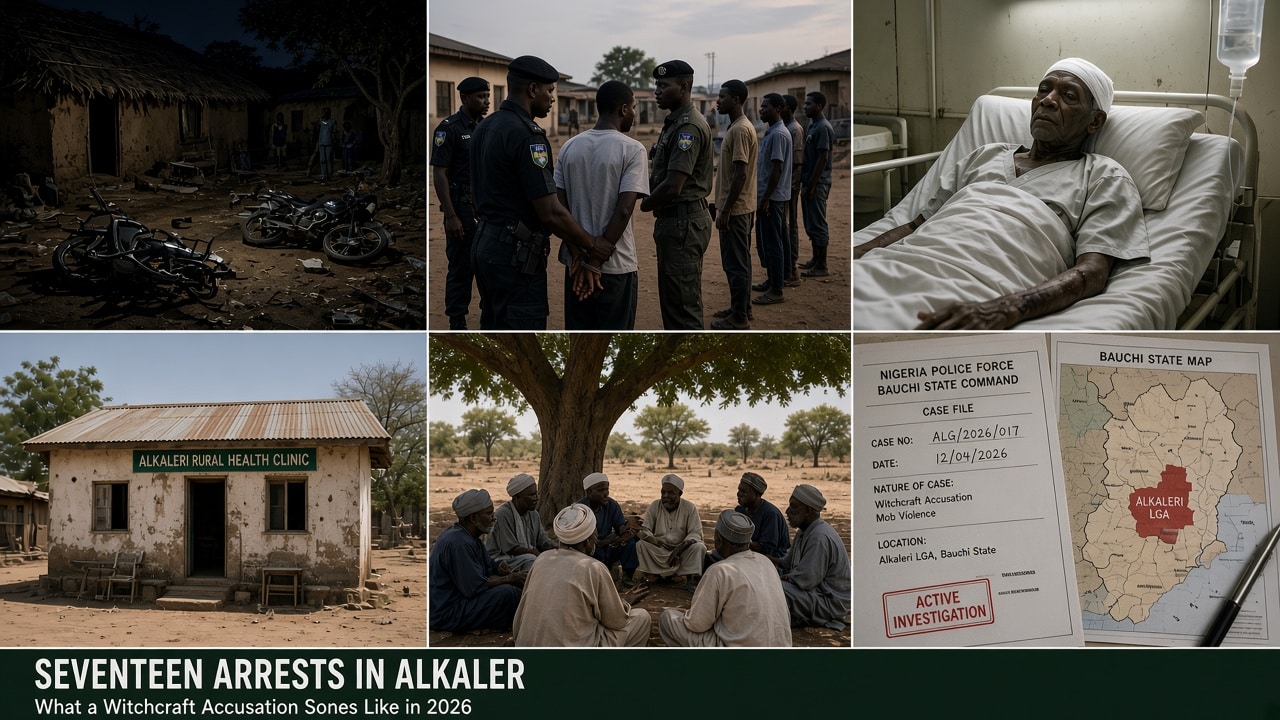
At approximately 1:00 am on Sunday, 18 October 2026, an armed mob breached a family compound in Gobirawa village, Gwana District, within Alkaleri Local Government Area of Bauchi State.
According to police reports, the assailants were armed with machetes and clubs. Their target was a 60-year-old resident and his family.
The pretext for the assault was a sudden domestic tragedy.
The incident
Two days prior, on 16 October, a 20-year-old male resident of the village died suddenly. The police command’s initial disclosure did not state a medical cause of death.
Following the bereavement, local actors attributed the youth’s passing to metaphysical malice, specifically accusing the 60-year-old elder’s adult son of practising lethal witchcraft.
The ensuing violent raid left the patriarch with critical blunt-force and laceration trauma. Local reports confirm that his son also sustained injuries, while mob elements vandalised two family motorcycles. Due to escalating trauma complications, the elder was evacuated from General Hospital, Alkaleri, and transferred to Ihsan Hospital in Bauchi for emergency care.
Operating on local intelligence, detectives from the Alkaleri Divisional Police Headquarters intercepted and detained 17 male suspects aged between 18 and 50, all residents of Gobirawa. Three other suspects remain at large.
The Commissioner of Police, Sani-Omolori Aliyu, ordered the immediate transfer of the investigation to the State Criminal Investigation Department (SCID) in Bauchi, condemning vigilante violence rooted in unverified occult claims.
I am intentionally withholding the names of the victims and the suspects. The victims remain exposed to life-threatening communal stigma from an unsubstantiated accusation, while the suspects have not yet been formally arraigned or indicted before a court of competent jurisdiction.
Diagnostic vacuum, superstitious refuge
When an apparently healthy 20-year-old dies in rural Northern Nigeria without clinical examination, a devastating diagnostic vacuum opens.
In rural Bauchi State, where primary healthcare infrastructure is profoundly constrained—with certified health metrics indicating a severe physician-to-population deficit exceeding 1 to 50,000—pathological autopsies are practically nonexistent. Unexplained mortalities from acute cardiovascular events, infectious toxicity, or undiagnosed terminal pathology frequently go uninvestigated.
Superstition immediately rushes into this evidentiary void. Attributing somatic death to occult malice provides an immediate, personalised cause where the healthcare infrastructure failed to provide a diagnosis. It assigns blame, transforms grief into vengeance, and bypasses empirical scrutiny entirely.
Scientific skepticism demands the rigorous inversion of this impulse: a cause of death requires clinical pathology, an allegation requires verifiable evidence, and disputes belong before institutional adjudicators rather than midnight vigilante squads.
What the legal framework prescribes
From a constitutional and statutory standpoint, the law is unequivocal:
First, under the Penal Code applicable across northern states, asserting occult accusations against another individual is itself a criminal offence. The law criminalises the instigators of witch-hunts; it does not recognise metaphysical witchcraft as an actionable charge.
Second, the violent assault directly contravenes Section 33 (Right to Life) and Section 34 (Right to Dignity of Human Person) of the 1999 Constitution, alongside codified statutory prohibitions against criminal conspiracy, armed trespass, and grievous hurt.
Third, under Section 36(5), every accused citizen is constitutionally presumed innocent until guilt is established by due process. The tragic irony remains stark: the 17 suspects currently in police custody will receive the statutory protections, constitutional representation, and formal evidence testing that their midnight mob denied the battered 60-year-old and his son.
Beyond the initial dragnet
While the prompt apprehension of 17 suspects within fourteen hours demonstrates commendable tactical responsiveness by the Alkaleri Division, meaningful accountability begins after the arrests:
Arraignment and Formal Charges: Will the state prosecution file substantive charges reflecting aggravated assault and criminal conspiracy, or will communal mediation quietly dilute the indictment?
Clinical Cause of Death: Will an official coroner’s inquest or post-mortem record be established for the deceased 20-year-old to publicly refute the lethal superstition?
Judicial Precedent: Will this arrest yield a transparent, deterrent conviction to break the recurring pattern of extrajudicial violence in Alkaleri?
Superstitious hysteria requires only fear and a lack of critical inquiry to ignite violence. The sole institutional remedy is uncompromising constitutional enforcement and the rigorous testing of facts.