

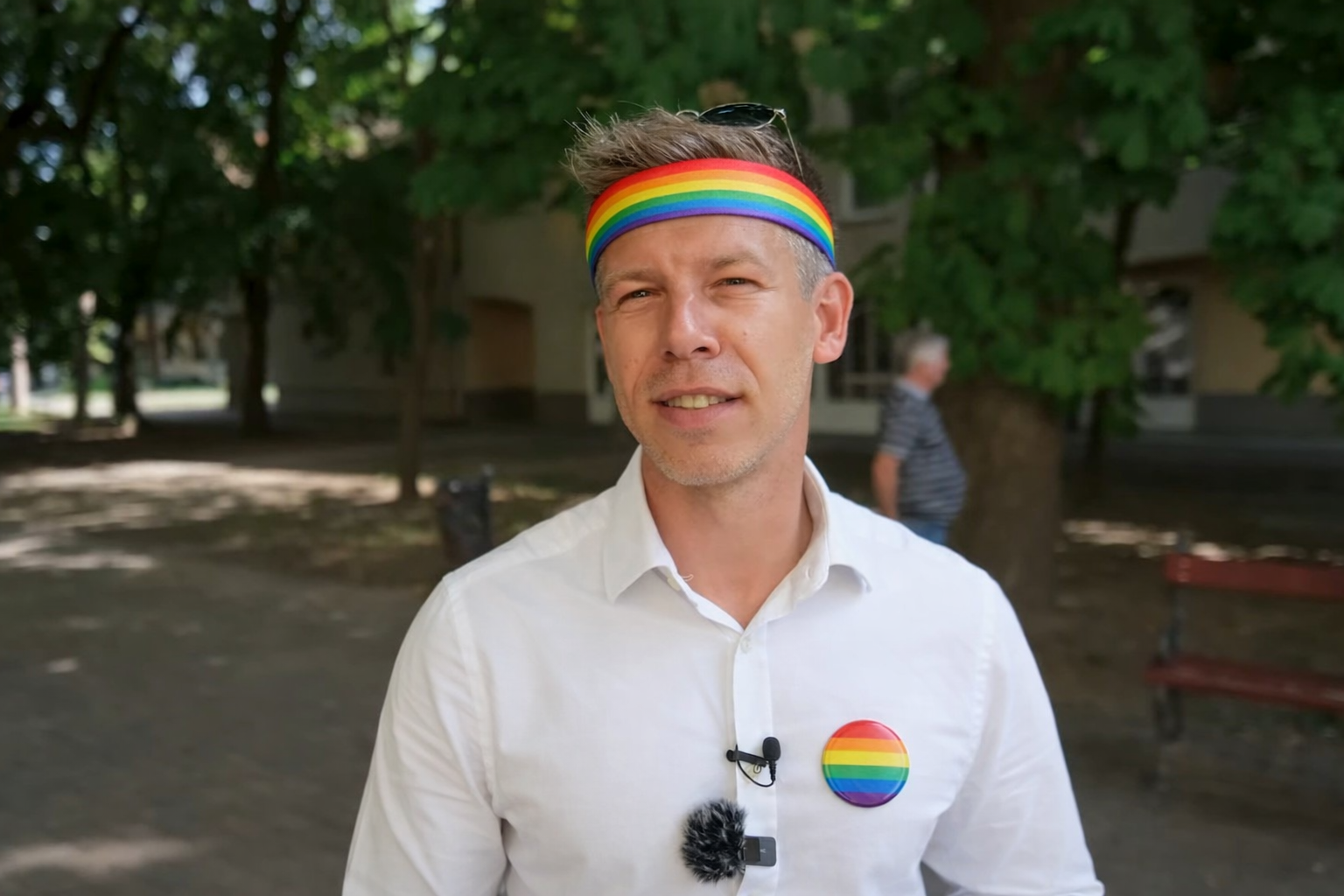
The political landscape of Hungary has been seismically shifted by the rise of Péter Magyar and his TISZA party. For Brussels, Magyar represents a potential end to the “veto-cracy” of Viktor Orbán and a return to the European mainstream. However, for the Hungarian LGBTQIA+ community, which has spent a decade as the primary target of government propaganda, the outlook is more complex. Is the fall of an autocrat automatically a victory for minority rights?
The European Perspective: A Return to the Fold
From the perspective of the European Union, Magyar’s success is undeniably positive. After years of Article 7 proceedings and frozen funds due to rule-of-law violations, Magyar promises a Hungary that functions within the framework of European cooperation. He has pledged to join the European Public Prosecutor’s Office and restore the independence of the judiciary. For the EU, a stable, non-obstructive Hungary is a massive win.
A Conservatism Deeply Rooted
However, it is vital to remember that Péter Magyar is not a progressive liberal; he is a disillusioned conservative. Having spent years within the inner circles of Fidesz, his ideological DNA remains center-right. He frequently emphasizes “traditional family values” and has been careful not to alienate the socially conservative voters in rural Hungary who form the backbone of his growing support.
Magyar’s conservatism is more “European” than Orbán’s radical populism, but it remains cautious. He often frames LGBTQIA+ issues as “distractions” used by the current government to mask corruption. While this de-escalates the hate speech, it also risks side-lining the urgent legal needs of the community.
The Right to Assembly: The Pride “Ban”
One of the most tangible indicators of Magyar’s stance came when he addressed the ongoing pressure against the Budapest Pride March. Hungary has a history of authorities attempting to restrict Pride under various pretexts, from traffic concerns to the controversial 2021 “Anti-LGBTI” law.
In a notable statement, Magyar asserted that while he might not personally participate in such events, he would firmly defend the right to public assembly. He argued that in a healthy democracy, the state’s job is to protect the rights of all citizens to gather and express themselves, regardless of whether the government agrees with their message. For a community that has faced police indifference and legislative hurdles to simply marching in the streets, this commitment to constitutional rights is a significant upgrade from the current administration.
The Victory Speech: “Every Hungarian Matters”
During his victory speech following the European and local elections, Magyar struck a tone of national unity that stood in stark contrast to Orbán’s “us vs. them” rhetoric. He made a point to address the entire nation, stating:
“We will build a country where it does not matter if someone is right-wing or left-wing, where it does not matter what their religion is… we will respect every Hungarian citizen.”
This inclusive rhetoric—the idea that a citizen’s worth is not dictated by their alignment with the ruling party—offers a glimmer of hope. By promising to be a leader for “all Hungarians,” he implicitly includes the LGBTQIA+ community, which has been systematically excluded from the “national cooperation” defined by Fidesz.
Hopeful, but Alert
For the LGBTQIA+ community, a Péter Magyar administration would likely mean the end of state-sponsored hate campaigns and “don’t say gay” style billboards. This alone would drastically improve the mental health and safety of queer Hungarians.
However, “respect” and “right to assembly” are not the same as “equality.” Magyar has shown little appetite for reversing the ban on same-sex adoption or legal gender recognition. He remains a politician who prioritizes the restoration of the state over the expansion of social rights.
The community can find hope in the return of the rule of law and the end of dehumanizing rhetoric. But they must stay alert: in the shadow of a new “national unity,” minority rights can easily be traded for political stability. The battle for a truly inclusive Hungary is far from over; it has simply entered a more civilized phase.


