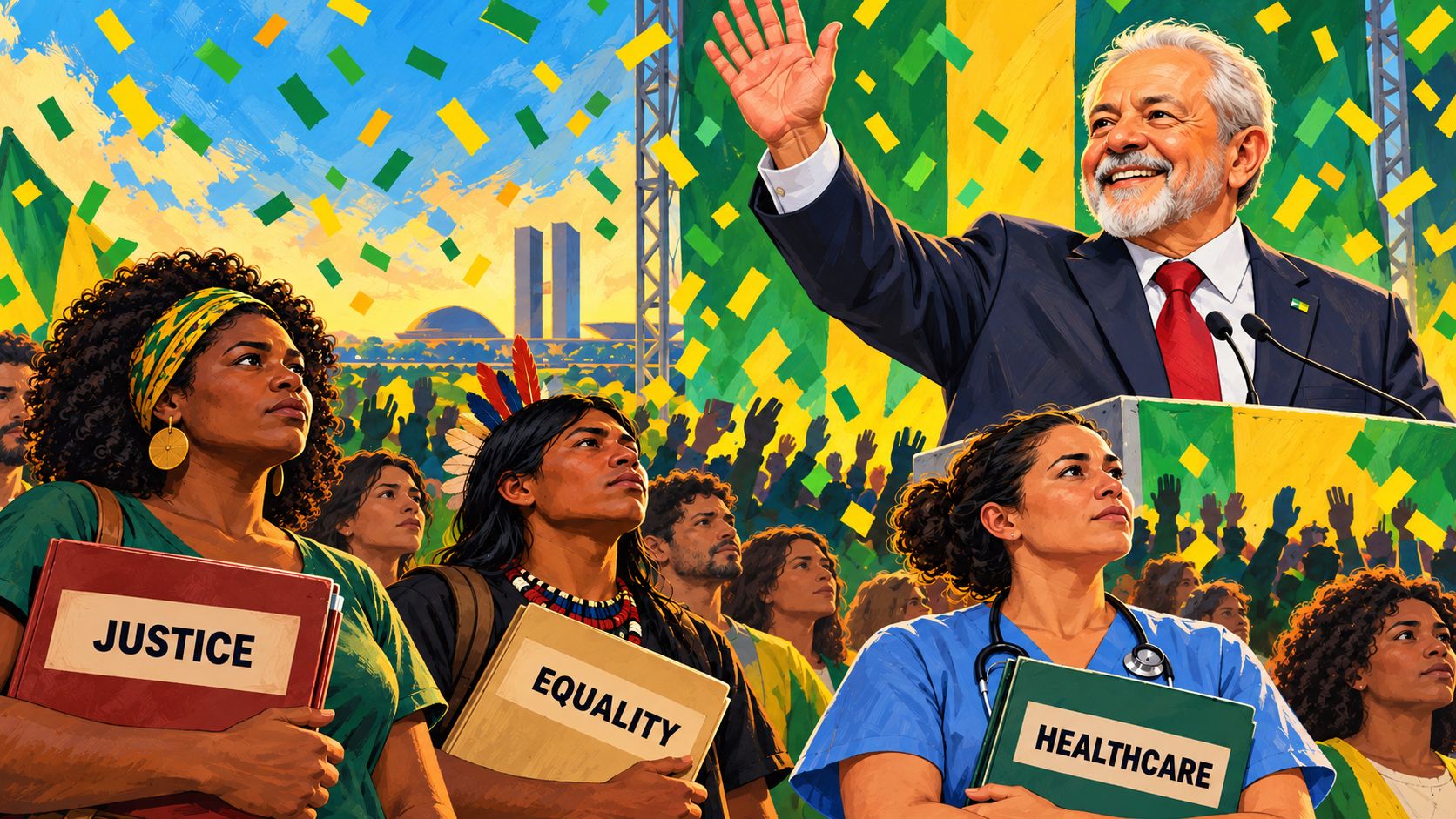
Brazil has denied the Bolsonaro family a return to the presidency. Luiz Inácio Lula da Silva defeated Flávio Bolsonaro in the October 25 runoff, securing a fourth presidential term. The result blocks the immediate return of a political movement whose founder tried to overturn his previous electoral defeat.
That outcome deserves recognition. However, preventing a dangerous government from taking office does not automatically make the winning government a champion of human rights. Brazilians still need protection from police abuse, discrimination, violence, and deprivation. Their rights cannot wait until the celebrations end or the next election approaches.
Lula should face demanding scrutiny precisely because he presents himself as a defender of democracy and social justice. Those principles must shape what his government does, including when protecting them becomes politically inconvenient.
An election victory is an opportunity
Flávio Bolsonaro campaigned on freeing his imprisoned father and confronting Supreme Court justices. His defeat matters because accountability for attempts to subvert democracy should not depend on whether a convicted leader’s relatives can win the next election.
Yet democracy requires more than defeating one authoritarian movement. It also requires independent institutions, transparent government, meaningful political participation, and protection for people who oppose the administration. A government cannot credibly defend those principles while demanding that its own supporters overlook misconduct.
Human rights apply to political opponents as well as allies. Even people convicted of serious crimes retain rights to humane treatment and fair proceedings. A democratic society demonstrates its strength by maintaining those protections when public anger makes them unpopular.
Public security must protect the public
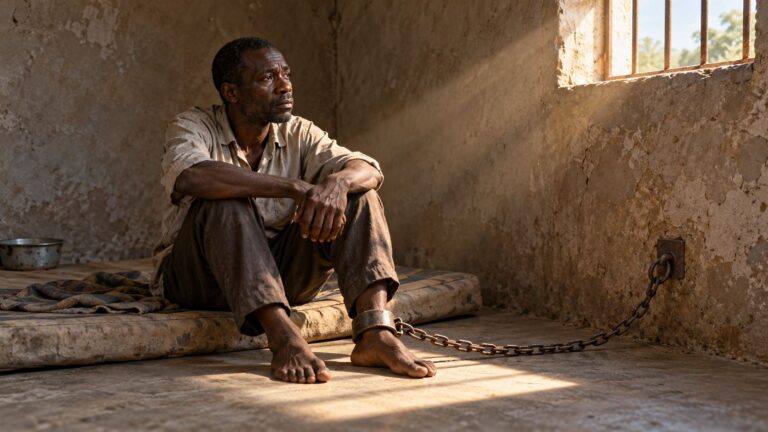
Police violence remains one of Brazil’s most urgent human rights problems. Human Rights Watch reports that police killed 6,589 people in 2025, with killings continuing to rise during 2026 through September. Black Brazilians bear a disproportionate share of the harm. The organization has urged Lula to strengthen accountability and support independent forensic investigations.
The total does not mean every death resulted from unlawful force. It does demand serious scrutiny, reliable investigations, and consequences when officers commit crimes. A uniform must never become protection from accountability.
People living with organized crime deserve effective security. They should not have to choose between fear of criminal groups and fear of the police. Investigating killings, protecting witnesses, and dismantling criminal networks are essential public responsibilities.
Although state governments bear primary responsibility for policing, the federal government has an important coordinating role. Lula cannot personally control every operation. He can make accountability a national priority and resist the political temptation to measure security through body counts.
That temptation extends beyond policing. Human Rights Watch criticized Lula’s October support for trying some 16- and 17-year-olds as adults. Young people who commit serious offenses must face accountability, but punishment should respect their age and prospects for rehabilitation. Copying punitive rhetoric from the right does not make it sound policy.
Women’s rights cannot remain negotiable
Brazil continues to face serious gender-based violence and barriers to reproductive healthcare. Amnesty International recorded at least 1,470 femicides in 2025 and warned that Black women remained disproportionately represented among victims. Institutional recognition of the problem has not yet produced adequate protection.
Women need services that work before violence becomes fatal: accessible shelters, responsive authorities, financial support, and effective enforcement of protective measures. A government’s sympathy after a killing cannot substitute for protection beforehand.
Reproductive autonomy belongs in the same discussion. Brazil permits abortion only in limited circumstances, and access can remain difficult even when the procedure is lawful. Human Rights Watch has documented serious obstacles affecting women and girls who qualify for care.
Religious convictions deserve freedom of expression. They should not give religious organizations authority over everyone else’s healthcare. A secular government must protect citizens whose beliefs differ from those of influential churches and political allies.
LGBTQI+ equality must survive outside the courtroom
Brazil has achieved important legal advances for LGBTQI+ people. Nevertheless, violence and discrimination continue, with transgender people facing particular danger. Legal recognition has not eliminated the gap between formal equality and everyday safety.
The test is practical. Can someone report a threat without humiliation? Can a transgender person access healthcare, find employment, and travel home safely? Do authorities investigate attacks with the seriousness they deserve?
Minorities should not have to repay political support with silence. Voting for the less hostile candidate does not surrender the right to demand stronger protections. Nor should a government treat equality as expendable when conservative opponents mobilize against it.
Social and environmental rights belong together
Lula’s record includes real gains. Amnesty International reports that income-transfer policies helped reduce poverty, while Human Rights Watch recognizes progress in forest protection and Indigenous land demarcation. Those achievements matter because deprivation and environmental destruction directly affect people’s ability to live safely and independently.
However, progress does not settle the remaining claims. Indigenous communities need protection from violence and encroachment. Environmental defenders need to remain alive long enough to exercise the rights governments praise at international conferences.
The same principle applies to housing, food, education, and healthcare. These should be treated as public obligations, with transparent budgets and measurable results. People should not depend on personal loyalty to a president to receive basic support.
Corruption undermines those obligations. Money diverted from public services has human consequences, even when the politicians involved use progressive language. Defending social spending also means defending it from patronage, secrecy, and theft.
Human rights must cross political borders
Brazil should apply the standards it invokes at home to its foreign policy. Condemning abuses by an adversary is easy. Credibility depends on confronting abuses when the responsible government is a trading partner, diplomatic ally, or ideological friend.
Torture does not become acceptable under a left-wing government. Political imprisonment does not become harmless when a state opposes Washington. Equally, Western alliances do not excuse collective punishment, repression, or attacks on civilians.
A consistent position requires independent judgment. Brazil can reject foreign coercion while defending victims abroad. It can pursue diplomacy without pretending that every government deserves the same assessment of its conduct.
Relief must become accountability
Lula will face a conservative-dominated Congress and substantial obstacles to his agenda. Those constraints are real. They make coalition-building and institutional work necessary, but they do not erase the administration’s responsibility for its own priorities and decisions.
Brazil’s voters have created another opportunity to strengthen democracy and protect people vulnerable to abuse. The government should now be judged by what changes for them: whether violence falls, services improve, discrimination meets consequences, and officials answer for wrongdoing.
Bolsonaro’s heir lost the election. Human rights still need budgets, enforcement, political courage, and sustained public pressure. The people celebrating Lula’s victory should be among those demanding them.