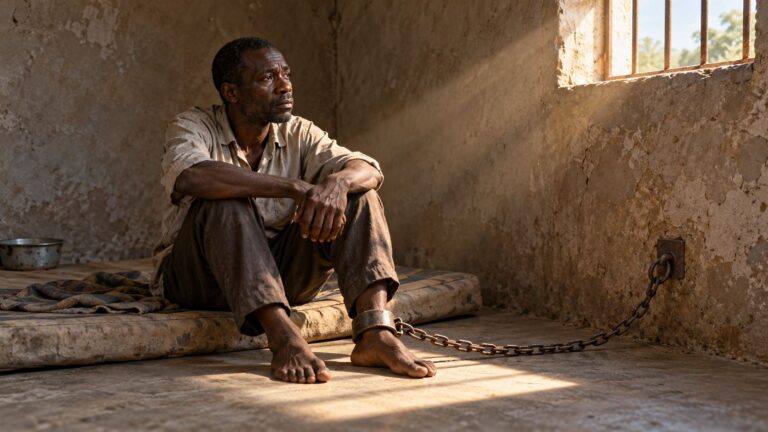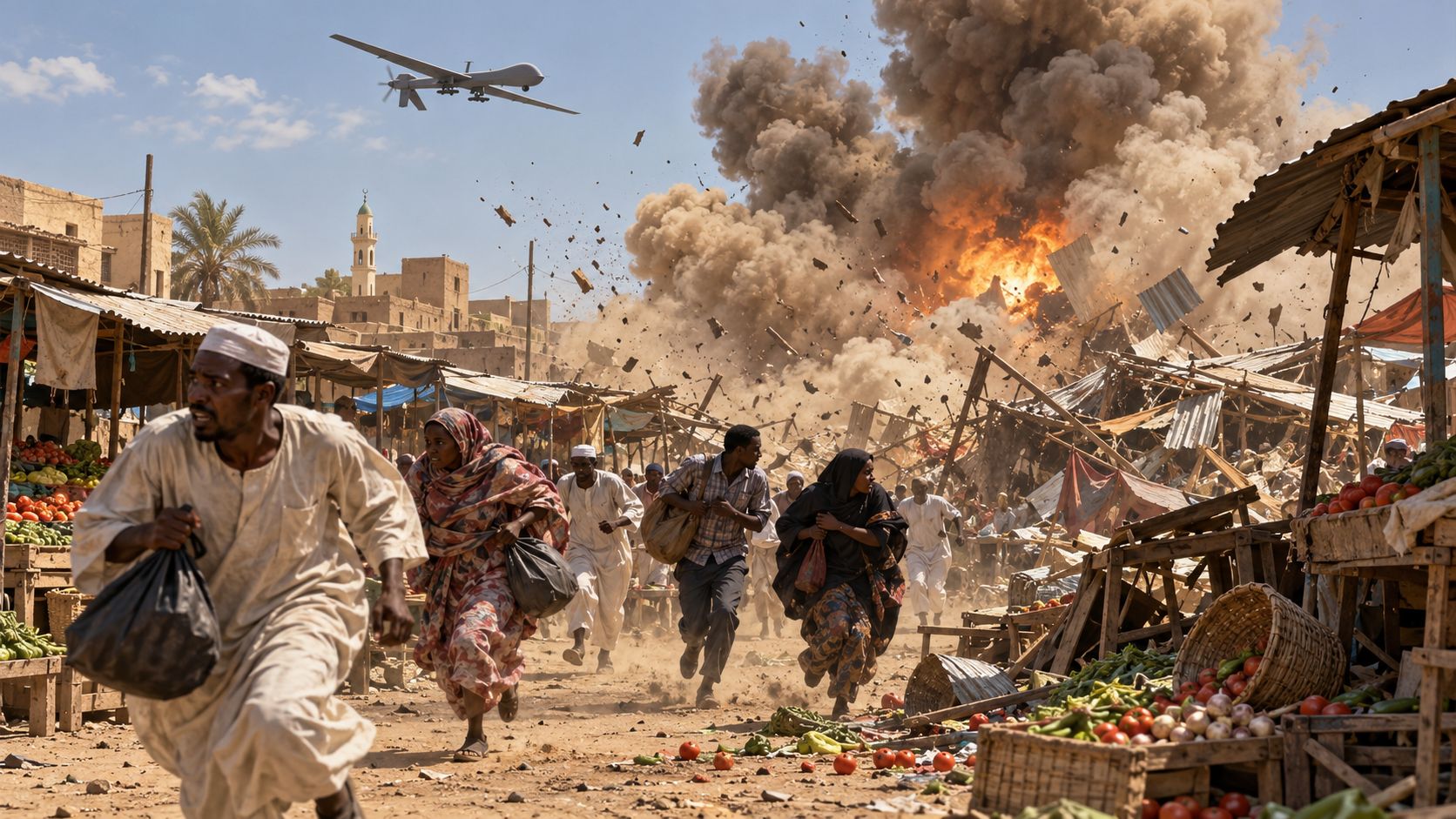
Hundreds of people are dying in drone attacks across Sudan, yet the catastrophe still struggles to command sustained international attention. Markets, homes, hospitals, and places sheltering displaced families have come under attack. The warnings keep arriving. The urgency they should provoke does not.
On October 23, UN human rights chief Volker Türk condemned the escalating strikes. His office documented at least 306 deaths and hundreds of injuries during the first three weeks of October. It attributed attacks to both the Sudanese Armed Forces and the paramilitary Rapid Support Forces.
These deaths should demand more than a passing headline. Instead, Sudan remains trapped in a familiar cycle: another atrocity, another warning, another appeal for help. People who have already lost their homes now face death in the places where they sought safety.
Fleeing does not guarantee survival
The UN’s account includes attacks on displacement shelters in Ghubeish and El Nuhud, in West Kordofan. Between October 6 and 10, strikes attributed to the army killed at least 25 civilians and injured 31 others. Women and children were among the casualties.
On October 9, an alleged RSF drone strike hit displaced people engaged in artisanal gold mining near Abu Shendi in Blue Nile. At least 31 people died, most of them women and children. These were people trying to survive displacement, only to find that the war had followed them.
Elsewhere, the violence has reached into ordinary family life. Emergency Lawyers, a group documenting abuses, reported that a drone attack in Khartoum killed three children aged two, four, and six on October 19. The group blamed the RSF, which did not immediately comment to the Associated Press.
Their ages deserve to be remembered. Reports of military advances and competing territorial claims can obscure what these attacks actually mean: children killed before they could understand the conflict that ended their lives.
A market becomes a disaster site
The violence has also devastated Abyei, the disputed territory between Sudan and South Sudan. Officials reported at least 153 deaths after an October 19 strike on Amiet market ignited a fuel depot. Fires complicated efforts to recover bodies, while medical teams treated wounded people, including patients with severe burns.
Responsibility remained contested. Reuters subsequently reported that Sudan’s government denied involvement. South Sudan initially blamed Sudan’s army, then said the circumstances remained unclear. Diplomats and analysts described the market as part of a fuel supply network serving the RSF.
Those competing accounts require investigation. They must not become an excuse to let the victims disappear behind arguments about supply routes. People worked in that market, depended on it, and sought refuge nearby. Their lives cannot be reduced to the military value someone assigned to the area.
Sudan receives warnings, but not enough attention
Sudan does not receive literally no coverage. Sudanese journalists, international reporters, medical workers, and human rights investigators continue documenting the disaster. Their work makes it possible to know what is happening, often despite extraordinary obstacles.
However, reporting has not produced sustained attention proportionate to the suffering. The Council on Foreign Relations has described Sudan’s prolonged emergency as increasingly abandoned by the international community. Repeated appeals and continuing funding shortages reveal the distance between acknowledging a catastrophe and treating it as a priority.
That distinction matters because neglect has consequences beyond the news cycle. A crisis that fails to retain political attention can struggle to secure the money, diplomatic effort, and public pressure needed to protect people.
Sudanese lives should not have to compete successfully in an attention market before they qualify for concern. Nor should audiences need a familiar Western politician, a viral video, or a geopolitical confrontation involving their own country before mass suffering becomes meaningful.
Surviving the strike is only the beginning
The humanitarian emergency extends beyond those killed or wounded directly. Families must find food, water, shelter, and medical care while conflict destroys the systems that provide them. Displacement can turn an injury or an otherwise manageable illness into a life-threatening emergency.
On October 16, the UN warned that severe rainfall deficits were deepening Sudan’s humanitarian catastrophe. Without urgent funding, humanitarian food and nutrition stocks could run out by early 2027. The warning concerned communities already weakened by years of war and repeated displacement.
Funding is already failing to keep pace. In September, the World Food Programme’s acting head told Reuters that its funding for Sudan had fallen by about half that year. Budget cuts had forced the agency to concentrate assistance on a fraction of the people facing hunger.
This is what inadequate international commitment looks like in practice. People survive violence and then discover that the assistance keeping them alive is shrinking.
Concern must become pressure
The war began in April 2023 between Sudan’s army and the RSF. More than three years later, UN political affairs chief Rosemary DiCarlo told the Security Council that the parties showed no credible commitment to compromise. Continued external support, she warned, helped sustain their belief that they could achieve their objectives through force.
Governments with influence therefore have responsibilities beyond issuing statements. They should press for civilian protection, humanitarian access, and a ceasefire. Donors should fund the assistance that relief agencies are warning they cannot sustain. Alleged atrocities require independent investigation and accountability.
Public attention cannot end this war by itself. But indifference makes it easier for governments to postpone difficult decisions and for suffering to become routine.
Sudan’s dead are not less important because their war has lasted too long, because its armed factions are unfamiliar, or because other crises dominate the headlines. Hundreds of deaths should shake the world’s conscience. The fact that Sudan still has to fight for that response is a failure of ours.