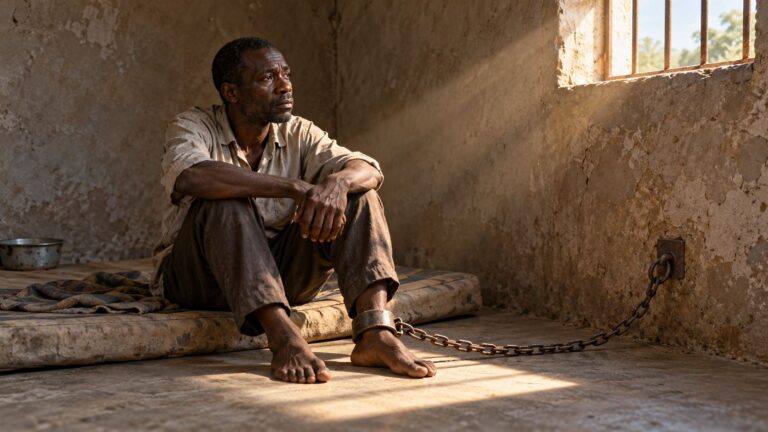
Waterboarding, beatings, prolonged sleep deprivation, mock executions, rape, summary executions, enforced disappearances, arbitrary detention, targeted assassinations, and indiscriminate attacks on civilians. These abuses appear in the documented record of Afghanistan’s war, involving different perpetrators: foreign forces, Afghan government forces and militias, the Taliban, and Islamic State fighters. Some findings establish abuses; others concern alleged crimes that still await a court’s judgment.
As October 7 approaches, the US-led invasion reaches its 25th anniversary. Human Rights Watch says the United States and its coalition partners still have not delivered genuine justice or redress for grave abuses committed during the conflict.
Torture behind the language of security
Human Rights Watch documented torture and mistreatment in US custody, including humiliation and the techniques named above. Some civilian detainees spent months or years imprisoned before authorities released them without charges. Survivors still lack a clear route to seek compensation from the US government.
The US Senate’s investigation into the CIA detention program also exposed abuse far beyond the reassuring phrase “enhanced interrogation.” Its findings described medically unnecessary rectal feeding, ice-water baths, and threats against prisoners’ families. The program operated across several countries; these findings should not all be assigned to Afghanistan.
The Senate committee also concluded that the CIA’s interrogation techniques were not an effective means of obtaining intelligence or gaining cooperation. That finding challenges the argument that brutality was a necessary price for security. More fundamentally, a government’s claim that torture serves a useful purpose cannot replace accountability for what its agents did.
Killings that still demand answers
Australia’s Brereton inquiry found credible information concerning 23 incidents involving the alleged unlawful killing of 39 people by, or involving, Australian special forces. It also identified alleged cruel treatment of two people. Those findings demanded criminal investigation; they were not criminal convictions.
The inquiry recommended compensating families where credible information identified an Afghan victim of unlawful killing, without waiting for a criminal conviction. That distinction matters. A family’s need for recognition and assistance should not disappear while investigators work through a lengthy case.
Britain established an independent statutory inquiry in December 2022. It examines alleged unlawful activity by special forces during detention operations from mid-2010 to mid-2013, alongside the adequacy of subsequent investigations. Its remit therefore concerns both what happened during operations and how authorities responded afterward.
An inquiry can uncover evidence and expose institutional failures. However, establishing one does not itself deliver a conviction, compensation, or an explanation to a bereaved family. Governments must follow evidence through to concrete consequences.
Accountability must cover every side
US-backed Afghan forces and militias also faced allegations of torture, rape, executions, and disappearances. Meanwhile, Taliban attacks killed civilians, and Islamic State attacks targeted Hazara and other minority communities. Accountability must address each perpetrator’s conduct rather than depend on political allegiance.
In October 2025, the UN Human Rights Council established an independent investigative mechanism for Afghanistan. Its mandate includes collecting, preserving, and analyzing evidence of international crimes and preparing files to support fair criminal proceedings. It explicitly includes violations against women and girls.
This offers a way to protect evidence for future cases. Still, an evidence archive cannot prosecute anyone by itself. Governments must provide resources, protect witnesses, and enable courts to act on the material investigators assemble.
Twenty-five years should strengthen the urgency of justice, not weaken it. Afghan survivors and bereaved families deserve investigations that establish responsibility, prosecutions where the evidence warrants them, and meaningful redress. An anniversary statement is no substitute for any of those things.