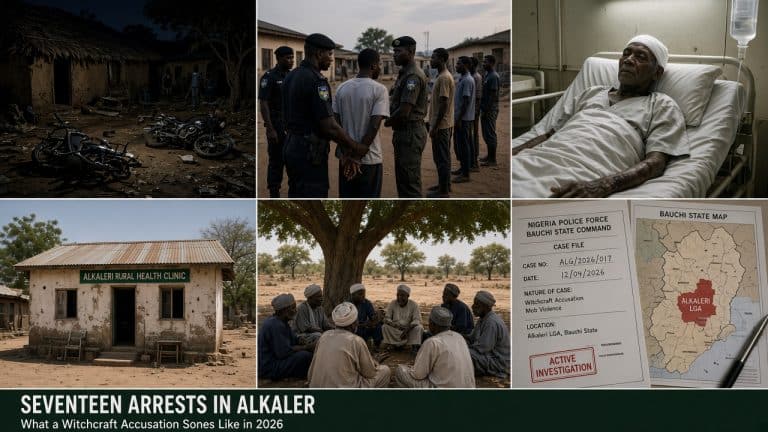
In Bauchi State, where I live, only 10.9 percent of surveyed health facilities had at least one medical doctor, according to a 2022 health facility assessment cited in BudgIT’s 2024 State of States report.
That means the vast majority of facilities were operating without a doctor on site. Many depend on other categories of health workers, while some facilities struggle with severe staffing shortages.
The shortage is even more striking when measured against the population. The 2025 SBM Health Preparedness Index reported that Bauchi had about one doctor for every 54,249 people the highest patient-to-doctor ratio among Nigeria’s states.
Let that number settle. One doctor for every 54,249 people.
The contrast with parts of southern Nigeria is stark. The same assessment reported substantially lower patient-to-doctor ratios in states such as Lagos, Enugu, and Edo.
The same country. Vastly different access to healthcare.
This did not happen by accident. It grew out of a system whose priorities were established more than a century ago, concentrated healthcare in urban and administrative centres, and left successive governments with an unequal foundation they have never fully dismantled.
Where the design came from
The origins of Nigeria’s health inequality can be traced to the colonial era, when medical services were concentrated in urban and administrative centres serving expatriates and colonial officials, leaving rural areas with minimal infrastructure.
Colonial healthcare was concentrated largely in major urban and administrative centres, where it served colonial officials, commercial interests, and growing populations. Lagos became an early centre of modern medical infrastructure, while cities such as Port Harcourt and Enugu also received significant investment.
Northern Nigeria developed medical facilities as well, but coverage remained much thinner, particularly outside major administrative centres. Rural communities were often left with limited access to formal healthcare.
Nigeria’s psychiatric history dates back to the colonial era, with the establishment of the Lunacy Ordinance in 1916. Early asylum centres were established in Calabar in 1903, Yaba in 1907, and Lantoro in 1944.
The early development of formal psychiatric institutions was concentrated in the south, leaving Northern Nigeria with far fewer specialised mental-health facilities and services. This geographic imbalance would have consequences long after colonial rule ended.
Colonial investment in infrastructure and healthcare was closely connected to administrative and economic priorities. Ports, railways, commercial centres, and colonial administrative headquarters received greater investment, while many rural communities remained poorly served. Northern Nigeria was integrated into the colonial economy through the production and export of commodities such as groundnuts, hides, and skins, but healthcare infrastructure remained unevenly distributed across the region.
The result was a healthcare system whose infrastructure was concentrated in selected urban and administrative centres, while large rural populations had much more limited access to formal medical services.
That inequality was already embedded in the geography of Nigeria’s healthcare system before independence. When Nigeria became independent in 1960, it inherited a health system shaped by decades of colonial priorities and uneven investment. Successive governments have expanded healthcare provision, but the geographic and regional disparities in access have never been fully eliminated.
What independence did not fix
Successive Nigerian governments have introduced health policies, programmes, and reforms aimed at expanding access to healthcare. Yet major regional and rural disparities have persisted, particularly in Northern Nigeria. The problem is therefore not simply the absence of health policies. It is the gap between policy commitments and what reaches people on the ground.
The northern part of Nigeria has lower educational achievement than the south, a factor known to influence health-seeking behaviour. Limited health literacy can affect when and where people seek care, while distance, cost, availability of services, and trust in healthcare providers can also shape those decisions. In communities where formal healthcare is difficult to reach or unaffordable, people may rely more heavily on traditional healers or informal medicine sellers.
This means that Northern Nigeria’s healthcare crisis cannot be explained by infrastructure alone. Access, affordability, education, and trust all influence whether people receive appropriate medical care.
By 2024, zero-dose prevalence in the North-West had risen to 47.4 percent meaning nearly half of children in the region were estimated to have received no routine vaccination. The problem is not simply whether vaccines exist, but whether vaccination services can consistently reach the communities that need them.
Across the North-West geopolitical zone, only 18.2 percent of births were attended by a skilled healthcare provider, compared with 43.3 percent nationally. In other words, fewer than one in five births in the region had a skilled provider present. The figures reveal how sharply access to skilled maternal healthcare varies across Nigeria.
Behind these numbers are real consequences: children who remain vulnerable to preventable diseases, women who face greater risks during childbirth, and families who may have to travel long distances to reach healthcare. For people living far from functioning facilities, distance, shortages of staff, medicines, and essential services can turn treatable conditions into life-threatening ones.
Mental health: The most invisible crisis
Northern Nigeria’s broader healthcare shortage is severe, but the shortage of mental-health services presents an additional and particularly neglected challenge.
The Association of Psychiatrists in Nigeria has raised alarm over the country’s critical shortage of mental health professionals, revealing that fewer than 200 psychiatrists are available to serve Nigeria’s population of over 200 million people. A more recent figure puts the number at under 300.
Mental health receives less than 3.5 percent of the health budget, with more than 90 percent of available mental health resources going to hospitals which are concentrated in urban centres.
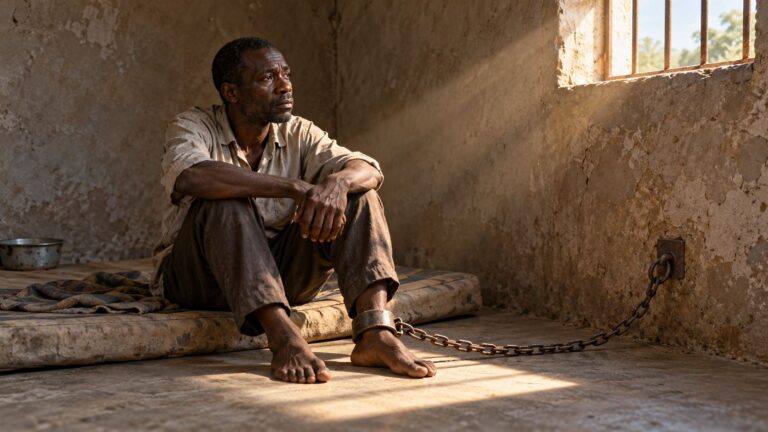
The consequences are visible in the way some families respond to mental illness. When specialised psychiatric care is unavailable, unaffordable, or too far away, families may turn to spiritual healing centres or other informal forms of care. In some facilities, people with mental-health conditions have been subjected to chaining and other forms of inhumane treatment not because these practices are medical treatment, but because a severe gap exists between the care people need and the services available to them.
Mental disorders affect 25 to 30 percent of Nigerians, yet formal professional services reach fewer than 10 percent of those requiring them.
Some unregulated healing centers have filled part of the gap left by limited access to formal mental-health services. In some cases, however, people with mental-health conditions have been subjected to chaining and other forms of inhumane treatment. The existence of these practices reflects a wider failure to ensure that people can access safe, evidence-based mental-health care in their communities.
What the law says patients are owed
As a Law student, I find it useful to read what Nigerian legislation actually promises and then look at what is actually delivered.
The National Health Act of 2014 established a legal framework for a Basic Minimum Package of Health Services and created the Basic Health Care Provision Fund to support the provision of essential health services, particularly through primary healthcare. The Act also requires healthcare providers to provide emergency treatment and prohibits the refusal of emergency care on grounds of payment.
The law provides for an annual contribution to the Fund equivalent to at least one percent of Nigeria’s Consolidated Revenue Fund.
The National Mental Health Act of 2023 a major reform of Nigeria’s mental-health law establishes rights and protections for people with mental-health conditions, prohibits discrimination and inhumane treatment, and provides for a community-based approach to mental-health services.
On paper, Northern Nigeria’s patients have rights.
In practice, mental health legislation in Nigeria dates back to 1916 and retained its colonial orientation for decades. The Mental Health Act is a major achievement, but the real test is implementation.
A law can establish rights and obligations, but its impact depends on implementation. The gap between Nigeria’s legal commitments and the reality of healthcare access in Bauchi illustrates the distance between what the law provides for and what many citizens can actually access. When a state has roughly one doctor for every 54,249 people, the question is no longer simply what the law promises, but whether those promises are reaching the people they are meant to protect.
What needs to happen and what the evidence says
The healthcare gap between north and south is not inevitable. Evidence from Nigeria and other low- and middle-income countries points to several interventions that can improve access to healthcare in underserved communities when they are properly funded, implemented, and sustained.
Financial and non-financial incentives can improve the recruitment and retention of healthcare workers in underserved areas, but their effectiveness depends on how they are designed and sustained. In Nigeria, efforts to encourage health workers to serve in rural communities have included financial incentives, rural postings, training opportunities, and other support measures. Evidence suggests that incentives can help attract and retain staff, but poor working conditions, inadequate infrastructure, limited career opportunities, and weak implementation can reduce their long-term impact.
Community health workers can help extend basic healthcare to communities that are poorly served by conventional health facilities. Nigeria’s Community Health Extension Worker programme is designed to provide essential primary healthcare closer to where people live. Where community health workers have adequate training, supervision, supplies, and support, they can play an important role in maternal and child health, disease prevention, health education, and referrals. However, shortages of staff, equipment, medicines, and funding can limit the effectiveness of these services, particularly in underserved rural communities.
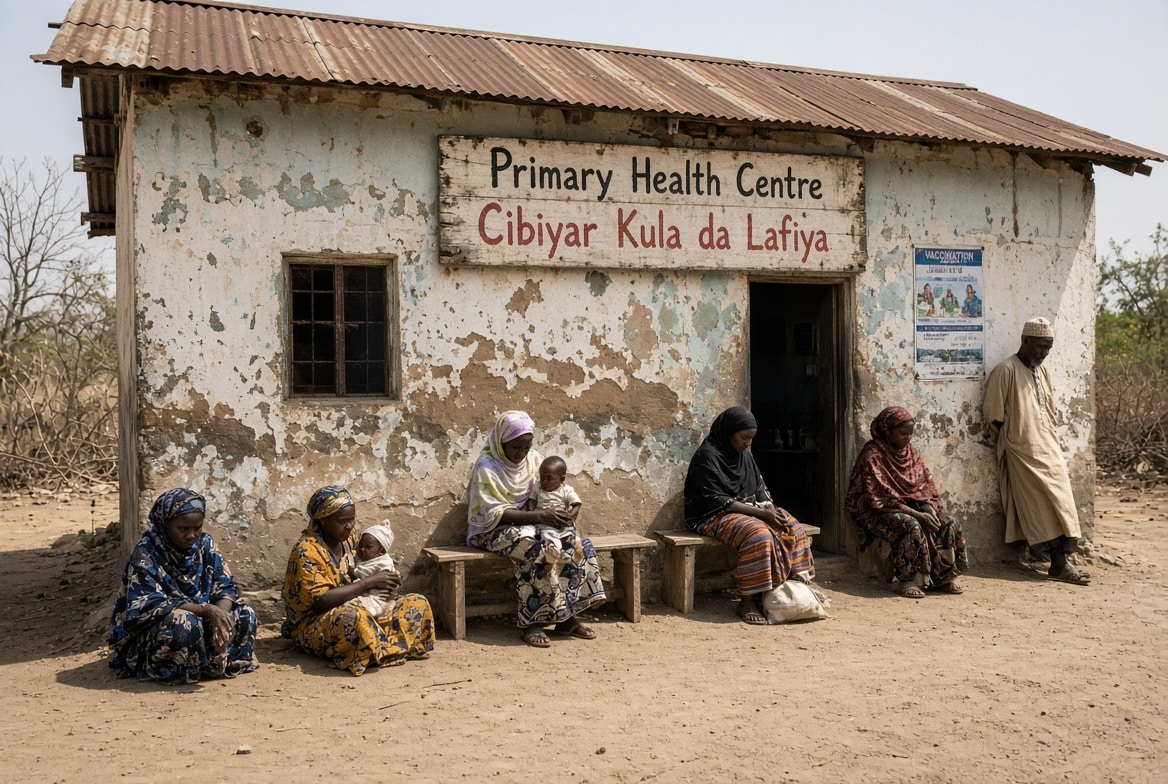
Strengthening primary healthcare can improve access to essential services, particularly for people living in rural and underserved communities. Effective primary healthcare can support immunisation, maternal and child health, early diagnosis, disease prevention, and referral to higher-level facilities when necessary. For Northern Nigeria, where many communities are far from major hospitals, investing in functional primary health centres, trained staff, medicines, and reliable referral systems could reduce some of the barriers that prevent people from receiving timely care.
Health insurance can reduce the financial barriers that prevent people from seeking healthcare when they need it. When patients have some protection from out-of-pocket costs, they may be better able to access preventive care, treatment, and essential services without facing the full cost at the point of use. Nigeria’s National Health Insurance Authority provides the framework for expanding health insurance coverage, including through state-level and community-based schemes. Expanding effective coverage in underserved communities could improve access to maternal, child, and mental-health services, particularly where cost is a major barrier to care.
None of these recommendations is new. Similar proposals have appeared repeatedly in Nigerian health policies and reform efforts over the years. The challenge is not simply identifying what needs to be done, but ensuring that policies are adequately funded, implemented, monitored, and sustained over time.
The sound outside the walls
Nearly two decades later, the challenges of access and staffing remain visible in more recent data. A 2024 BudgIT assessment found that only 10.9 percent of surveyed health facilities in Bauchi State had at least one medical doctor.
The numbers have changed over time, but the underlying problem remains: for many communities, reaching a functioning health facility with the staff, medicines, and services they need is still a major challenge.
Healthcare is not simply a service the state provides when resources allow. It is recognised as a right within Nigeria’s legal framework and under international human-rights standards. Yet access to healthcare remains deeply unequal across Nigeria, with many communities in Northern Nigeria facing greater barriers related to distance, staffing, affordability, infrastructure, and availability of essential services. The challenge is therefore not only to recognise healthcare as a right, but to ensure that this right is meaningful in the daily lives of the people it is meant to protect.
The problem is not simply that healthcare facilities were never built. Northern Nigeria has hospitals and primary health centres, but access to them remains uneven, and many facilities face shortages of staff, medicines, equipment, or reliable services. In some communities, the nearest functioning facility may still be too far away or unable to provide the level of care that patients need. The challenge is therefore not only building more facilities, but ensuring that existing and new facilities are properly staffed, equipped, funded, and accessible to the communities they serve.
From a Humanist perspective, the principle is simple: every person’s life and dignity deserve equal consideration, regardless of where they live. A child in Bauchi State should have the same basic opportunity to receive essential healthcare as a child in Lagos. A woman giving birth in Zamfara should not face avoidable barriers to skilled maternal care simply because she lives in a different part of the country.
Until that principle is reflected in public spending, healthcare-worker deployment, infrastructure, and service delivery, the gap between legal rights and lived reality will remain. For millions of people in underserved communities, access to timely, affordable, and effective healthcare will continue to depend too heavily on where they live.