If you walk into the outskirts of certain towns here in Northern Nigeria, you might hear a sound that does not belong in the 21st century. It is the rattling of metal chains.
In my society, mental health awareness is dangerously low. When a young man suffers from a condition like schizophrenia, or a woman goes through severe postpartum depression, the community rarely sees a medical crisis. They see demons. They see Jinn. And to cure these “demons,” families often bypass the hospital and head straight to traditional or religious healing centers.
The Mental Health Gap
The root of this problem is a massive healthcare vacuum. According to the Association of Psychiatrists in Nigeria (APN), there are fewer than 300 licensed psychiatrists serving a population of over 200 million people.
Because modern psychiatric care is either too expensive, inaccessible, or heavily stigmatized, desperate families turn to spiritual healers and Rukiyya (exorcism) practitioners. While faith-based support is a personal right, the problem begins when unregulated centers use religion as a cover for abuse and extortion. While some of these clerics simply offer prayers and harmless counsel, a growing number of unregulated “healing centers” have turned this desperation into a structure of horrific abuse.
Documented Abuse and the Illusion of Healing
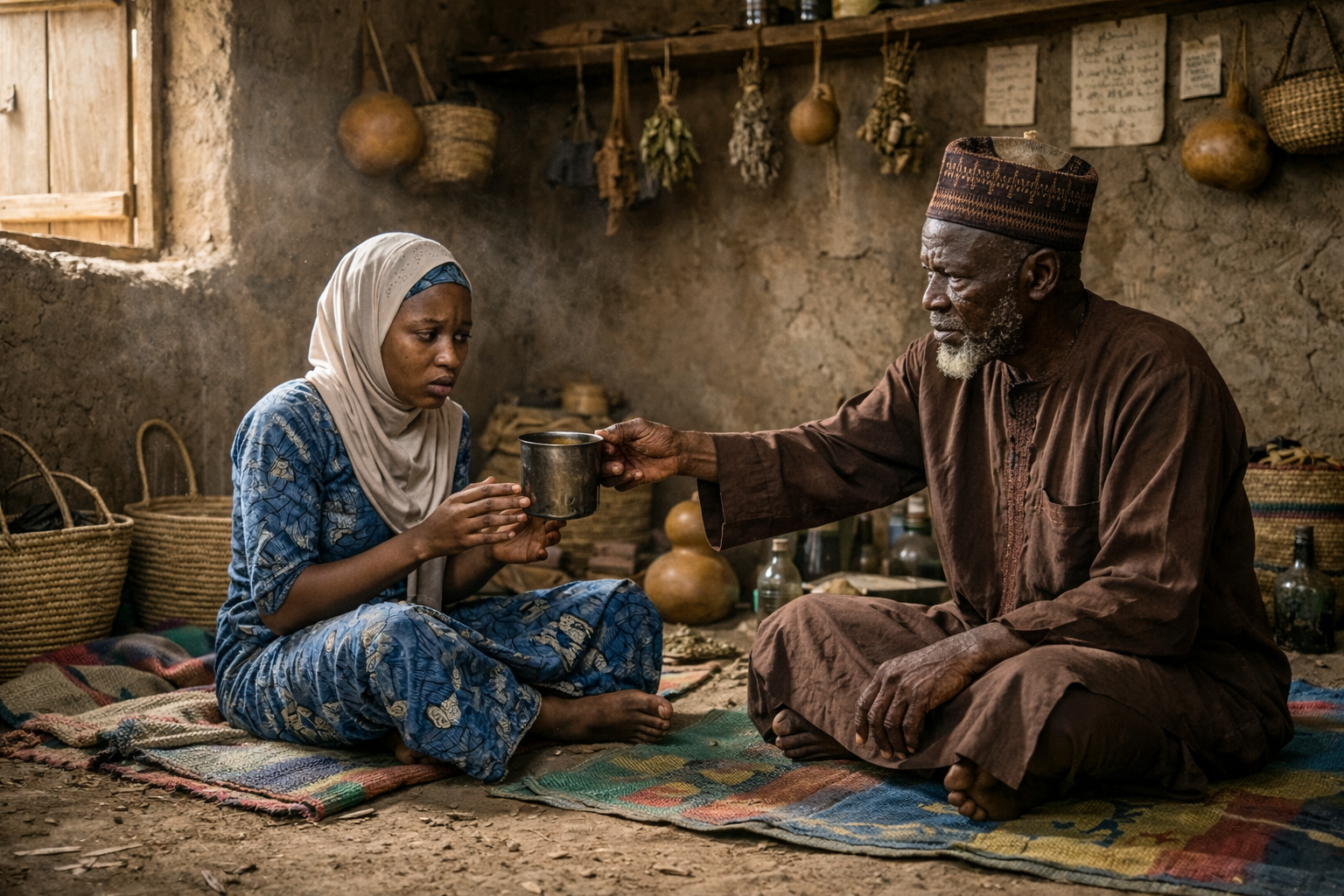
Behind the closed doors of some of these unregulated centers, vulnerable patients are subjected to extreme cruelty. To convince a family that their loved one is possessed, certain fake spiritual healers use a brilliant but dangerous trick: they force the patient to drink unverified, dark herbal mixtures.
These concoctions are often laced with unregulated psychoactive roots and local hallucinogens. When the patient’s brain chemistry reacts to the toxins—causing them to hallucinate, scream, or become disoriented—the cleric points to the reaction as “proof” that the demon is manifesting.
But the exploitation goes far beyond chemical manipulation. Human Rights Watch (HRW) has extensively documented the horrific conditions in many of these traditional rehabilitation centers across Nigeria. Their reports reveal that thousands of people with actual mental health conditions are chained to walls, starved, and brutally beaten under the guise of driving out evil spirits.
Furthermore, the vulnerability of female patients has led to tragic outcomes. Over the past few years, the Nigerian Police Force has raided several illegal healing centers in states like Kano and Katsina, as documented in Human Rights Watch’s November 2019 report. These police raids have rescued chained inmates and exposed documented cases of severe sexual assault and rape committed by so-called “holy men” against heavily sedated female patients. The tragedy is that if a victim tries to speak out, the community often silences her, blaming her accusations on the “angry demon” inside her.
Economic Exploitation
This unregulated system also drains families economically.
When fake clerics see a desperate family, they turn the exorcism into a lucrative business. They convince the family that the “demon” is stubborn and requires a blood sacrifice or special rituals before it leaves the body. The family is pressured to buy expensive black rams, goats, or pay huge sums of money for special prayers.
The cleric ends up enriching himself, while the impoverished family is left completely bankrupt, waiting for a miraculous cure for a medical disease that will never be healed by animal blood.
The Solution: Therapy, Not Chains
This is the terrifying reality of abandoning science for superstition. When we replace psychiatrists with exorcists, and hospitals with spiritual torture chambers, we surrender our most vulnerable citizens to predators.
Mental illness is a medical condition rooted in human biology, not a curse from the unseen world. It requires clinical medication, professional therapy, and deep compassion. It certainly does not require metal chains, hallucinogenic drugs, or extortion.
To fix this, the government must step in to aggressively regulate these religious healing centers and shut down abusive facilities. More importantly, we need a massive public education campaign to demystify mental health. We must shine a light into these dark rooms and help our society choose science over silence.