Every year, when the final ten days of Ramadan arrive, many people in Northern Nigeria already know what is coming. It is not just a period of increased devotion. For a lot of residents, it marks the beginning of several nights filled with relentless noise and sleeplessness.
During this time, late-night prayers are performed in the hope of finding Laylat al-Qadr, often called the “Night of Power.” But the way these prayers are conducted in many places goes far beyond personal worship. Instead, it becomes something imposed on entire communities.
Midnight Loudspeaker Chaos
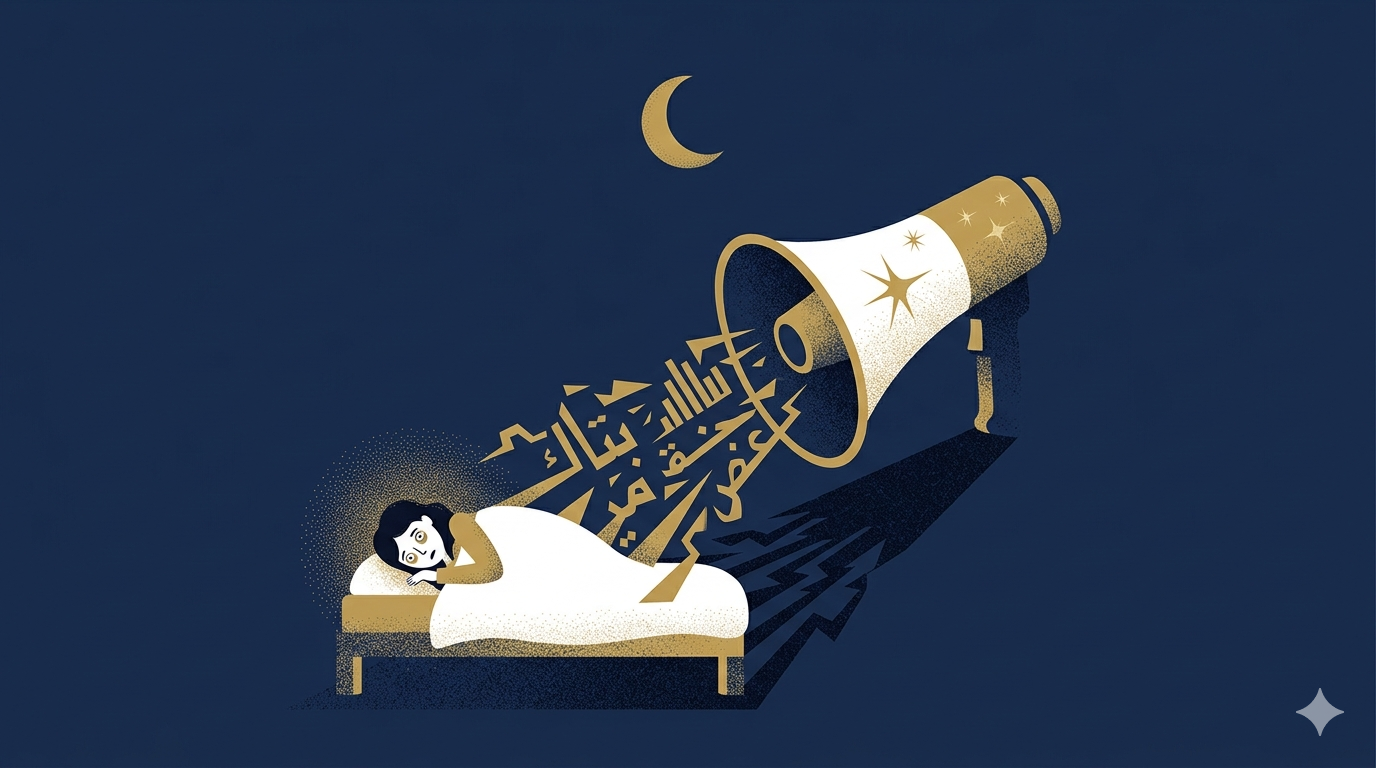
From around midnight until 3:00 or even 4:00 AM, mosques across many neighborhoods turn their outdoor loudspeakers to maximum volume. Prayers, sermons, and recitations are broadcast across entire streets and communities.
No one stops to consider whether there are sick people trying to rest.
No one considers infants who need sleep.
No one considers people who must wake early for work.
Whether you want to hear it or not, you are forced to listen.
A Simple Question of Logic
If worship is meant to be a personal connection between a believer and the deity they pray to, why must it be broadcast through powerful loudspeakers across an entire town?
If someone chooses to pray in the middle of the night, that is entirely their right. But using massive loudspeakers that keep thousands of people awake turns private devotion into a public disturbance.
If worship is a personal conversation with the divine, why does it require amplification that reaches thousands of unwilling listeners?
Worship or a Display of Power?
In reality, it often begins to look less like devotion and more like competition. Which mosque can be louder? Which preacher can dominate the night with the longest sermon? Who can display the most visible form of piety? In such situations, prayer starts to feel less like a sincere act of faith and more like a performance—an assertion of religious dominance over public space.
The Daytime Consequences
After nights of noise and interrupted sleep, the effects spill into the daytime. People wake up exhausted. Offices, banks, and schools are filled with tired workers who struggle to concentrate.
A society that needs energy, focus, and productivity to progress cannot function well when entire communities are repeatedly deprived of sleep in the name of religious activity.
Freedom Should Work Both Ways
Freethinking encourages people to question, to reason, and to respect individual freedom.
People absolutely have the right to practice their religion. But others also have the right to peace, quiet, and rest in their own homes.
If faith is truly strong, it should not need massive loudspeakers to prove its presence. Genuine spirituality can exist quietly. A Path Forward
Respecting both religious freedom and community wellbeing does not require choosing one over the other.
Mosques can still conduct late-night prayers. Believers can still seek Laylat al-Qadr with devotion. But this can be done with indoor sound systems that serve worshippers inside the mosque without imposing on thousands of sleeping residents outside.
In many modern Muslim-majority countries, mosques use volume controls and directional speakers to respect their neighbors while maintaining their religious practices.
The question is not whether people should pray. The question is whether religious expression requires forcing entire communities into sleeplessness. But forcing an entire community to endure sleepless nights in the name of devotion is not spirituality—it is simply public disturbance.