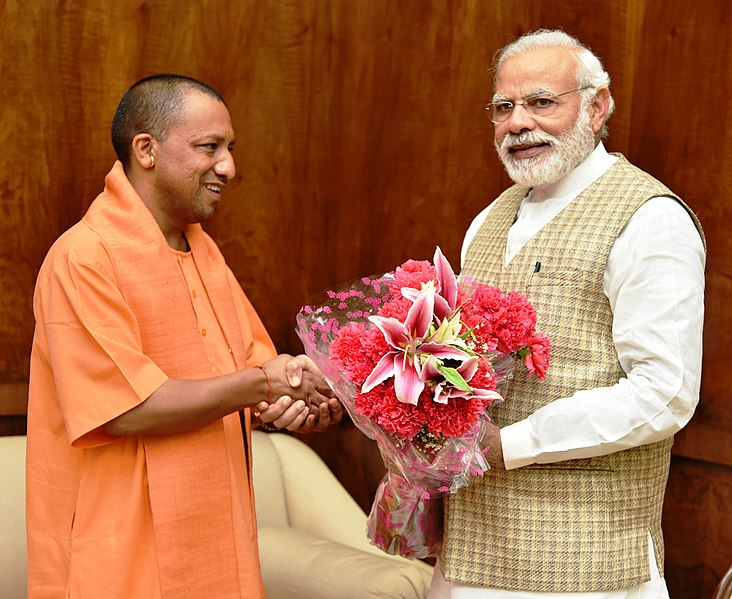
The Allahabad High Court’s recent support of Uttar Pradesh’s anti-conversion law, claiming it upholds secularism, is a controversial development in Indian politics. Uttar Pradesh, India’s most populous state, is politically significant and currently governed by Yogi Adityanath, a leader from the Bharatiya Janata Party (BJP). The law, enacted in 2021, primarily aims to prevent religious conversions under duress or through fraudulent means.
However, critics argue that the law can be misused to target minority communities, particularly Muslims and Christians, under the guise of protecting “secularism.” The law’s proponents see it as a necessary measure to maintain religious harmony, ensuring that individuals are not coerced into changing their religion.
The timing of this decision is also worth noting. In recent years, communal tensions in India have been on the rise, and the political climate, particularly in Uttar Pradesh, has increasingly favored hardline stances on religious issues. The ruling could be seen as part of a broader strategy by the BJP to consolidate its voter base by appealing to Hindu nationalism.
While the court’s intent to uphold secularism is commendable, the law’s implementation could lead to unintended consequences, such as the suppression of genuine religious expression and conversion. The balance between protecting individuals from coercion and ensuring freedom of religion is delicate, and how this law will be applied in practice remains a key concern.
In conclusion, while the anti-conversion law might appear to protect secular values, its potential for misuse raises significant concerns about religious freedom in Uttar Pradesh and India as a whole.