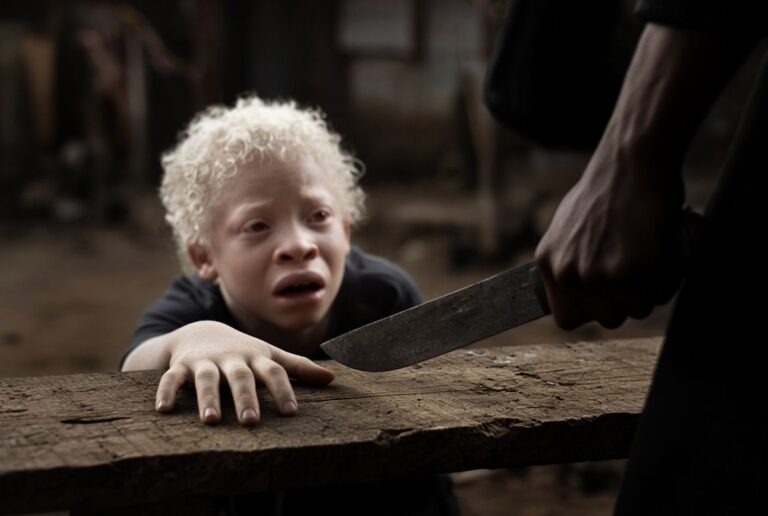
In March 2025, sixteen Hausa hunters travelling to Kano were lynched by a mob.
They had not committed any crime. They were reportedly killed after a mob suspected they were Fulani. The mob could not tell the difference or did not try to.
This is what ethnic profiling does when it is allowed to run unchecked. It does not stop at the guilty. It cannot. Because it was never really about guilt. It was about identity.
The story of the Hausa and the Fulani is one of the most misread stories in Nigerian history. In recent years, that misreading has become dangerous. Some politicians exploit these divisions. Sections of the media amplify them, while social media often accelerates their spread. And ordinary people Hausa farmers and Fulani pastoralists who have lived alongside each other for centuries pay the price.
This article is about the history. What actually happened. And what is actually at stake.
How two peoples became one identity
The Hausa and the Fulani were not always a single identity. They came from different origins, different cultures, different ways of life.
The Hausa people are indigenous to the region and established powerful city-states and kingdoms centuries ago. The Fulani, also known as Fulbe or Peul, are traditionally a nomadic pastoral people who migrated into Hausaland over several centuries from West Africa’s Sahel region.
For most of their early history, the relationship was one of coexistence rather than unity. Hausa farmers and Fulani pastoralists occupied different ecological niches. They traded. They sometimes competed. But there was no single shared identity.
That relationship changed dramatically in 1804 with the Sokoto Jihad, which reshaped political authority across much of Hausaland.
The idea of Hausa-Fulani unity was shaped by history, particularly following the 19th-century Sokoto Jihad, which led to the establishment of the Sokoto Caliphate. Fulani Islamic scholars and leaders became political rulers in many Hausa city-states, while Hausa culture, language, and social systems remained dominant in everyday life. Over time, many Fulani adopted Hausa language and customs, while Hausa communities accepted Fulani leadership within Islamic governance structures.
The aftermath of the conquest produced a more complex outcome than a simple transfer of political power. Although the Fulanis had taken over Hausaland, it is as though the Hausas absorbed them instead Hausa was adopted as the general language of the Caliphate. The conquerors adopted the language of the conquered. The conquered accepted the governance of the conquerors.
In cities such as Kano, Katsina, Zaria, and Sokoto, people identified more with religion and region than with strict ethnic labels. The term Hausa-Fulani came to symbolise unity, political cohesion, and shared values rather than ethnic difference.
This was not a merger enforced from above. It was a convergence that happened from below through intermarriage, through shared faith, through the daily reality of living in the same cities, speaking the same language, burying the dead in the same cemeteries.
Over time, intermarriage, shared Islamic faith, and political integration led to significant cultural convergence. The Hausa language serves as the lingua franca across northern Nigeria and is widely spoken throughout West Africa.
By the time the British arrived in 1903, the distinction between “Hausa” and “Fulani” was already blurred beyond easy separation in many communities. When the British arrived, they recognised this evolving political and social order and incorporated it into their system of indirect rule. Their indirect rule system funnelled governance through the emirate structure treating the Hausa Fulani as a unified administrative bloc. Whatever tensions existed within that bloc, colonial policy required that it function as one unit.
What two centuries of integration had built, colonial administration then institutionalised.
What the narrative of division looks like and who is spreading it
In recent years, this long-standing identity has come under serious strain.
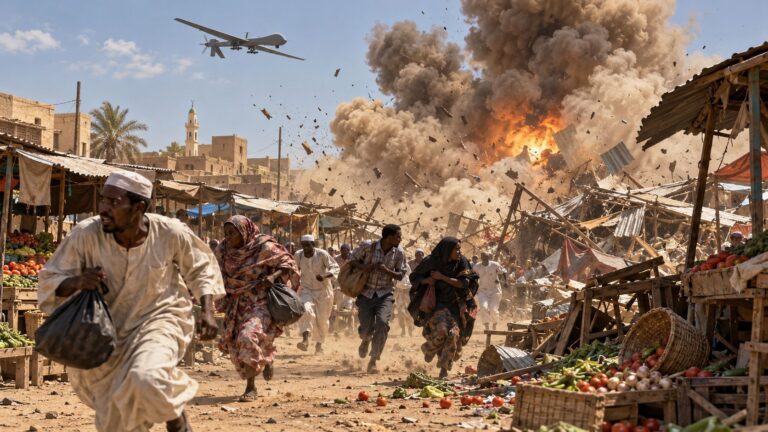
The strains are real. The farmer-herder conflict has killed tens of thousands of people. Violence involving armed groups that include some individuals identified as Fulani has been widely documented and condemned. These are real security challenges, but they do not justify treating an entire ethnic group as collectively responsible.
But there is a difference between acknowledging real violence and treating an entire ethnic group as a suspect population.
The social construction of the Fulani ethnic group by the media and political actors in Nigeria as foreigners, uncivilised savages, terrorists, rapists, and armed bandits with a hidden agenda to Islamise non-Christian Nigerians has led to the failure of well-intentioned policy initiatives to minimise conflicts between peasants and pastoralists.
A review of crime reporting patterns shows that ethnic identifiers such as “Fulani herdsmen” are frequently used in headlines about violence in parts of the country. The Fulani are one of Africa’s largest and most geographically dispersed ethnic groups, living across West and Central Africa. In Nigeria, they are not a monolithic community. Some are nomadic pastoralists, others are semi-settled agro-pastoralists, and many are fully urbanised professionals, traders, civil servants, and academics.
The Fulani lecturer, trader, civil servant, teacher, doctor, or business owner rarely appears in headlines. Yet they represent the everyday lives of millions of Fulani whose stories receive little public attention.
A Fulani community in Tangaza Local Government Area of Sokoto State was burned down by Yan Sakai after bandits attacked a commercial vehicle. Members of the Tangaza community were misrepresented as bandits because they shared the same language as the real perpetrators.
This is how ethnic profiling works. A violent attack occurs. An ethnic identity is attached to the crime. Suspicion then spreads beyond the perpetrators to an entire community, while the individuals responsible disappear behind collective blame.
More than half of the civilians killed by the military or ethnic militias in Mali and Burkina Faso in 2022 were Fulani, according to data collected from the Armed Conflict Location and Event Data Project. Violence is fueled by racially charged radio broadcasts and social media posts that paint all Fulani as terrorists.
The Fulani are simultaneously blamed for the violence and dying from it. Both facts belong in any honest account of this crisis.
What separation actually produces
The argument for separating the Hausa-Fulani identity for treating them as distinct, competing groups rather than a shared community is usually framed as a response to violence. It is not.
It is a political project. And it has a history.
Colonial administrators often reinforced ethnic distinctions for administrative purposes, even where everyday social life had become more integrated. Post-independence politicians who needed voting blocs inflamed communal tensions that stability had dampened. Today, some foreign lawmakers and advocacy groups have described the conflict in ways that critics argue risk portraying the Fulani as a single, uniform group rather than a diverse ethnic community.
The Hausa farmer who loses his crops to cattle and is told “the Fulani are your enemy” gains a scapegoat. He does not gain back his crops. He does not get a court that will hear his case. He does not get a government that will enforce land rights. He gets an enemy which is useful for politicians who do not want him focused on what they are not doing.
The Fulani pastoralist who is pushed off degraded land by desertification and is told “the Hausa want to destroy you” gets the same thing. An enemy instead of a policy.
Division serves those who profit from the conflict. It has never served the communities living in it.
What honest solutions require
The farmer-herder conflict is real and must be addressed. Addressing it honestly requires some things that are politically inconvenient.
It requires acknowledging that criminal violence must be prosecuted as criminal violence not as ethnic behaviour. A Fulani man who burns a farm is a criminal. So is a Hausa vigilante who burns a Fulani settlement in retaliation. Both crimes need to be prosecuted in the same courts, under the same law, with the same urgency. That is not currently happening. It needs to.
It requires media that name individuals and groups responsible for specific acts of violence not ethnicities. “Fulani herdsmen attacked” is not journalism. “Armed men attacked” and then a proper investigation into who they were and why that is journalism. The difference matters enormously in a country where ethnic labelling has already led to mobs killing innocent people.
It requires investment in the structural conditions that produce conflict grazing reserves, land rights, climate adaptation support, rural courts rather than military deployments that arrive after the killing and prevent nothing.
And it requires that communities which have shared centuries of history language, religion, governance, commerce, blood — be given something better than an ethnically charged narrative about why they should fear each other.
For much of Nigeria’s modern history, the term Hausa-Fulani described a shared cultural, religious, and political identity in the northern region reflecting centuries of interaction, intermarriage, and cooperation united by Islam, governance systems, and the Hausa language as a common medium.
That history did not disappear because some people found it inconvenient. It is still there. In the language. In the mosques. In the markets. In the families where a grandmother speaks Hausa and a grandfather speaks Fulfude and the children speak both.
The people trying to erase that history are not concerned with the communities that live it. They are concerned with the power that comes from dividing it.
That is worth remembering every time a headline tells you who your enemy is.