

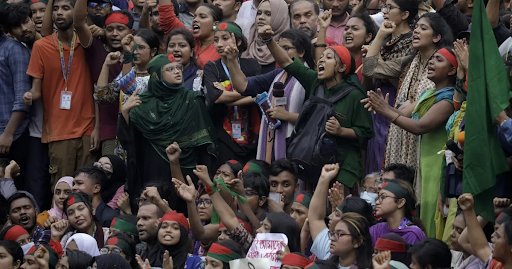
Bangladesh, a nation marked by its vibrant history and tumultuous political landscape, stands at a pivotal juncture. Following the dramatic ousting of long-time Prime Minister Sheikh Hasina, interim leader and Nobel laureate Muhammad Yunus has taken the reins with a bold promise: to guide the country toward democracy through reforms and accountability. But will these promises materialize, or are we witnessing another cycle of political rhetoric?
The Promise of Reform
Yunus, a global icon for his work in poverty alleviation, has set his sights on an ambitious agenda. Elections, he promises, will be held by late 2025 or early 2026, but only after comprehensive electoral reforms. These include revising the voter registry and addressing the systemic abuses that plagued the Hasina administration. By prioritizing these reforms, Yunus aims to restore public trust in a political system long tarnished by allegations of corruption and authoritarianism.
Yet, the path to reform is fraught with challenges. How do you rebuild democratic institutions in a country where politics has often been a zero-sum game? Can Yunus, a man celebrated for microfinance but untested in high-stakes political leadership, rise to the occasion?
A Fractured Political Landscape
The ousting of Hasina has left Bangladesh’s political landscape in flux. Speculation is rife about the revival of the “minus two” formula—a strategy aimed at sidelining both Hasina and her long-time rival Khaleda Zia. This approach, while perhaps pragmatic, raises critical questions. Can democracy truly flourish if its most prominent figures are removed from the equation? Or does this signify an overdue shift away from personality-driven politics?
Meanwhile, the Bangladesh Nationalist Party (BNP), Hasina’s main opposition, faces an existential crisis. Student leaders who spearheaded anti-Hasina protests are now forming a new political party, further fragmenting the opposition. This development could either invigorate the political scene with fresh voices or deepen the divisions that have long plagued Bangladeshi politics.
Accountability vs. Political Expediency
One of the most striking aspects of Yunus’ leadership has been his emphasis on human rights and accountability. The release of detainees from anti-Hasina protests and the invitation to the UN High Commissioner for Human Rights to investigate abuses signal a willingness to confront the dark chapters of Bangladesh’s recent history.
However, history teaches us that promises of accountability often clash with political expediency. Will Yunus’ government hold those responsible for past abuses accountable, or will the pursuit of consensus and stability dilute these efforts? Furthermore, can the commissions established to reform the judiciary and electoral system operate independently in a country where political interference has often been the norm?
The Freethinker’s Dilemma
For freethinkers and secularists, Bangladesh’s current moment offers both hope and hesitation. The fall of Hasina’s increasingly authoritarian regime is a cause for celebration, but the road ahead is riddled with uncertainty. Can a country steeped in political polarization find a way to prioritize principles over power? And what role should international actors play in supporting—or scrutinizing—Bangladesh’s transition?
This moment invites us to ask hard questions. Is democracy merely about elections, or does it require a deeper commitment to justice, accountability, and inclusion? Can Bangladesh’s leaders rise above their history of rivalry and repression to chart a genuinely new course? And perhaps most critically, what lessons can other nations draw from this unfolding experiment in democratic renewal?
A Call for Global Engagement
As Bangladesh embarks on this journey, the world must pay attention. The stakes are not just national but global. Bangladesh’s success or failure will serve as a litmus test for the resilience of democracy in an era marked by rising authoritarianism.
For freethinkers, secularists, and advocates of human rights, this is a moment to engage—not just in debate but in action. Bangladesh’s future hinges not only on the decisions made within its borders but also on the solidarity and support it receives from the global community. Will we rise to the occasion?






