

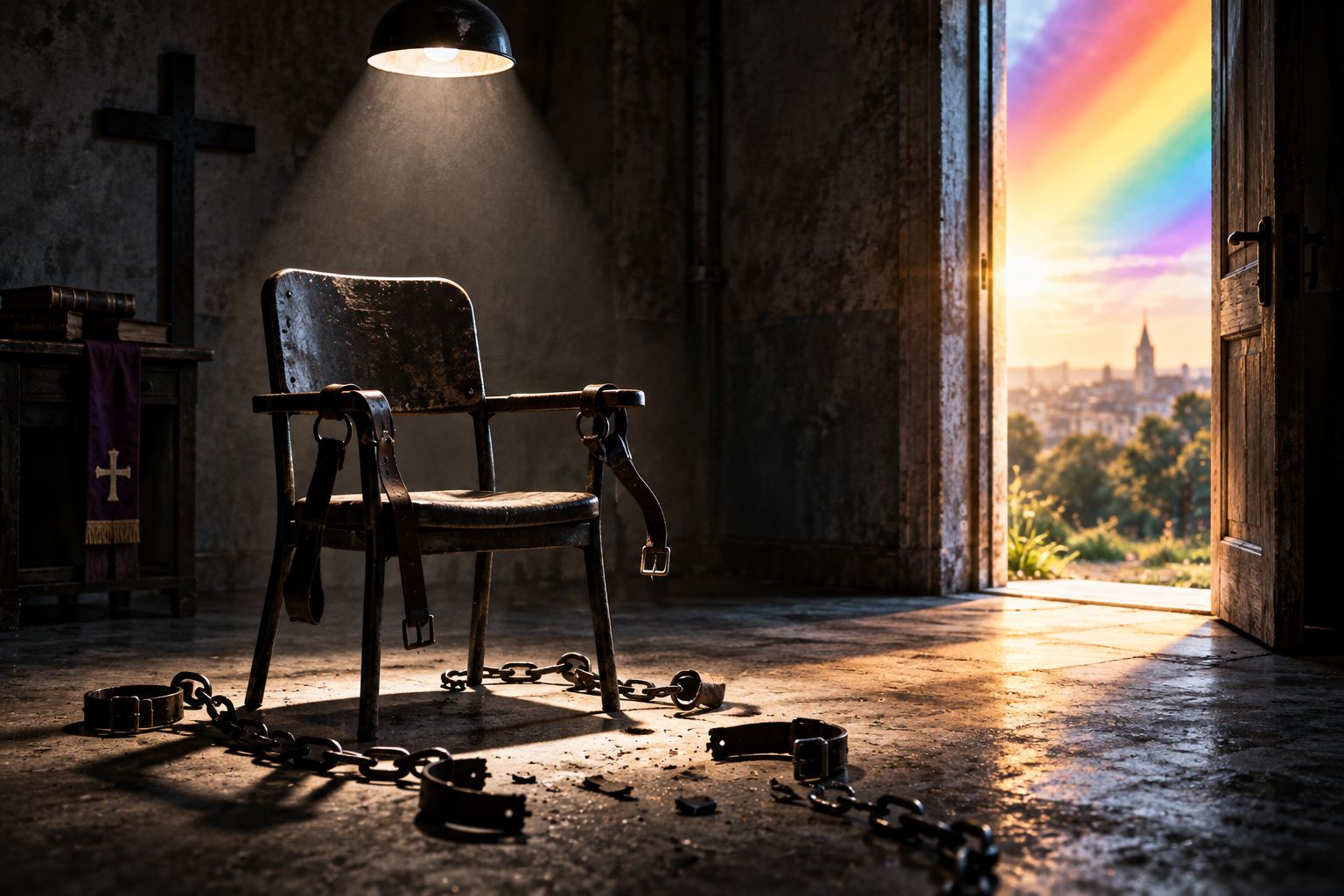
Northern Ireland could become the first jurisdiction in the UK or Ireland to enact a specific criminal ban on LGBT conversion practices.
The Conversion Practices (Criminalisation) Bill, introduced by Alliance Party deputy leader Eóin Tennyson, is moving through the Northern Ireland Assembly. Its Second Stage is scheduled for September 15.
The principle behind it is straightforward: being gay, lesbian, bisexual or transgender is not a disease that needs to be cured. Attempts to force people to suppress or change their sexual orientation or gender identity can cross the line from religious or personal belief into coercion and abuse.
The difficult question is where exactly the law should draw that line.
What the bill would ban
The proposed legislation would create three specific criminal offences: providing conversion therapy, engaging in coercive conversion behaviour and taking someone outside Northern Ireland in order to subject that person to conversion practices.
For the conversion-therapy offence, merely disagreeing with someone’s sexual orientation or gender identity would not be enough.
The prosecution would have to establish an intention to change or suppress the victim’s sexual orientation or gender identity. The person subjected to the practice would also have to suffer physical or psychological harm as a consequence.
Psychological harm is defined to include fear, alarm or distress.
The legislation would also cover coercive conduct. This includes behaviors such as violence or threats, controlling someone’s daily activities and humiliation. For coercive behavior to qualify under this part of the legislation, it must occur on at least two occasions.
Maximum penalties for the proposed offences include up to 12 months in prison, a fine, or both.
Religion is at the center of the controversy
Religion inevitably occupies a major place in this debate.
Some conversion practices have historically occurred in religious environments. They can include coercive counseling, pressure to suppress sexuality, forced prayer or attempts to treat homosexuality as something from which a person needs to be delivered.
Northern Ireland Humanists has welcomed the legislation and argues that religious settings must not become a loophole allowing harmful conversion practices to continue.
That does not mean the proposed law simply criminalizes religious opposition to homosexuality or transgender identities.
The bill specifically says there is no intent to change or suppress someone’s identity when a person is solely expressing beliefs or opinions without directing the other person toward a particular identity.
This distinction matters enormously.
Freedom of religion includes the right to believe that homosexuality is sinful. Freedom of expression includes the right to say so. Neither freedom should, however, automatically provide immunity for coercion or harmful attempts to change another person’s sexuality.
A democratic society has to protect both freedom of conscience and people from abuse.
Critics fear the law goes too far
Opponents argue that the bill does not achieve that balance.
Democratic Unionist Party Communities Minister Gordon Lyons has warned that its definitions are broad enough to threaten ordinary parenting, religious instruction and pastoral counseling.
He has pointed in particular to language covering coaching and instruction. Religious practice, he argues, frequently involves more than simply expressing an opinion. A minister, priest or parent might actively instruct someone according to religious teachings.
Supporters dispute that interpretation.
Tennyson argues that intent to change or suppress someone’s sexual orientation or gender identity must be established. The legislation also provides a defense of reasonableness.
The dispute is therefore not really about whether brutally coercive conversion practices should be defended. It is about exactly where protected speech, counseling, parenting and religious practice end and punishable conversion practices begin.
That boundary deserves careful scrutiny.
Evidence of harm
Supporters of prohibition point to testimony from LGBT+ people who say they have experienced deeply harmful attempts to change or suppress their identity.
A Northern Ireland study includes disturbing testimony, including an account from a woman who said church youth leaders locked her in a dark room for hours when she was 13.
However, there is an important limitation.
The dedicated Northern Ireland study involved only ten interviewees, and its authors acknowledged that its findings could not be generalized to the wider population. Its lead author, Professor Fidelma Ashe, has cautioned that criminal legislation should not be based on a single study.
That does not establish that conversion practices are harmless or nonexistent. It means lawmakers should consider the wider body of evidence rather than exaggerating what one small study can demonstrate.
Tennyson has also pointed to broader UK evidence, including a 2018 government survey in which LGBT respondents reported experiences of being offered or subjected to conversion practices.
Consent would not be a defense
One of the bill’s more significant provisions is that consent would not constitute a defense.
That may initially sound surprising. Adults normally have considerable freedom to seek religious counseling, psychological assistance or other forms of advice.
The reasoning behind the provision is that conversion practices can themselves involve coercive relationships and pressure, making apparent consent an unreliable safeguard.
Nevertheless, this is another area where legislators should be precise. Adults must retain the freedom to discuss their sexuality, gender identity and religious convictions with counselors, therapists, family members or religious leaders.
Protecting LGBT+ people should not require criminalizing voluntary conversations.
The challenge is to prohibit practices designed to inflict harm or coercively suppress someone’s identity without turning controversial beliefs themselves into crimes.
Northern Ireland could move ahead of its neighbors
The political significance extends beyond Northern Ireland.
Governments elsewhere in the UK and Ireland have repeatedly discussed banning conversion practices, but attempts to enact legislation have stalled or encountered legal and political difficulties.
If Stormont ultimately passes the legislation, Northern Ireland could therefore move ahead of Westminster and Dublin.
That would be particularly striking given Northern Ireland’s history.
In 1977, Ian Paisley launched the infamous “Save Ulster from Sodomy” campaign against the decriminalization of homosexuality. Nearly half a century later, the Northern Ireland Assembly is debating whether to criminalize practices intended to change or suppress LGBT identities.
Societies can change dramatically.
Belief is free. Abuse is not.
Religious freedom deserves protection, including when religious beliefs are unpopular or offensive.
But religious freedom cannot mean unlimited freedom to harm another human being.
A Christian can believe homosexuality is sinful. A Muslim can believe homosexuality is forbidden. An atheist can argue that both beliefs are irrational. All three positions belong within a society committed to freedom of conscience.
Coercion is different.
Locking frightened children in rooms, humiliating people because of their sexuality, threatening them or deliberately subjecting them to psychologically harmful practices cannot be excused simply by attaching the word “religious” to the behavior.
Northern Ireland’s legislators now have a difficult task: write a law precise enough to distinguish those things.
If they succeed, Northern Ireland will not be criminalizing religion or disagreement. It will be drawing a much-needed boundary.
Believe whatever you want.
But LGBT+ people are not diseases to be cured.






