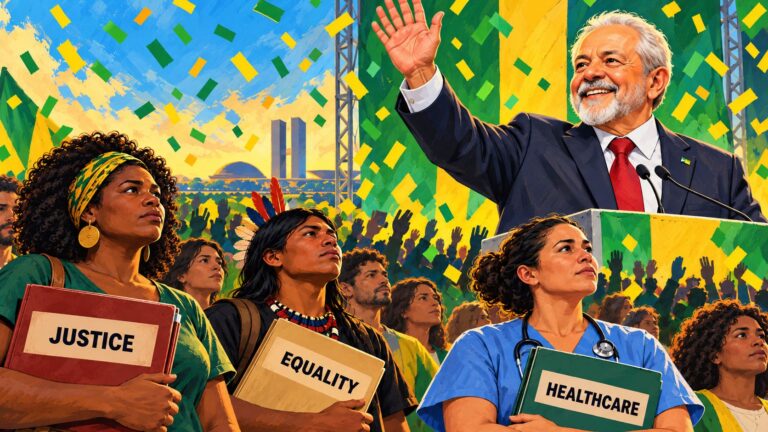
Human rights: a phrase that conjures images of justice, equality, and freedom. We champion these rights as inherent and inalienable, fundamental to a just and flourishing society. But what happens when the institutions sworn to protect these rights are accused of violating them? Or when historical wounds re-open, challenging our progress narrative? This tension – the gap between the *idea* of human rights and their *practice* – demands rigorous scrutiny, especially from freethinkers who value critical inquiry above blind faith. Are human rights a universally applied standard, or a constantly negotiated and sometimes tragically abused ideal?
The Police as “Human Rights Activists”? A Critical Examination
The claim from Jamaica’s Police Commissioner that law enforcement officers are “human rights activists” presents a fascinating, and potentially problematic, proposition. On the surface, it sounds positive. Shouldn’t law enforcement be committed to upholding the rights of all citizens? However, a critical examination reveals the inherent contradictions.
Power Dynamics: Law enforcement, by definition, wields power over individuals. This power, when unchecked, can easily lead to human rights abuses, such as excessive force, arbitrary detention, and discriminatory practices. Are Jamaican police adequately trained on human rights?
Conflicting Obligations: Police are often tasked with maintaining order and enforcing laws, which may, at times, conflict with individual rights. Striking a balance requires a commitment to due process, transparency, and accountability.
Public Perception: Community trust is essential for effective policing. If the public perceives the police as violating rights, rather than protecting them, it erodes trust and hinders their ability to maintain order legitimately.
Instead of simply accepting the commissioner’s statement, freethinkers should demand evidence. What specific initiatives are in place to ensure that Jamaican police officers understand and uphold human rights? What accountability mechanisms are in place to address abuses? Can the police genuinely act as human rights activists while simultaneously wielding the power of the state?
Bloody Sunday and the Unfinished Business of Civil Rights
The anniversary of “Bloody Sunday” in Selma, Alabama, is not just a historical marker; it’s a stark reminder that the struggle for civil rights is far from over. News about civil rights questions clouding “Bloody Sunday” tells us that something isn’t right. While much progress has been made since the brutal attacks on peaceful marchers in 1965, the event continues to reverberate.
Voting Rights Under Threat: Decades after the passage of the Voting Rights Act, voter suppression tactics continue to disproportionately impact minority communities. Restrictive voter ID laws, gerrymandering, and limited polling places are modern-day manifestations of the same systemic racism that fueled the violence in Selma.
Persistent Inequality: The legacy of slavery and Jim Crow laws continues to impact economic opportunity, access to education, and the criminal justice system for African Americans.
Historical Reckoning: Confronting the full history of racial injustice in the United States is essential for healing and progress. Acknowledging past wrongs and addressing their lingering effects is crucial for building a truly just and equitable society.
The continued relevance of “Bloody Sunday” underscores the fragility of progress and the need for constant vigilance. As freethinkers, we must critically examine the systems that perpetuate inequality and advocate for policies that promote justice and equality for all.
Human Rights Under Siege: The Syrian Tragedy
The news from Syria paints a grim picture of ongoing human rights violations. Amid fears of committing new massacres, combing operations continued in Syrian coastal regions, but with distress calls reporting the execution of a family. This speaks to the systematic erosion of human rights.
War Crimes and Impunity: The conflict in Syria has been marked by widespread human rights abuses, including war crimes, crimes against humanity, and the use of chemical weapons. The lack of accountability for these atrocities perpetuates a culture of impunity.
Displacement and Suffering: Millions of Syrians have been displaced by the conflict, creating a massive humanitarian crisis. Refugees face immense challenges in accessing food, shelter, and medical care.
Erosion of International Norms: The Syrian conflict has exposed the limitations of international law and the failure of the international community to protect civilians.
The situation in Syria serves as a powerful reminder of the fragility of human rights in the face of political violence and state-sponsored repression. Freethinkers must condemn these abuses and advocate for accountability and justice for the victims.
Conclusion
These headlines, disparate as they may seem, highlight a fundamental tension at the heart of the human rights project: the persistent gap between the ideal and the reality. Whether it’s questioning the role of law enforcement, confronting the unfinished business of civil rights, or witnessing the horrors of war, it’s crucial to apply a critical lens. Human rights are not self-enforcing; they require constant vigilance, critical inquiry, and a willingness to challenge power.
As freethinkers, we have a responsibility to engage in these difficult conversations, challenge assumptions, and demand accountability from those in power. Are we truly committed to upholding human rights, or do we merely pay lip service to an ideal? Only through constant critical reflection can we hope to bridge the gap between aspiration and action.
Share your thoughts in the comments: How can freethinkers contribute to advancing human rights in a world filled with hypocrisy and conflicting interests?