

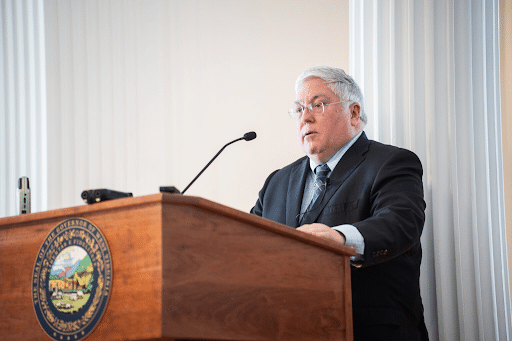
West Virginia Governor Patrick Morrisey wasted no time making headlines after his inauguration, signing an executive order to introduce religious exemptions for childhood vaccines. Framed as a defense of religious liberty, this decision has sparked both celebration and alarm, raising questions about the balance between individual rights and collective responsibility. For freethinkers and secularists, this debate presents a unique challenge: How do we protect personal freedoms while upholding evidence-based public health policies?
A Controversial Mandate
Governor Morrisey’s decision stems from his commitment to enforcing the 2023 Equal Protection for Religious Act. The governor contends that the state’s existing vaccine mandate violates the religious freedoms guaranteed under this law. “We’re recognizing the Constitution and the religious beliefs that citizens have,” Morrisey said. “That’s really critical to do in West Virginia.”
By February 1, the state’s Office of Public Health must deliver a proposal outlining how the exemption process will function. Meanwhile, the announcement has reopened a bitter debate that divided the state last year. Former Governor Jim Justice vetoed similar legislation in 2024, citing strong opposition from medical professionals and public health advocates.
Dr. Steven Eshenaur, health officer for the Kanawha-Charleston Health Department, has been one of the loudest voices against vaccine exemptions. Speaking earlier in 2024, he warned, “It’s like unlocking one door of a four-door car. It’s no longer locked.” His concern? That loosening vaccine requirements will open the floodgates for preventable diseases to resurge.
A Double-Edged Sword
To secularists, this executive order prompts uncomfortable questions. Religious freedom is a cornerstone of modern democracy, but does it outweigh the collective good? Where should the line be drawn between respecting personal beliefs and ensuring public health?
From a freethinker’s perspective, the risks are significant. Vaccine mandates exist because they work—herd immunity protects not just the vaccinated but also the vulnerable: infants, the immunocompromised, and the elderly. Introducing exemptions undermines this delicate balance. It prioritizes individual belief over scientific consensus, creating a potential public health crisis.
Governor Morrisey argues otherwise. “Having a religious and conscientious exemption I don’t think is going to lead to any compromise,” he said, positioning the move as a way to bring West Virginia “back into the mainstream.” Yet, mainstream by whose standards? Public health experts caution that this shift may put West Virginia on a precarious path, not toward freedom, but toward preventable outbreaks of diseases like measles and whooping cough.
Beyond Vaccines: A Broader Agenda
Morrisey’s vaccine exemption order is just one piece of his sweeping agenda. Among his other executive actions are plans to expand school choice, eliminate minority quotas in state government, and review outdated executive orders. His administration is also addressing transgender issues and proposing to classify fentanyl as a weapon of mass destruction.
While each of these moves deserves scrutiny, the vaccine exemption stands out for its potential to affect every West Virginian. It forces us to confront a broader philosophical dilemma: How do we navigate the tension between personal liberty and societal welfare in an increasingly polarized era?
The Freethinker’s Dilemma
For those who value evidence-based reasoning, Morrisey’s order represents a troubling trend. Religious exemptions, no matter how well-intentioned, risk undermining the hard-won progress of modern medicine. They also blur the line between the secular and the religious in matters of governance. If public health policies can be overridden by personal belief, what precedent does that set for other critical issues, from climate change to education?
At the same time, freethinkers must grapple with the ethical complexities of the situation. Should the state have the power to compel individuals to act against their deeply held beliefs, even if those beliefs run counter to scientific consensus? And if so, where does that power end?
A Call for Dialogue
Governor Morrisey’s vaccine exemption order is more than a state-level policy shift; it’s a microcosm of a national debate. For freethinkers and secularists, it’s an opportunity to engage in meaningful dialogue about the role of science, religion, and personal liberty in shaping public policy.
The stakes are high. A decision framed as protecting religious freedom could, paradoxically, endanger the very freedoms it claims to uphold—the freedom to live in a society safeguarded by collective action and evidence-based decision-making. As the details of the exemption process emerge, let’s ensure this debate doesn’t devolve into tribalism but instead becomes a platform for thoughtful, reasoned discourse.
The question isn’t just about vaccines; it’s about the kind of society we want to build. One where evidence and empathy coexist, or one where belief takes precedence over fact. Freethinkers, the floor is yours.






