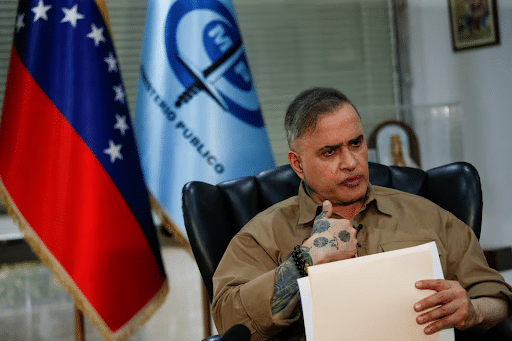
In a nation already fractured by political turmoil and economic despair, Venezuelan Attorney General Tarek William Saab’s announcement of 200 new releases from detention raises urgent questions. Are these actions a step toward justice, or a calculated response to mounting international scrutiny?
On Friday, Saab revealed that 200 individuals detained following Venezuela’s highly contentious July 28 presidential election were freed. This brings the total number of releases during an ongoing judicial review process to 733. While the government lauds these actions as evidence of its commitment to justice and human rights, critics remain skeptical, viewing the move as a strategy to deflect both domestic and international criticism.
The Aftermath of a Controversial Election
The releases come in the wake of an election marred by allegations of fraud. President Nicolás Maduro’s declared victory sparked accusations from opposition groups and widespread unrest. According to the Ministry of Public Prosecution, the detentions targeted individuals involved in “grave acts of violence” aimed at inciting civil war. The Attorney General emphasized that these releases were conducted “within the framework of due process” as outlined in Article 136 of the Venezuelan Constitution. This article calls for collaboration among public powers to uphold justice and peace.
Yet for many, the government’s narrative rings hollow. Foro Penal, a Venezuelan NGO monitoring political detentions, has long documented systematic violations of constitutional guarantees. The group’s reports highlight thousands of ongoing political detentions and allege widespread arbitrary arrests. Such criticisms are echoed by the United Nations’ Independent Fact-Finding Mission, which earlier this year condemned Venezuela’s pattern of repression and called for the immediate release of all individuals detained on political grounds.
Constitutional and International Contradictions
Venezuela’s Constitution, specifically Article 44, enshrines the principles of personal liberty and due process. It prohibits arrests without judicial orders except in cases of flagrante delicto, requiring detainees to appear before a competent court within 48 hours. However, the government’s repeated use of politically motivated arrests raises serious doubts about its adherence to these safeguards.
Beyond its own constitution, Venezuela is bound by international treaties such as the International Covenant on Civil and Political Rights, which strictly prohibits arbitrary detention. Human rights organizations argue that the government’s recent mass releases reflect more about its desire to ease international pressure than any substantive reforms to judicial practices.
Justice or Performative Politics?
In his official statement, Attorney General Saab underscored ongoing efforts to review additional cases, framing these actions as a defense of “peace, justice, and human rights.” However, observers remain divided on the sincerity of these measures. Are they a sign of progress, or merely a calculated concession?
Foro Penal and other watchdogs suggest the latter, pointing to systemic issues within Venezuela’s legal and political systems. The judiciary’s lack of independence, coupled with the government’s track record of repressing dissent, casts doubt on the genuineness of the review process.
The International Lens
Internationally, Venezuela faces mounting pressure to reform. Human rights organizations and global bodies have scrutinized its judicial practices, with many calling for structural changes. Yet these calls often clash with the government’s narrative, which frames its actions as constitutional and necessary for maintaining stability.
Critics argue that the releases—while welcome—fail to address the root causes of political detentions. “This is not reform,” says a representative from a leading international NGO. “This is damage control.”
A Nation’s Crossroads
For freethinkers, the situation in Venezuela highlights broader questions about the balance between sovereignty, human rights, and international accountability. How can justice be achieved in a system where the judiciary is widely perceived as a tool of the state? Can incremental progress, like these mass releases, pave the way for broader reforms, or do they merely mask deeper systemic flaws?
Saab’s announcement underscores the tension at the heart of Venezuela’s current crisis. The nation’s Constitution and international commitments provide a framework for justice, but their consistent application remains elusive. As the world watches, the challenge for Venezuela lies not just in addressing past injustices but in building a system where such abuses cannot recur.
The Path Forward
Observers agree that true progress requires more than isolated acts of leniency. It demands a judiciary free from political influence, a government committed to transparency, and robust protections for dissenting voices. Without these changes, the cycle of repression and release will likely continue, leaving Venezuela’s political prisoners as pawns in a larger game of geopolitical maneuvering.
For now, the fate of those still detained—and the future of Venezuela’s democracy—remains uncertain. Freethinkers worldwide must ask: What role should the global community play in holding Venezuela accountable, and how can the principles of justice and human rights be upheld in a deeply polarized world?
As Venezuela’s judicial review process continues, it offers a stark reminder that justice is not just about freeing the detained. It’s about creating a society where such detentions never happen in the first place.