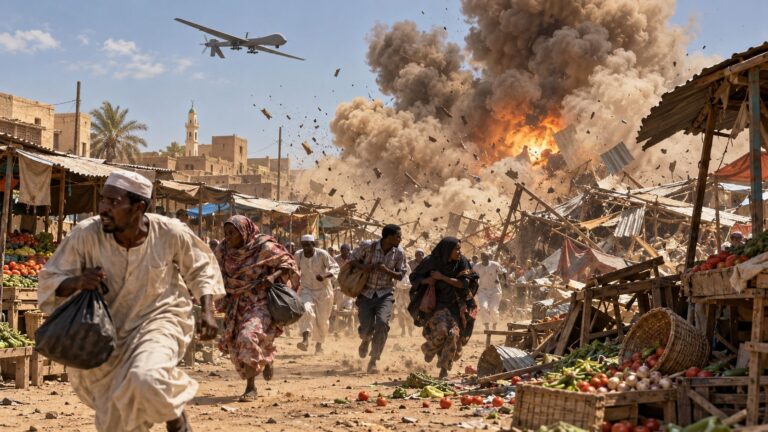
The fall of Bashar al-Assad, a man who ruled for over a decade amidst the ruins of war and bloodshed, marks a turning point in the history of the Middle East. This shift not only propels Syria into a new era of challenges and opportunities but also fundamentally alters the balance of power in the region.
Internal Devastation: Can Syria Find a Path to Recovery?
Today, Syria is less a unified and independent nation than a fragmented puzzle of zones controlled by domestic and foreign powers. While some remain optimistic, Assad’s fall will not automatically usher in peace. Diverse opposition groups—from radical Islamists to secular nationalists—are likely to engage in a fierce contest for power. History shows that power vacuums often give rise to fresh civil wars.
Meanwhile, Syria faces an unprecedented humanitarian crisis: millions of displaced people, destroyed infrastructure, and a nearly collapsed economy. In such a landscape, rebuilding the country is both a daunting and essential task. But can the opposition forces that now hold power unite the nation and lead its reconstruction?
Regional Politics: Will Proxy Wars Persist?
Assad’s fall signifies a complete failure of Iran’s policy in Syria. Having spent billions of dollars supporting Assad’s regime and using Hezbollah as its ground forces, Iran now risks losing its vital corridor to the Mediterranean.
But Iran isn’t the only player affected by Assad’s fall. Turkey, which has sought to expand its influence in northern Syria in recent years, will likely work to consolidate its position in the face of new developments. Meanwhile, the Gulf Arab states, long-time backers of Assad’s opposition, may seize this opportunity to reenter the Syrian political landscape.
Russia and the West: Redefining Roles
Russia, Assad’s most significant ally, suffers a strategic defeat with his fall. However, Moscow, still maintaining military bases in Syria, will likely strive to secure its interests through negotiations with the opposition or by supporting specific factions. On the other hand, Western nations, particularly the United States and Europe, may try to strengthen their influence in the new government through financial and political support.
The Shadow of the Taliban: Will History Repeat Itself?
One of the greatest fears following Assad’s fall is the emergence of extremist groups akin to the Taliban in Afghanistan. Syria, still scarred by ISIS’s presence, offers fertile ground for the resurgence of extremism due to its social and economic conditions. Without constructive international cooperation to counter this trend, Syria’s future could turn into a nightmare for the region and the world.
The Road Ahead: Opportunities and Threats
While Assad’s fall ends one of the Middle East’s longest modern dictatorships, it ushers in a period of new complexities and challenges. Syria’s new government must navigate the conflicting interests of internal factions and external pressures. The global community also bears a significant responsibility toward this war-torn nation.
If today’s Middle Eastern history were a book, Assad’s fall would be but a chapter—one with no definitive or clear resolution. Syria’s future, like a candle in the wind, wavers between hope and fear. What is certain, however, is that the country needs relentless effort, patience, and unwavering support to rebuild and recover.
Lessons for Iran and Global Powers
Syria today reflects a mirror in which the world must see itself. Power struggles, foreign interventions, and disregard for human needs have all contributed to this nation’s plight. Assad’s fall offers a chance to rethink policies, collaborate on reconstruction, and prevent such tragedies from recurring.
Will the world seize this opportunity or continue repeating past mistakes? The answer to this question will shape not only Syria’s destiny but also the region’s future.
Image source: Wikimedia Commons