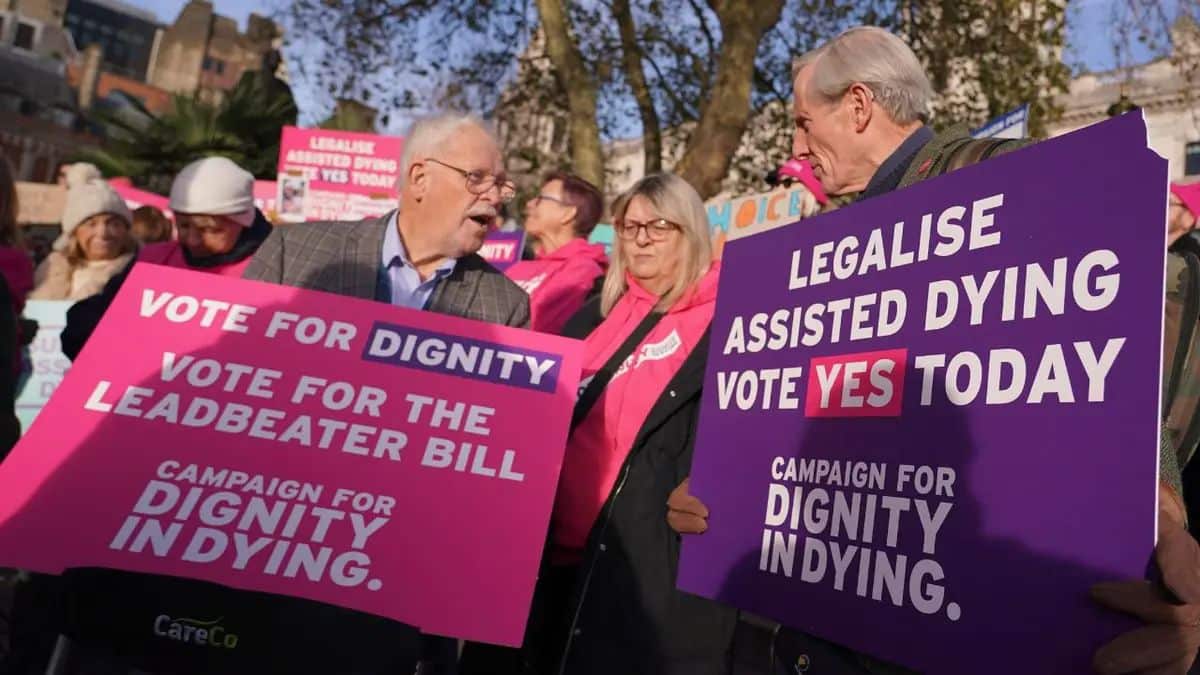
In a landmark decision that could reshape the way society views life, death, and personal autonomy, British lawmakers gave initial approval on Friday to a bill legalizing assisted dying for terminally ill adults in England and Wales. The vote, which passed by 330 to 275, followed an emotional debate in Parliament that touched on ethics, human rights, and the role of society in caring for its most vulnerable.
The Assisted Dying Bill, introduced by Labour MP Kim Leadbeater, would allow adults with a terminal diagnosis of less than six months to live to request medical assistance to end their lives. To prevent abuse, the legislation includes strict safeguards, requiring that the individual be of sound mind and physically capable of administering the fatal medication themselves. While the bill’s proponents framed it as a compassionate response to suffering, its critics—both religious and secular—warned of potential dangers to the most vulnerable in society.
This debate raises profound ethical questions for freethinkers and humanists, groups often associated with support for personal autonomy. While much opposition to euthanasia stems from religious beliefs about the sanctity of life, there are secular arguments against the practice that demand careful consideration.
A Landmark Decision
During Friday’s debate, proponents of the bill shared deeply personal stories of constituents and family members who suffered prolonged, unnecessary pain due to the lack of legal options for assisted dying. “Let’s be clear, we’re not talking about a choice between life or death; we are talking about giving dying people a choice about how to die,” Leadbeater said in her opening speech.
Yet opponents, such as Conservative MP Danny Kruger, described the proposal as a dangerous step toward a “state suicide service.” He warned that the bill risks pressuring vulnerable individuals—including the elderly, disabled, and those with limited resources—into choosing death out of a sense of obligation. “We are the safeguard, this place, this Parliament, you and me,” Kruger declared, emphasizing the legislature’s responsibility to protect society’s most vulnerable.
The vote represents only the first stage of what promises to be a contentious legislative journey. If enacted, the bill would place Britain among a growing number of nations—including Canada, Belgium, and parts of the United States—that permit assisted dying under specific conditions.
Freethinkers: Divided on Euthanasia?
For many freethinkers, the right to die is a logical extension of personal autonomy and self-determination. The ability to make decisions about one’s own body and life—especially in the face of terminal illness and unbearable suffering—is seen as a fundamental human right. Organizations like Dignity in Dying argue that assisted dying offers dignity, relief, and control at the end of life.
But not all freethinkers are united on this issue. Despite their rejection of religious dogma, some humanists and atheists oppose euthanasia for reasons rooted in ethics, societal responsibility, and caution against unintended consequences.
The Ethical Concerns
1. The Risk of Coercion and Social Pressure
Even with legal safeguards, freethinkers worry that the legalization of euthanasia could create subtle pressures on vulnerable individuals. Those who are elderly, disabled, or economically disadvantaged may feel obligated to choose assisted dying to avoid being perceived as a burden to their families or society.
From a humanist perspective, this raises the question: Is a choice truly free when societal narratives about productivity, cost, and caregiving influence the decision?
2. The Slippery Slope
Secular opponents often point to countries like Belgium and the Netherlands, where euthanasia laws have expanded to include individuals with non-terminal conditions, including mental health struggles. While these cases represent a minority, they highlight the potential for incremental normalization of euthanasia in broader contexts.
Freethinkers might argue that societies should focus on improving mental health care, disability support, and palliative care rather than expanding access to assisted dying.
3. Undermining Human Solidarity
For humanists, the essence of morality lies in caring for one another, especially the most vulnerable. Opponents of euthanasia worry that legalizing the practice could erode societal commitments to caregiving and solidarity, potentially normalizing the idea that some lives are less worth living.
4. The Limits of Autonomy
While autonomy is a cornerstone of freethinking philosophy, opponents question whether the decision to end one’s life is ever made in isolation. Factors like untreated depression, inadequate pain management, or societal neglect can compromise autonomy. For some humanists, this underscores the need to address the root causes of suffering rather than offering death as a solution.
Historical Context
Britain’s debate on assisted dying is not new. Similar proposals have been introduced and defeated in Parliament over the past two decades. The country’s current law, rooted in the Suicide Act of 1961, decriminalized suicide but made it a crime to assist someone in ending their life. This legal framework has driven hundreds of Britons to Switzerland, where assisted dying for non-residents is permitted.
Globally, the movement for euthanasia and assisted dying has gained momentum. Nations like Canada, Australia, and several U.S. states have adopted laws allowing terminally ill patients to seek medical assistance in dying. However, critics point to cases of expansion beyond terminal illnesses as a cautionary tale.
The Future of Human Rights
The Assisted Dying Bill has ignited a broader conversation about the meaning of human dignity, the value of life, and the responsibilities of society. Freethinkers, who often champion the rights of the individual, face a profound ethical dilemma: How do we balance personal autonomy with the need to protect the vulnerable and uphold human solidarity?
If the bill becomes law, it could represent a milestone in the global movement for end-of-life rights. Yet it also challenges societies to confront deeper questions: Are we doing enough to alleviate suffering without resorting to euthanasia? Can autonomy truly exist in the face of societal inequality and systemic neglect?
The journey of this bill, and the debates it inspires, will not only shape Britain’s legal landscape but also provoke freethinkers worldwide to reexamine their views on life, death, and what it means to live ethically in a complex, interdependent world.