

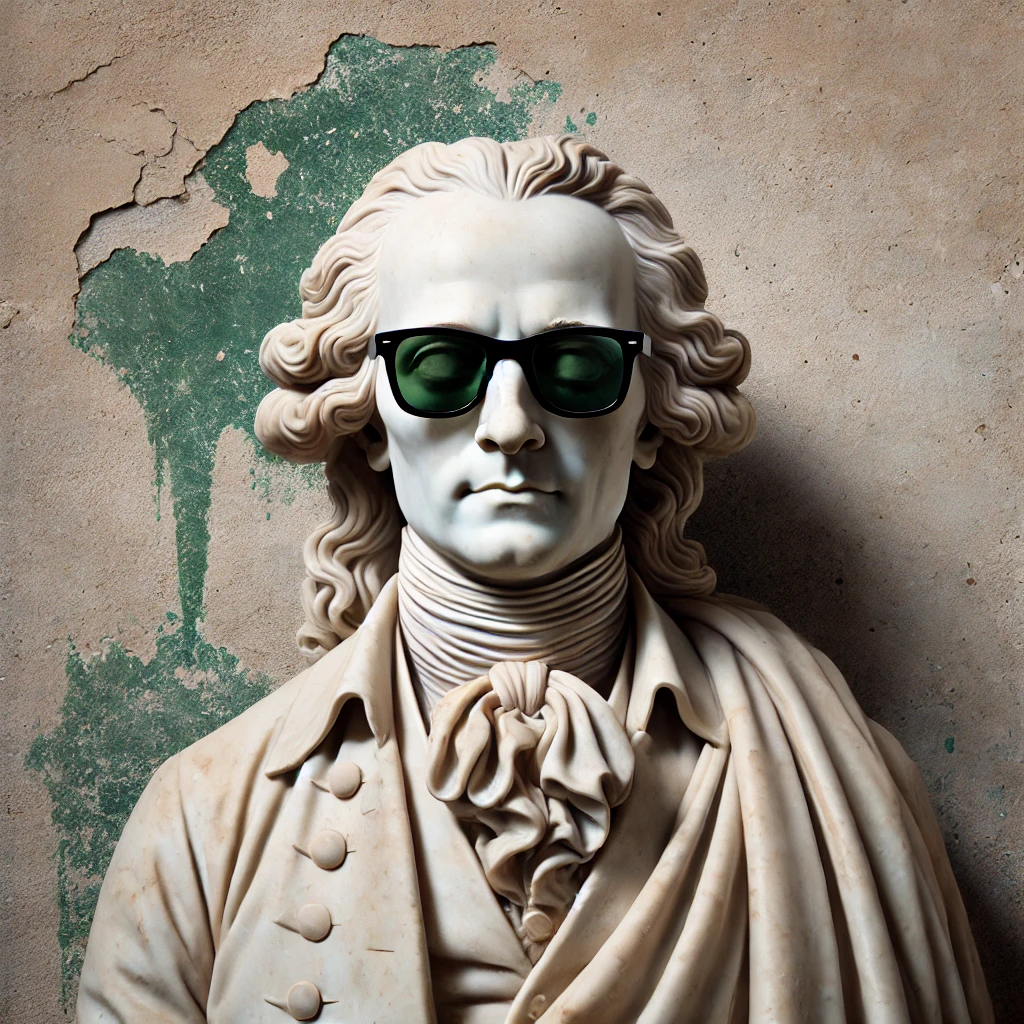
Few figures in history have wielded a pen with such power as Voltaire, the French writer, philosopher, and freethinker who fearlessly challenged the status quo of his time. Born François-Marie Arouet in 1694, Voltaire became a leading voice of the Enlightenment, a period characterized by an emphasis on reason, science, and skepticism of traditional authority. His advocacy for civil liberties, freedom of expression, and separation of church and state laid the foundation for modern democratic ideals.
A Biographical Sketch
Voltaire was born into a moderately prosperous family in Paris. From a young age, he showed a keen intellect and a sharp wit, qualities that would define his career. He was educated at a Jesuit school, where he developed a love for literature but also a disdain for dogmatic teachings. His father, a lawyer, wanted him to pursue a career in law, but Voltaire had other plans. Determined to become a writer, he began circulating satirical poems that mocked the French government and the Catholic Church.
This penchant for satire soon landed him in trouble. In 1717, Voltaire was imprisoned in the Bastille for lampooning the French Regent, Philippe II, Duke of Orléans. Rather than being cowed, Voltaire used his time in prison to begin writing his first major play, Oedipe, which was a critical success upon its release. After his release, he adopted the pen name “Voltaire,” an anagram of a Latinized version of his name, and quickly became known for his brilliant wit and biting criticism.
Challenging Dogmas and Championing Freedom
Voltaire’s writing targeted what he saw as the greatest evils of his time: religious intolerance, superstition, and the abuse of power by church and state. His novel Candide (1759) is perhaps his most famous work, a satirical attack on optimism, the philosophical belief that “all is for the best in the best of all possible worlds.” Through the absurd and often tragic misadventures of its protagonist, Candide, Voltaire mercilessly mocked the idea that human suffering and evil are part of a divine plan.
Voltaire was also a fierce critic of the Catholic Church, which he accused of perpetuating ignorance and intolerance. His Philosophical Dictionary (1764) was a compendium of his thoughts on religion, philosophy, and history, and it criticized organized religion and argued for a rational approach to understanding the world. Voltaire believed in “écrasez l’infâme,” or “crush the infamous thing,” referring to the church’s perceived corruption and oppression.
Core Beliefs and Opposition Faced
Voltaire’s core beliefs centered around reason, freedom of thought, and civil liberties. He advocated for the separation of church and state, freedom of speech, and the right to a fair trial. He was an outspoken critic of absolute monarchy and supported constitutional government. Voltaire’s ideas were revolutionary for his time and often put him at odds with the powerful. He was exiled to England in 1726 after a series of quarrels with the French aristocracy. His time in England exposed him to new political ideas and freedoms, which profoundly influenced his thinking.
Upon returning to France, Voltaire continued to write prolifically, often under threat of censorship and arrest. His works were frequently banned, and he faced constant persecution from the authorities. Despite this, he remained steadfast in his commitment to advocating for a more just and enlightened society.
Legacy and Relevance Today
Voltaire’s legacy is immense. He is regarded as one of the key figures of the Enlightenment, and his ideas helped to shape the modern world. His advocacy for civil liberties and freedom of expression influenced the development of democratic principles in France and the United States. Voltaire’s critique of religion and his call for reason and tolerance remain relevant in today’s world, where issues of freedom of expression and the separation of church and state continue to be hotly debated.
Critical Analysis
While Voltaire was a tireless advocate for justice and reason, his views were not without their flaws. He often held elitist views and was not immune to the prejudices of his time, particularly in his writings on race and gender. Nonetheless, Voltaire’s willingness to challenge authority and question established beliefs helped to pave the way for modern democratic thought and freedom of expression.
Further Reading
- Voltaire’s Philosophical Letters: This work offers a glimpse into his admiration for English political and intellectual life, which greatly influenced his thinking.
- Candide by Voltaire: An essential read for understanding Voltaire’s wit and his critique of optimism.
- Voltaire in Exile by Ian Davidson: A biography that details Voltaire’s years of exile and his continuing fight against tyranny.
Thought-Provoking Summary
Voltaire’s life was a testament to the power of the written word to challenge authority and inspire change. His fearless critique of the institutions that wielded power in his day helped to lay the groundwork for the freedoms many enjoy today. In a world where freedom of expression is still under threat, Voltaire’s call to “écrasez l’infâme” resonates as a timeless rallying cry for justice and reason. How far would you go to defend your right to speak your mind?





