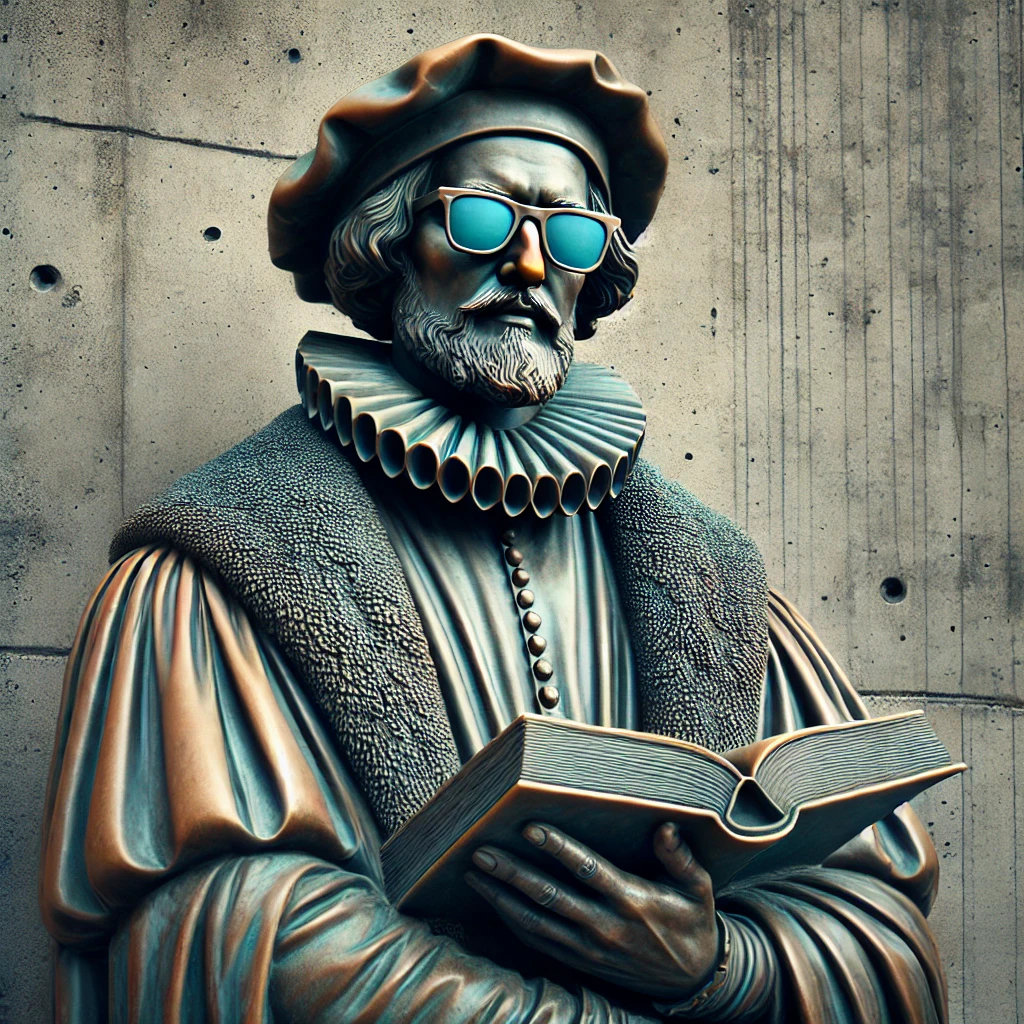
Erasmus of Rotterdam (1466–1536) was a towering figure of the Northern Renaissance and a pivotal force in the movement for religious reform. As a Dutch humanist, philosopher, and theologian, he is best known for his critiques of the Catholic Church’s corruption and his advocacy for a more personal and tolerant form of Christianity.
Biographical Sketch
Born in Rotterdam, Desiderius Erasmus was educated in monastic schools before joining the Augustinian order. His life as a monk, however, did not align with his intellectual aspirations, leading him to seek freedom from monastic constraints to pursue scholarly work. His journey took him across Europe, where he studied at the University of Paris and later held positions at various universities, including Cambridge. Erasmus was a prolific writer and a master of Latin, which allowed him to correspond with the leading intellectuals of his time.
Dogmas Disputed
Erasmus’s primary target was the widespread corruption within the Catholic Church. He critiqued the Church’s excessive wealth, the sale of indulgences, and the mechanical rituals that, in his view, had little to do with true faith. His most famous work, In Praise of Folly (1511), satirized the abuses of power and the folly of human nature, particularly among the clergy. He called for a return to the teachings of Christ and advocated for a simple, pious life grounded in the scriptures.
Core Beliefs
Erasmus believed in Christian humanism, the idea that human beings can understand and improve themselves through the study of classical texts and the Bible. He emphasized free will, arguing against the deterministic views that were emerging in the Protestant Reformation. His vision of Christianity was one of internalized piety and ethical living, rather than blind adherence to rituals or dogma.
Opposition Faced
Although Erasmus sought reform within the Church, he avoided breaking with it entirely, which put him at odds with more radical reformers like Martin Luther. Luther’s call for a definitive break from Rome contrasted sharply with Erasmus’s belief in gradual reform through education and moral improvement. As the Protestant Reformation gained momentum, Erasmus found himself attacked from both sides: by Catholic authorities for his criticisms of the Church, and by Protestants for his refusal to join their cause.
Legacy
Erasmus’s work laid the intellectual groundwork for the Reformation, even if he did not fully support it. His call for religious tolerance and his emphasis on education and moral integrity influenced later reformers and helped shape the humanist tradition. Though he died without seeing the reconciliation he hoped for between reformers and the Catholic Church, his ideas continued to inspire discussions about faith, morality, and governance.
Current Relevance
Erasmus’s advocacy for religious tolerance and his emphasis on critical thinking remain highly relevant today. In an age of increasing polarization, his belief in dialogue, education, and moderation serves as a reminder of the importance of intellectual humility and the dangers of extremism.
Critical Analysis
Erasmus’s legacy is a complex one. His humanist ideals and his emphasis on a rational, ethical approach to religion have been praised for their enduring influence. However, some critics argue that his reluctance to take a definitive stand during the Reformation limited his impact. Nonetheless, his contributions to the intellectual life of Europe and his advocacy for reform within the Church mark him as a pivotal figure in the history of Western thought.
Further Reading
- Erasmus, In Praise of Folly (1511): An accessible satire critiquing the follies of his time, especially within the Church.
- Erasmus, Handbook of the Christian Soldier (1503): A guide for living a pious Christian life, emphasizing internal devotion over external rituals.
- James D. Tracy, Erasmus of the Low Countries (1997): A detailed biography that places Erasmus in the context of his time.
- Erasmus of Rotterdam Society: A resource for exploring Erasmus’s works and influence (https://www.erasmus.org).
Erasmus’s life and work remind us that intellectual rigor and moral integrity are essential in the pursuit of truth, even in the face of powerful opposition.