Thomas Paine helped provide the intellectual ammunition for the American Revolution. He attacked monarchy, defended republican government, challenged organized religion and became one of the most uncompromising freethinkers of the revolutionary era.
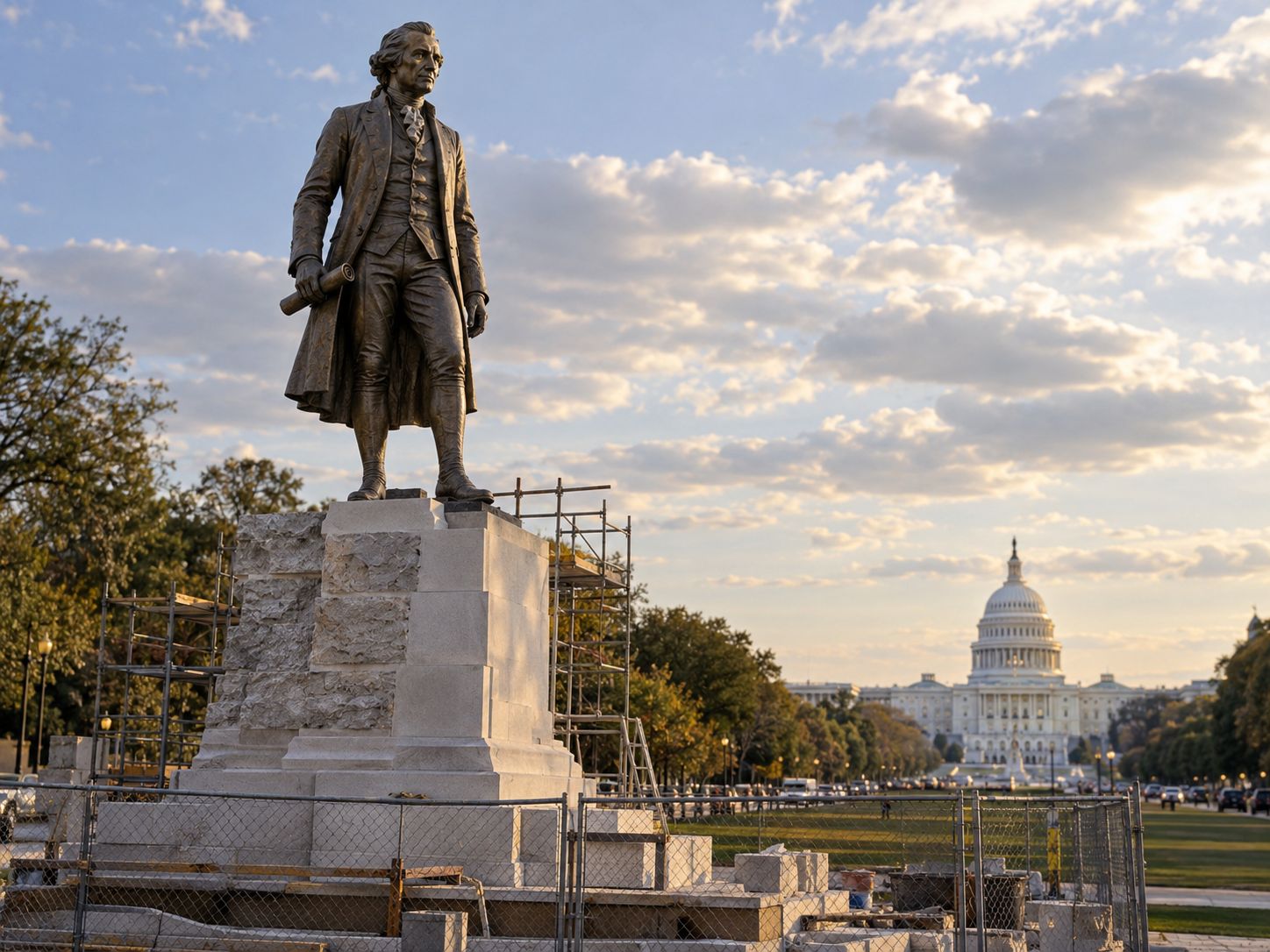
Yet visitors to Washington, D.C., can find monuments to presidents, generals and religious figures while one of America’s most influential revolutionary writers still lacks a prominent memorial near the National Mall.
That may finally change.
On September 15, the U.S. House Committee on Natural Resources advanced legislation that would allow a Thomas Paine memorial to be located in Area I, the central monumental area near the Capitol and National Mall. The committee approved the measure unanimously, according to the Freedom From Religion Foundation. The legislation now awaits further action in the House.
The Common Sense 250 Act
The legislation is H.R. 9600, appropriately named the Common Sense 250 Act of 2026. Democratic Representative Jamie Raskin of Maryland introduced it in July with Republican Representative Victoria Spartz of Indiana as a co-sponsor.
Its purpose is surprisingly narrow. Congress already authorized the Thomas Paine Memorial Association in 2022 to establish a memorial honoring Paine in Washington. What remains unresolved is where that memorial may stand.
H.R. 9600 would authorize the memorial’s placement within Area I. Under federal law, that prestigious central area is subject to particularly strict rules for new commemorative works. The House committee describes the bill as authorizing the Paine memorial within Area I on the National Mall.
In other words, Congress is not suddenly deciding whether Thomas Paine deserves to be remembered at all. That decision was already made. The present legislation could determine whether his memorial receives a location commensurate with his historical importance.
The man behind Common Sense
Few political pamphlets have acquired a reputation comparable to Paine’s 1776 Common Sense.
Paine made the case for American independence in direct language intended for ordinary readers rather than political elites. He rejected hereditary monarchy and argued that the colonies should separate from Britain.
His importance did not end with American independence. Paine later defended the French Revolution in Rights of Man, opposed hereditary privilege and advocated ideas that included social welfare measures remarkably ambitious for the eighteenth century.
He was a revolutionary in more than one sense.
Paine was also a religious dissenter
For freethinkers, another part of Paine’s legacy is particularly important.
Paine’s The Age of Reason subjected institutional Christianity and claims of biblical revelation to fierce criticism. Paine was not an atheist in the modern sense; he explicitly professed belief in one God. His position is generally described as deistic.
But his rejection of revealed religion was unmistakable.
That distinction matters. Calling Paine an atheist would distort his beliefs. Calling him a major figure in the history of freethought would not.
His religious writings helped establish a tradition in which scripture, churches and religious authorities could be subjected to the same rational criticism as political institutions.
That was an extraordinarily controversial position in his time.
A memorial with bipartisan sponsors
There is something particularly interesting about the current proposal: its House sponsors come from different political parties.
Raskin is a Democrat and Spartz is a Republican. The Natural Resources Committee subsequently advanced the bill, and FFRF says the vote was unanimous.
That does not guarantee enactment. Committee approval is a significant legislative step, not the end of the process. The measure still needs further congressional action before the proposed location receives final legislative approval.
The National Capital Memorial Advisory Commission has also been considering matters surrounding the memorial and its proposed location. The National Park Service published materials concerning H.R. 9600 as part of the commission’s August 2026 meeting.
America’s forgotten revolutionary
Paine presents an interesting contradiction in American historical memory.
His arguments helped popularize independence, yet his later attacks on organized religion damaged his reputation among many contemporaries. The revolutionary pamphleteer who had once been celebrated became a deeply controversial figure.
Two and a half centuries later, that makes the prospect of a prominent Washington memorial particularly appropriate.
A country founded amid arguments about liberty, government and individual conscience would be commemorating a man who insisted that inherited authority should never be immune from questioning.
Kings could be questioned.
Governments could be questioned.
Scripture could be questioned.
Religion could be questioned.
And Thomas Paine did plenty of questioning.
The memorial is not there yet. H.R. 9600 has not completed the legislative process. But after the House Natural Resources Committee’s action on September 15, Paine is one significant step closer to receiving a prominent place in the capital of the country whose revolution he helped articulate.