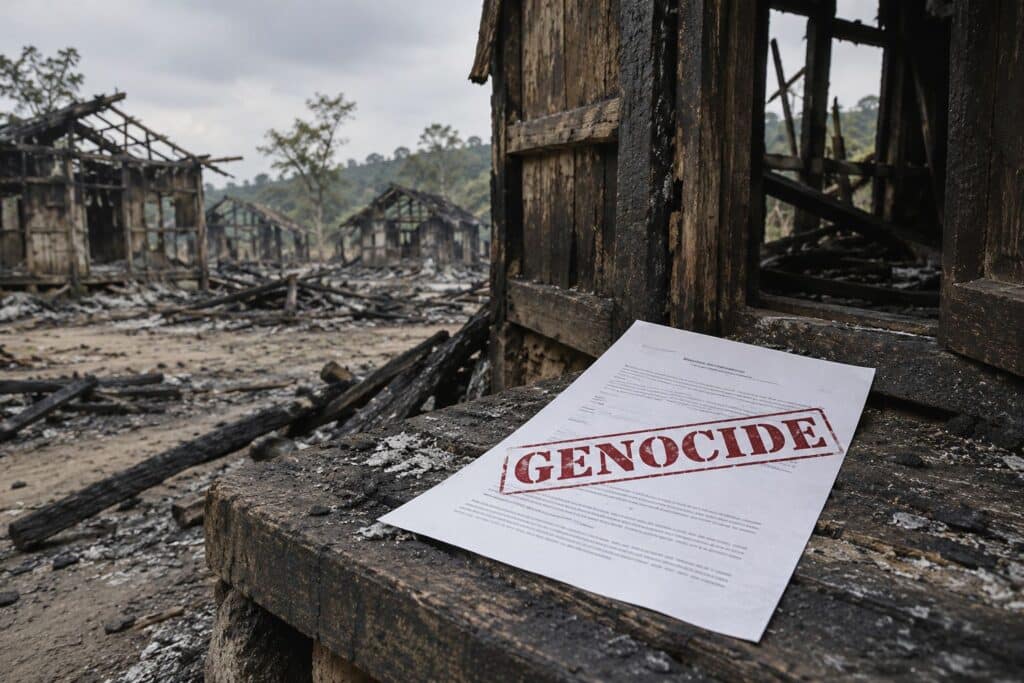
Myanmar: Genocide confirmed, justice still owed
Myanmar committed genocide against the Rohingya. On November 19, 2026, the International Court of Justice reached that conclusion by nine votes to six, delivering a historic judgment after years of denial and displacement. It is the first time the UN’s highest court has held a state responsible for committing genocide. The ruling is final and legally binding.
A campaign of destruction
The judges found that Myanmar’s security forces committed killings, inflicted serious physical and psychological harm, and imposed measures intended to prevent births within the Rohingya population. Examining the systematic violence, sexual assaults, attacks on children, and destruction of communities, the majority concluded that Myanmar intended to destroy a substantial part of the group in northern Rakhine State. Claims of fighting an insurgency did not adequately explain the evidence.
The Rohingya, a predominantly Muslim minority, had already endured decades of exclusion, denial of citizenship, and persecution. The military’s 2017 campaign drove more than 700,000 people into neighboring Bangladesh. Families escaped massacres and burning villages, only to face years of uncertainty in refugee camps.
What the judgment requires
The Gambia brought the case in 2019 under the Genocide Convention. Its success demonstrates that a country need not share a border with an atrocity to challenge it. The proceedings establish Myanmar’s responsibility as a state; they do not themselves convict individual commanders or send anyone to prison. Criminal accountability requires separate proceedings.
The court ordered concrete remedies. Myanmar must investigate suspected perpetrators and, where warranted, prosecute and punish them. It must facilitate safe, voluntary, and dignified returns, reunite displaced families, restore or replace lost property, and protect the Rohingya from discrimination and persecution. Compensation is required where restitution cannot repair the damage.
Denial and danger continue
Myanmar’s authorities rejected the judgment, describing it as unfair and emphasizing that the judges were divided. They continued to portray the military operations as a response to terrorism. That rejection underscores the difficulty of turning a binding judgment into practical protection.
Meanwhile, Rohingya civilians continue to face abuses amid fighting between Myanmar’s military and the Arakan Army. Human Rights Watch has documented persecution by the military and forced labor, arbitrary detention, and other grave abuses by the Arakan Army. The danger did not end when the judges delivered their decision.
Governments should now press for compliance, support survivors, and pursue accountability for those responsible. The Rohingya deserve safety, equal rights, and the freedom to rebuild their lives. A historic judgment must become the beginning of meaningful justice.