Ten Strokes: What We Know, and What We Do Not, About a Reported Caning Order in Adamawa
A video circulating on Nigerian social media depicts what local platforms describe as the judicial caning of two youths in Adamawa State.
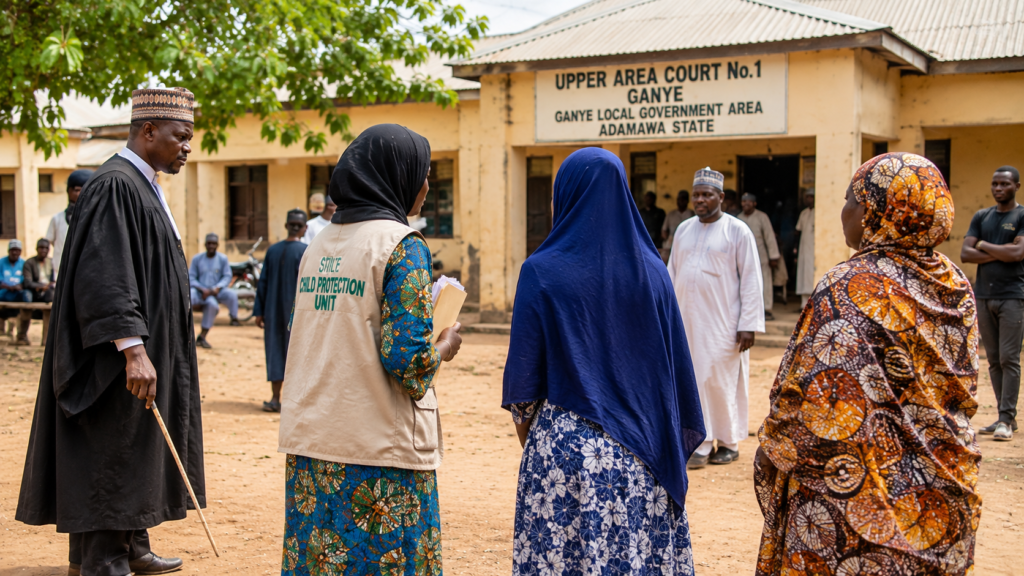
According to initial reports published by Adamawa Pulse, a local court ordered a 21-year-old man and his 17-year-old female partner to receive ten strokes of the cane each following an undisclosed “relationship dispute”. The accompanying video appears to show an individual subjected to corporal flogging on bare ground in a public compound.
One of the individuals subjected to this process is legally a child.
While primary court records and formal statements from the Adamawa State Judiciary or the State Police Command have not yet been made public, the reported proceedings demand immediate constitutional examination.
I am deliberately withholding the identities of both individuals and refraining from recirculating the footage. The female partner remains a juvenile entitled to statutory protection, and neither party’s judicial record has been independently verified.
The evidentiary and procedural void
The sparse details provided in the social media report leave vital legal questions unanswered:
Jurisdiction: Which tier of court issued the summary order? Adamawa operates statutory Magistrate Courts, Area Courts, and Upper Area Courts, each governed by distinct procedural and jurisdictional limits.
The Alleged Charge: A “relationship dispute” constitutes a private domestic friction, not a codified penal offence. Under Section 36(12) of the 1999 Constitution, no person can be convicted of a criminal offence unless that offence is defined and its penalty written in an existing statute.
Execution of Sentence: Did the physical caning occur under statutory oversight, or was it executed summarily within administrative or private premises?
Representation: Did the 17-year-old have legal representation, the presence of parents or guardians, or the mandatory intervention of a state juvenile welfare officer?
In any proceeding involving a minor, these questions determine the boundary between lawful adjudication and illegal abuse.
The legal protections of a minor
Regardless of the municipal court involved, Nigerian law establishes unequivocal statutory barriers against the corporal punishment of minors.
First, the Adamawa State Child Protection Law, enacted by Governor Ahmadu Umaru Fintiri in August 2022, domesticated the federal Child Rights Act of 2003. The statute defines a child as any individual under eighteen years of age.
Second, the statutory framework strictly governs juvenile justice:
Section 11 (Right to Dignity): Explicitly protects every child from torture, physical abuse, and inhuman or degrading treatment.
Section 221 (Prohibition of Corporal Sanctions): Forbids judicial authorities from ordering the corporal flogging, caning, or imprisonment of a minor. When a minor commits an actionable infraction, the statute restricts remedies to corrective supervision, community service, or counseling within a specialized Family Court.
Third, Section 34(1)(a) of the 1999 Constitution universally establishes that no citizen shall be subjected to torture or to inhuman or degrading treatment. The United Nations Convention on the Rights of the Child (UN CRC), to which Nigeria is an unreserved signatory, similarly criminalizes state-sanctioned violence against minors.
Adamawa’s penal architecture
The incident also highlights the statutory confusion within northern legal administration.
Unlike the twelve northern jurisdictions that enacted explicit Sharia Penal Codes after 1999, Adamawa State did not codify discretionary ta’zir corporal punishments into general penal law.
Area Courts within the state continue to apply standard statutory penal codes alongside customary dispute resolution. If a municipal Area Court purported to exercise penal jurisdiction over private intimate conduct and subsequently imposed public caning upon a juvenile that order stands in flagrant violation of the Child Protection Law and Section 34 of the Constitution.
Critical inquiries from the record
The integrity of the justice system requires the state to clarify the record:
Judicial Accountability: Did a judicial officer of the Adamawa State bench sanction this caning, and under what codified statutory section?
Due Process Compliance: Was the 17-year-old handled in accordance with statutory juvenile justice protocols, or was she prosecuted as an adult?
Criminal Liability: If the punishment was carried out without statutory authority, what immediate investigation is the Ministry of Justice initiating into aggravated assault and breach of fundamental rights?
Child Protection Oversight: What intervention is the State Child Protection Network undertaking to ensure medical care and legal remedies for the minor?
The constitutional protection afforded to a minor is not conditional upon local customs or morality narratives. It is an absolute statutory shield. The Adamawa State Ministry of Justice must investigate and place the full findings on the public record.