They tried to exorcise his homosexuality. He attempted suicide
Ian Smith was a young man seeking acceptance when people around him treated his homosexuality as something that could be driven out through prayer. Decades later, he has taken his experience to Parliament.
On November 2, Smith appeared alongside Guernsey politician and conversion-practices survivor Jayne Ozanne before the parliamentary committee scrutinizing the government’s Draft Conversion Practices Bill. Their testimony placed the consequences of religious attempts to change sexuality at the center of the debate.
An exorcism for being gay
According to Humanists UK’s account, Smith became a born-again Christian after moving to Newport at 18. Between 1987 and 1997, he underwent conversion practices through churches, counselors, and support groups in Wales and Bristol.
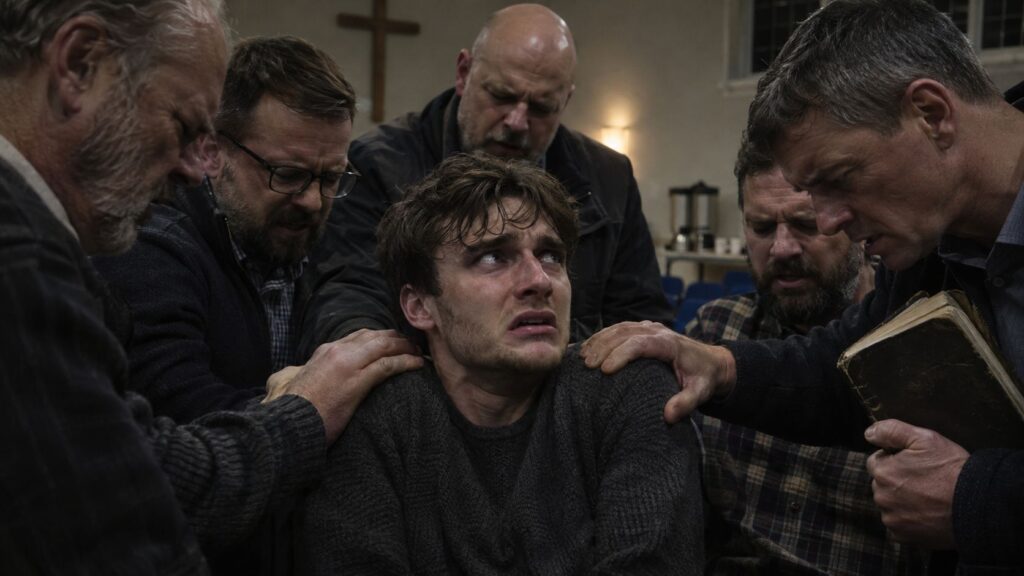
During one session, around ten men gathered around him after women were asked to leave. They placed their hands on him, spoke in tongues, and shouted at supposed demons. The ordeal lasted more than two hours.
Smith described subsequent nightmares and a wider environment that repeatedly taught him to reject his sexuality. When the attempts failed, he was encouraged to blame his own insufficient faith.
He eventually attempted suicide and received psychiatric care. There, a psychiatrist offered a radically different message: “There is nothing wrong with being gay.”
The contrast is devastating. Religious interventions had treated an ordinary part of his humanity as a spiritual defect. Acceptance offered a way to question the shame he had been taught.
Willing participation does not erase harm
A difficult part of this story is that Smith sought these interventions himself. That fact does not make their consequences disappear.
People can approach religious authorities sincerely believing that they need to be changed. Their apparent willingness may coexist with fear of rejection, deeply internalized shame, or the conviction that a fulfilling relationship would offend God.
This does not mean that every religious choice is coerced. It means that consent cannot be the only question when assessing practices directed at someone who has learned to regard their own sexuality as unacceptable.
The ethical issue includes the conduct of those offering the intervention: what they promise, what authority they claim, and how they respond when the promised transformation does not happen.
A Christian survivor challenges religious harm
Ozanne’s evidence also challenged the assumption that opposition to conversion practices is necessarily opposition to religion.
In the committee’s published, uncorrected transcript, she identifies herself as a Christian who values prayer. She describes willingly undergoing years of interventions, including exorcisms, while believing they would help her. She links the repeated message that she was unacceptable to profound distress and hospitalization.
Her criticism extends beyond dramatic rituals. She warns about pressure to suppress sexuality and about legal thresholds that could leave harmful conduct outside the proposed offenses. Smith, meanwhile, emphasizes institutional accountability and the importance of society clearly recognizing the harm.
The transcript remains uncorrected, meaning members and witnesses had not yet had the opportunity to correct the published record.
Their accounts raise a question that declarations of good intentions cannot answer: when people repeatedly tell someone that they must become different to deserve acceptance, who takes responsibility for the damage?
What Parliament is considering
The government published its draft legislation on June 25. It applies to England and Wales and is undergoing pre-legislative scrutiny; it is not an enacted ban.
The proposals include criminal offenses concerning conversion practices, provisions addressing the encouragement or assistance of such practices against UK nationals or residents abroad, and civil protection orders intended to protect people before harm occurs.
The government’s impact assessment acknowledges gaps in existing protections, particularly concerning nonphysical conduct and psychological abuse. It also states that legitimate healthcare supporting exploration of sexual orientation or gender identity should remain protected.
Those distinctions require careful drafting. A law should protect people from abusive interventions while preserving genuine exploration, supportive counseling, and freedom of belief. It should also be clear enough for people to understand what conduct is prohibited.
Religious freedom cannot excuse abuse
Freedom of conscience protects the right to believe, doubt, worship, or leave a religion. It should not be used to make harmful conduct immune from scrutiny merely because it is described as prayer.
A person seeking help deserves support that takes their dignity seriously. They should not be required to surrender the possibility of love to satisfy someone else’s religious expectations.
Smith’s story also shows why public understanding must extend beyond the sensational image of an exorcism. The quieter messages surrounding it—repeated shame, conditional acceptance, and personal blame—deserve attention too.
Parliament’s task is to turn recognition of that harm into effective protection. No one should have to reach a psychiatric ward before hearing that being gay is not something that needs to be cured.