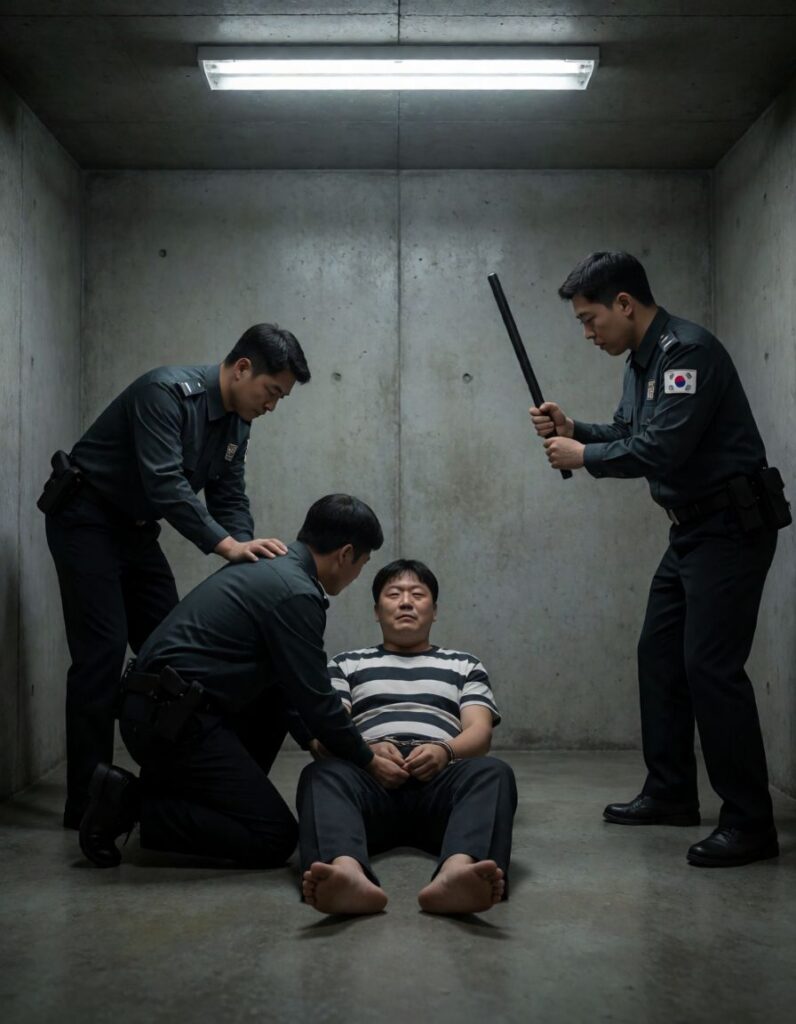
South Korea: Torture and fatal abuse in a U.S. ally
A young conscript subjected to repeated beatings and humiliation before his death. Another recruit killed by illegal punishment exercises. A prisoner restrained, isolated, and ignored when he called for help.
These cases concern South Korea, a close American ally whose partnership with Washington is officially presented as resting on democracy, human rights, and the rule of law. That language demands scrutiny of what happens inside its barracks and prisons.
The victims deserve more than expressions of regret. They deserve institutions that prevent abuse, expose it, and hold those responsible accountable—including people whose authority allows cruelty to continue.
Tortured in the barracks
In 2014, Private First Class Yoon died after sustained abuse by fellow soldiers. Reporting described repeated beatings, enforced sleep deprivation, painful stress positions, and being forced to lick spit from the floor. The case was described in South Korean reporting as months of torture.
“Torture” is an appropriate description of deliberately inflicted physical suffering and degradation of this kind. Calling it “hazing” risks making organized cruelty sound like an unpleasant initiation ceremony. Calling it “military culture” can obscure the people who inflicted it and those responsible for protecting the victim.
A decade later, another recruit died following unlawful disciplinary exercises. In May 2024, recruits in Inje were ordered to run and perform push-ups carrying full combat gear. Investigators said backpacks were supplemented with books and required safety procedures were neglected. One recruit collapsed and died two days later from multiple organ dysfunction caused by heatstroke.
In September 2025, the Supreme Court upheld sentences of five and a half years for the company commander and three years for her deputy. Their convictions included abuse resulting in death. This was a judicially established case of fatal abuse, although it should not be misrepresented as a conviction for torture or murder.
Compulsory service makes the state’s responsibility especially clear. When a government requires people to enter its military, it must protect them from the people commanding them.
Outrage has not ended the abuse
It would be inaccurate to describe the response to Yoon’s death as uniformly lukewarm. South Korean reporting documented widespread anger, demands for punishment, criticism across political parties, and an apology from the defense minister. Korean journalists and rights campaigners helped bring the abuse into public view.
The more defensible—and still damning—criticism is that outrage and promises of reform have failed to prevent further serious abuse.
In May 2025, the National Human Rights Commission announced an investigation into suspected structural mistreatment in an Army brigade. Its preliminary concerns included a cycle in which alleged perpetrators had suffered similar abuse as recruits, and indications that some officers tolerated the practices.
That is how cruelty becomes institutional: suffering is passed down as something newcomers must endure.
A generalization that Koreans care less about human rights than Europeans would require comparative evidence these cases do not provide. It would also erase the Koreans fighting to expose the abuses. The criticism belongs squarely on institutions that repeatedly fail to make human dignity an enforceable limit on authority.
A prisoner died in a “protection room”
The language used inside prisons can be equally misleading.
In November 2024, South Korea’s human rights commission reported findings concerning a prisoner who had died that March after being placed in a “protection room.” Its investigation found inadequate preliminary medical checks, an unanswered call for help, and excessive restriction through three types of physical restraint equipment. It also concluded that his placement in the room was unnecessary.
According to reporting on the findings, the prisoner showed signs of pain, sought help, and collapsed. Guards did not recognize the emergency promptly. The commission said an earlier response could have saved him.
“Protection” is a grotesquely inadequate description when a restrained person’s pleas go unanswered.
This case raises grave questions about cruel treatment and preventable death. The available findings should not be inflated into a judicial determination of torture. But that distinction must not become an excuse to soften the conduct itself: a person under state control suffered, called for help, and died.
Torture concerns cannot be dismissed as paperwork
The UN Committee against Torture’s 2024 review identified overcrowding, excessive solitary confinement lasting up to 45 days, and inadequate access to medical and mental health care reportedly contributing to deaths in custody. It also criticized the lack of an effective independent mechanism to investigate custodial deaths and allegations of torture and ill-treatment.
These are fundamental questions about bodily integrity, suffering, and survival.
A further prison case reported in March 2026 involved allegations of assault while a prisoner was restrained. The human rights commission found that the use of force failed to meet minimum legal requirements. Reporting described body-camera footage showing the prisoner expressing pain and difficulty breathing while restraints were tightened.
A prison sentence does not authorize additional punishment through pain, humiliation, or medical neglect. Restraints cannot become instruments for making a prisoner submit through suffering.
An American ally deserves no exemption
Washington and Seoul invoke shared values when describing their alliance. Those values should have practical consequences inside military units and detention facilities.
Independent investigations, protection for whistleblowers, timely medical care, and accountability up the chain of command should be basic expectations. Apologies after deaths cannot substitute for preventing them.
South Korea’s strategic importance makes scrutiny more necessary, not less. Human rights advocacy loses credibility when it speaks forcefully about adversaries while becoming diplomatic and evasive about friends.
A tortured conscript is not less deserving of justice because his country is a U.S. ally. Neither is a prisoner whose suffering disappears behind the reassuring label of “protection.”
[…] carried over from older reference material. Authorities promised a broader review and stronger human rights training for […]