How a Roman goblet changes colour, and why it took until 1963 to explain
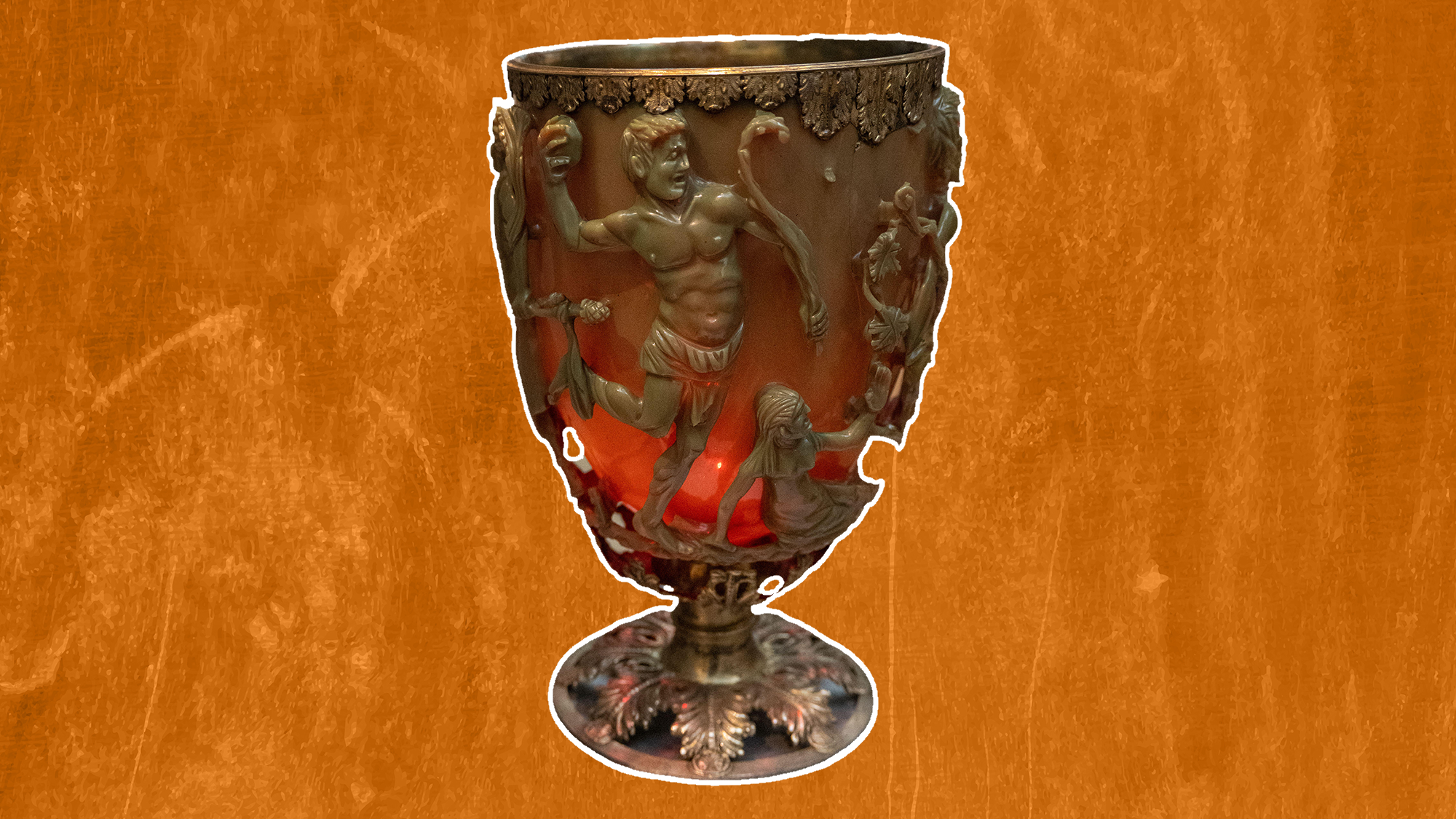
The Lycurgus Cup, a fourth-century Roman glass goblet in the British Museum, looks jade green when lit from the front and ruby red when lit from behind. Live Science explains that a 1963 study traced the effect to microscopic particles of gold and silver in the glass, which scatter and transmit light differently. Modern replicas reproduce it, but whether Roman glassmakers did this on purpose or by accident is still unresolved.
The scene on the cup shows King Lycurgus, who opposed the worship of Dionysus, trapped by a vine into which the god's follower had turned. For freethinkers, it is a lovely case of an object once seen as marvellous being explained by materials science.
Source: Kristina Killgrove, Live Science (2026-11-02)
Summarised by the FTI newsdesk.