

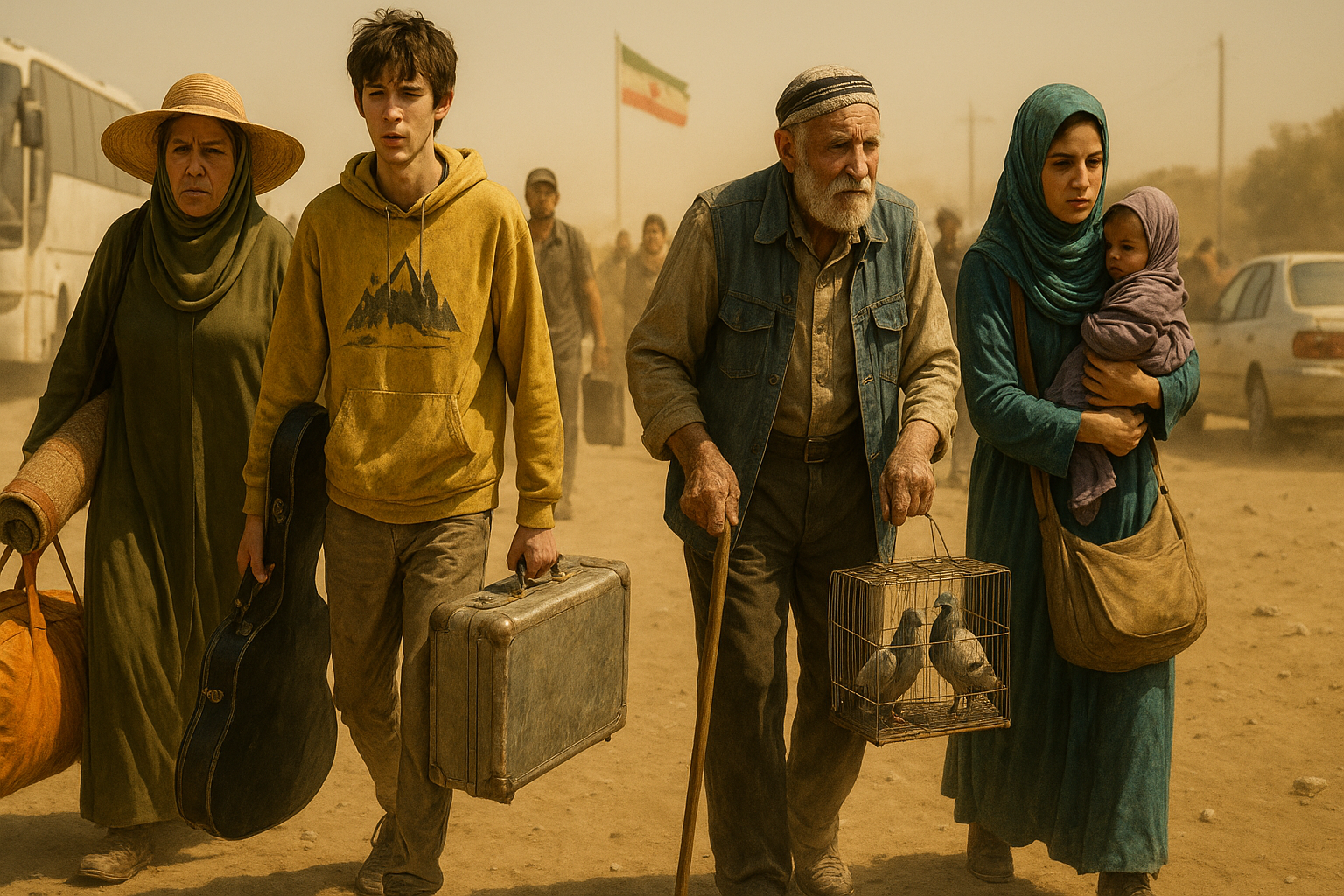
When two elephants fight, it’s the grass that gets trampled—but in this case the “grass” has names, families and broken bones.
Aryan’s Morning Walk to Nowhere
Aryan* should be on his way to a tile factory outside Qom right now, earning the $90 a month that keeps rice on his families table. Instead, he and his brother sit in a rented room with the curtains drawn. The last time they stepped outside, a patrol stopped them, beat them for “looking Afghan,” and promised them a one-way ticket across the border. A crackle on the police radio saved them; the brothers ran—literally for their lives. Now they run out of hope instead of breath.
(Names changed at the family’s request, because when the system can deport you twice it can punish you thrice.)
The Numbers Tehran Doesn’t Put on the Evening News
- Five-million people in limbo. Iran admits to “about five million” Afghans on its soil—and has banned them from living, travelling or even working in more than half of the country’s provinces.monitoring.bbc.co.uk
- A deportation conveyor belt. Iranian officials boast that 450 000 Afghans have been “returned” in just four months, and the National Migration Organisation talks openly about physically sealing the border.monitoring.bbc.co.uk
- June’s grim record. After the recent 12-day flare-up with Israel, deportations spiked to 256 000 in a single month—the highest ever recorded—leaving many families literally sliced in half at Islam Qala.amu.tv
That last statistic hides stories like Ashraf Bamiani’s: “They called us dogs and donkeys… My wife and kids are still in Iran.”amu.tv
Why a War 1 500 Kilometres Away Hurts a Kabul Baker in Tehran
Iran’s rulers need domestic villains who cannot answer back. After rocket-for-rocket nights with Israel, the narrative machine flicks to its favourite channel: blame the undocumented foreigner.
- Hard-line papers complain Afghans “drink Iran dry” of subsidies while hashtags such as #DeportAfghans_NationalDemand trend on Iranian social media.twstalker.com
- Viral clips (quickly “debunked” by officials) show alleged arson attacks on Afghan homes in Yazd, feeding street-level paranoia.monitoring.bbc.co.uk
- When frightened Iranians dare not curse the IRGC for dragging them toward another regional war, cursing a day-labourer from Herat feels safer—and the security forces look the other way.
Call it trickle-down repression: geopolitical tension at the top translates into knuckle-down terror in alleyways.
Are Afghans the “Real” Victims?
Victimhood isn’t a zero-sum game, but look at the ledger:
| Ledger Item | Israelis & Iranians | Afghan Refugees in Iran |
|---|---|---|
| Right to state protection | Claimed by both sides, even in war | Explicitly denied in over half of Iran’s provinces |
| Mobility | Air-raid sirens, but passports still work | Police checkpoints, instant detention, confiscated wages |
| Casualty visibility | Headline counts, UN statements | Line in an IOM spreadsheet—and a tearful phone-call Aryan can’t afford |
When artillery stops, Israelis and Iranians return to rebuild. Deportees return to a Taliban-ruled economy where the World Food Programme already labels two-thirds of households “acute food insecure.” Afghanistan has no Marshal Plan waiting—only another smugglers’ route back into Iran.
The Irony, Served Hot
Iran points to Western sanctions to explain shortages, then spends millions bussing welders and farmhands to a border crossing that can’t process them. The state that prides itself on “defending the oppressed” abroad strips ID cards from children born on its own soil, because their parents once fled a Soviet war… aided by Iran.
If hypocrisy were an Olympic event, Tehran would take gold—though it might deport the Afghan grounds crew before the medal ceremony.
What Now?
- Name the scapegoating. Every tweet with “DeportAfghans” deserves a reply reminding followers that collective punishment is neither justice nor security.
- Fund the humanitarian buffer. Kabul can’t absorb quarter-million-person monthly shocks; donors must treat border camps as front-line disaster zones.
- Pressure, not pity. European capitals that negotiate prisoner swaps with Tehran can negotiate migrant protections too—if they choose.
“We must learn to live together as brothers or perish together as fools.”
— Martin Luther King Jr.
King spoke of racial injustice in America; his warning echoes today on a dusty road between Yazd and Islam Qala. Until Iran, Israel and the wider world stop trampling those roads with proxy wars, Afghan refugees like Aryan will keep asking the same exhausted question: “When will it stop?”
(If you know the answer, please write back—Aryan is still waiting.)


