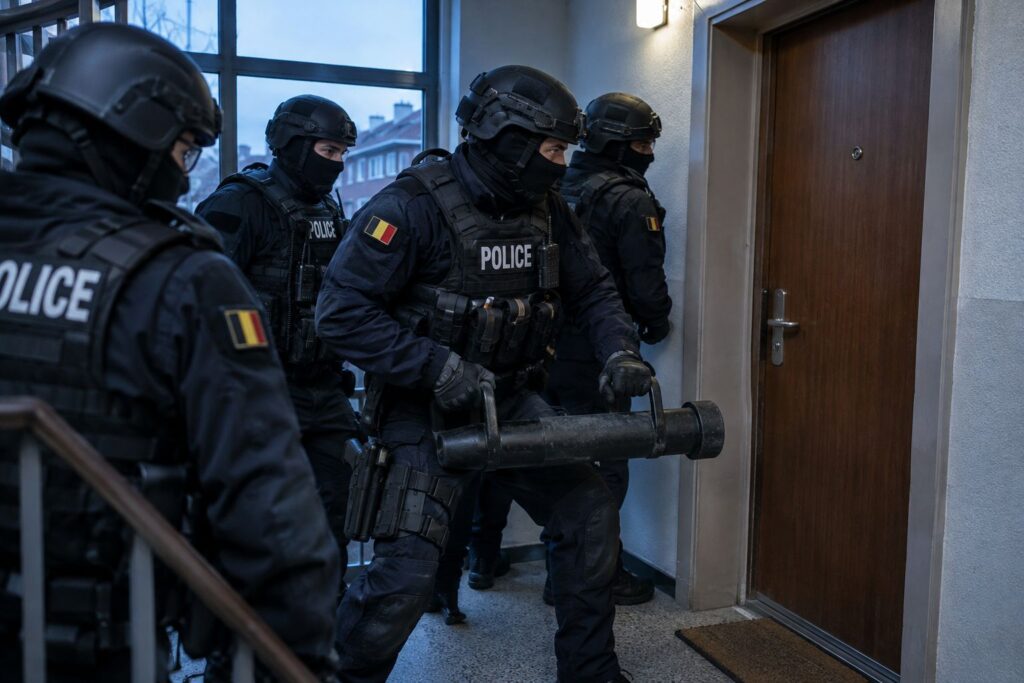
Belgium: Open your home to a migrant, face a police raid
Offering someone a place to sleep could expose a household to a forced police entry under a controversial proposal before Belgium’s parliament.
The bill would allow authorities, with an investigating judge’s authorization, to enter private homes to apprehend certain undocumented migrants facing removal. That includes the homes of people sheltering them. Amnesty International warns that the measure threatens privacy, family life, and the willingness of ordinary people to help their neighbors.
A parliamentary vote is scheduled for November 5. At the time of writing, its outcome has not been confirmed.
What the proposal would allow
The proposed powers concern people who are subject to an order to leave Belgium, refuse to comply, and are considered a threat to public order or national security. Immigration authorities would seek permission from an investigating judge before entering a residence.
The bill passed its second reading in the parliamentary committee on October 7. Amendments would give judges seven days to decide, permit requests for additional information, and require a new element before another application concerning the same case could be submitted.
According to Amnesty, police could force entry between 5 a.m. and 9 p.m. and search for identity documents. The presence of children would not automatically prevent a raid. The organization also warns that the public-order criterion is undefined and that affected residents lack an effective route to challenge the authorization or its proportionality.
The government’s security argument
Migration Minister Anneleen Van Bossuyt says the proposal targets dangerous individuals who refuse to leave, citing convicted rapists who have completed their sentences and hate preachers. She denies that it amounts to a general campaign against undocumented people or beneficiaries of international protection.
Her argument is that a removal decision cannot be enforced effectively if authorities must stop at a locked front door. The government points to the requirement for judicial authorization as a safeguard.
Those limits matter. Describing the proposal as permission to raid any home merely because an undocumented person might be inside would omit its stated conditions.
But the existence of conditions does not settle whether they are precise enough, whether oversight is meaningful, or whether residents can obtain an effective remedy when authorities overreach.
A judge’s signature is not the whole safeguard
The Platform for International Cooperation on Undocumented Migrants, PICUM, warns that these operations would take place outside criminal investigations and would therefore lack safeguards associated with searches conducted to investigate suspected crimes.
The organization also questions whether an authorizing judge would have access to the complete case file. It warns that broad interpretations of “public order” could expand the measure beyond the dangerous offenders emphasized in government statements.
For a person whose home is entered, these distinctions have practical consequences. Judicial oversight must allow serious scrutiny of the evidence, the necessity of entry, and the impact on everyone living there.
Children and hosts would bear the consequences
Committee amendments would allow judges to specify arrangements when children are present. An evaluation is also planned eighteen months after the law takes effect, with particular attention to minors. Critics argue that these provisions do not adequately resolve the risks.
A child experiencing police forcing their way into a home is unlikely to understand the distinction between an immigration operation and a criminal search. Adults offering shelter could also become reluctant to help if doing so exposes their household to that experience.
PICUM reports that more than sixty municipalities and the Brussels regional parliament have adopted motions opposing the proposal. The resistance reflects concern that its effects would extend well beyond the individual targeted for removal.
Belgium can enforce immigration decisions while remaining accountable for how it does so. Public safety requires credible evidence, proportionate powers, and effective safeguards. It should not become a slogan that ends the discussion as soon as the people affected are migrants—or those willing to give them a bed.