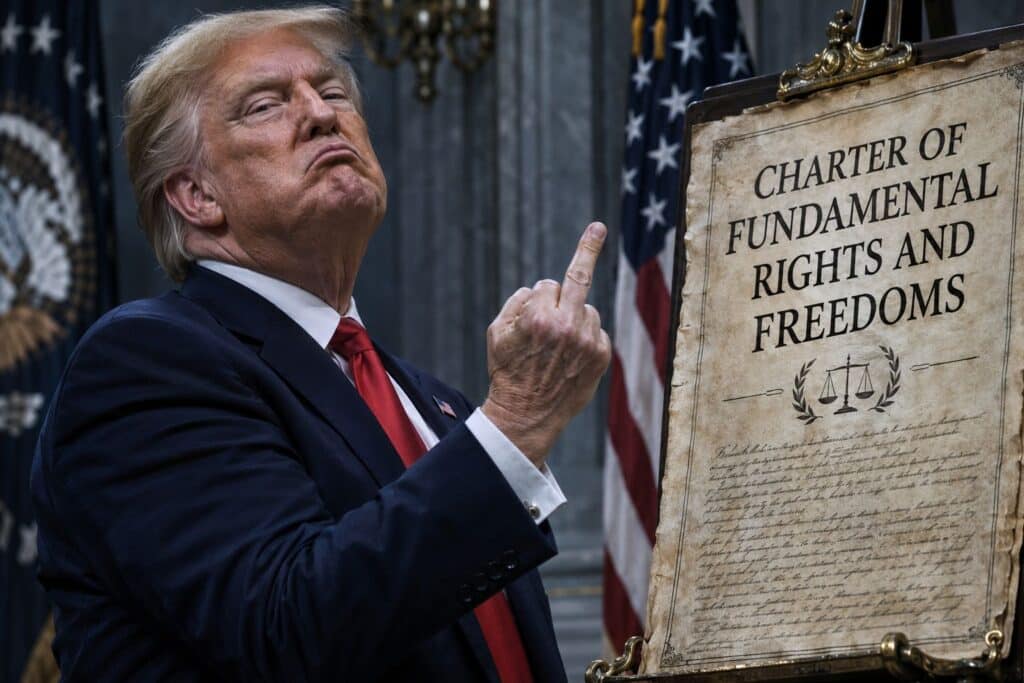
US and human rights? We’ll skip that. Again.
The United States had another appointment to discuss its human rights record. The Trump administration declined to attend.
On November 10, Washington skipped its United Nations Universal Periodic Review for the second time, following its refusal to participate in November 2025. The Human Rights Council responded by postponing the examination until January 2027 and urging the United States to cooperate.
For a government accustomed to passing judgment on other countries, answering questions about its own conduct apparently remains an unreasonable request.
Universal—unless Washington objects
The Universal Periodic Review examines the human rights records of all 193 UN member states. Governments answer questions from other countries and receive recommendations for improvement. The process also gives civil society organizations an opportunity to bring concerns to international attention.
Its credibility rests on a straightforward principle: every country faces scrutiny. Wealth, military power, and declarations of moral leadership do not purchase an exemption.
Washington’s repeated refusal challenges that principle. A review described as universal cannot comfortably accommodate a special arrangement under which the most powerful government participates only when it approves of the questions.
Blame the institution, avoid the examination
The administration’s defense is familiar. It accuses the Human Rights Council of bias against the United States and Israel and argues that participation would lend credibility to a discredited institution.
The council deserves scrutiny itself. Governments should be able to challenge its inconsistencies, political bargaining, and failures. But criticizing an institution does not answer questions about one’s own treatment of human beings.
A government confident in its record could attend, contest unfair allegations, provide evidence, and challenge its critics publicly. Refusing the examination leaves those questions unanswered.
The administration has chosen to attack the credibility of the forum while declining the opportunity to defend its conduct within it.
The questions do not disappear
Countries had prepared questions concerning issues including abortion and the death penalty. Nongovernmental organizations submitted nearly 200 contributions addressing matters ranging from migration to racial discrimination.
These concerns represent people whose experiences deserve examination, regardless of whether their government finds the venue agreeable. Washington’s absence does nothing to resolve them. It merely prevents the scheduled exchange in which officials would have been expected to respond.
An empty chair is a particularly inadequate answer to someone seeking accountability.
Another postponement, another invitation
The council has now offered Washington another opportunity to participate in January 2027. It has also agreed to consider further appropriate steps before that review session concludes.
Keeping a route back to cooperation makes sense. Allowing postponement to become a permanent substitute for scrutiny would be another matter entirely.
Human Rights Watch and other organizations have urged the council to ensure that the US record receives attention even without Washington’s cooperation. One proposal is a briefing by the UN human rights chief, with participation from civil society and people affected by violations.
The concern extends beyond this administration. If persistent refusal produces only another invitation, other governments receive an obvious lesson: avoiding scrutiny may be easier than answering it.
Human rights are not a privilege of power
The United States can dispute allegations. It can criticize the UN. It can argue that other governments deserve tougher scrutiny.
None of those positions explains why its own record should escape examination.
Human rights lose their meaning when powerful states treat accountability as something to prescribe abroad and decline at home. A government does not demonstrate respect for freedom by insisting that everyone else answer questions.
It demonstrates that respect by answering them itself.