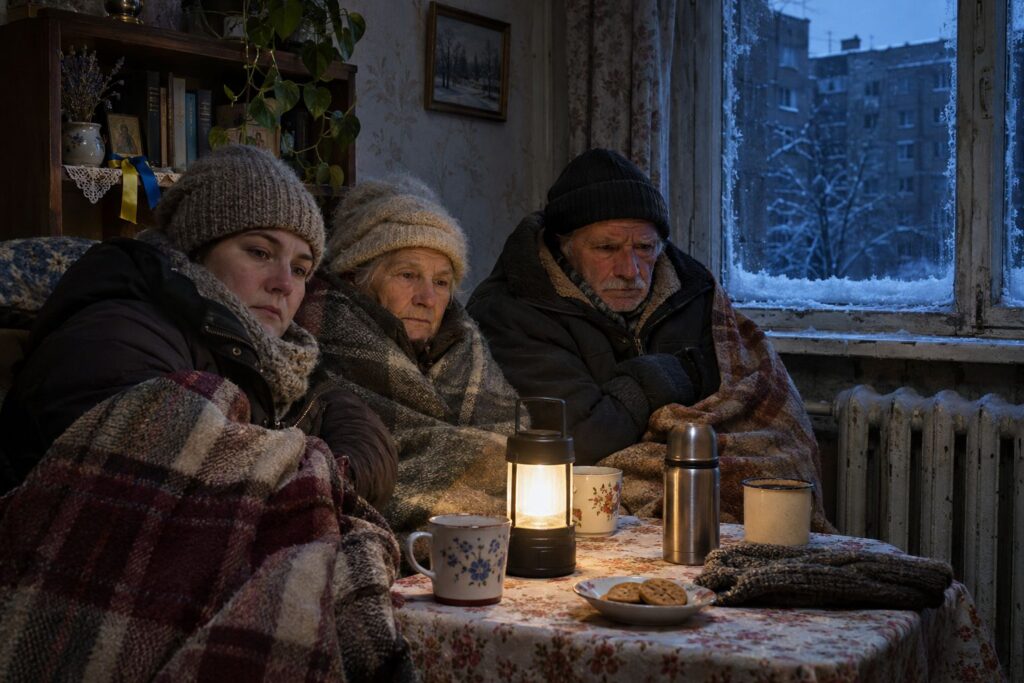
Ukraine faces winter without reliable heat or power
For Ukrainians approaching another winter under Russian attack, survival depends on more than avoiding missiles and drones. It also depends on whether the heating works, water reaches their apartment, and hospitals can keep essential equipment running.
Russia’s renewed attacks on energy infrastructure threaten those basic conditions of life. On November 2, Amnesty International warned that the campaign risked creating another humanitarian catastrophe as temperatures fall.
The danger extends far beyond the front lines. A damaged power station can leave entire neighborhoods facing consequences long after the explosion.
A winter emergency taking shape
The UN Human Rights Monitoring Mission in Ukraine reported that Russian forces had resumed systematic attacks on energy infrastructure across the country.
Strikes on October 13–14 hit multiple facilities, including Kyiv’s three main power stations. According to Ukrainian authorities cited by the UN, approximately 600,000 people in the capital temporarily lost electricity.
The attacks come amid mounting civilian casualties. UN monitors verified at least 328 civilians killed and 2,105 injured in September. The combined number of deaths and injuries was 85 percent higher than in September 2025. Those figures cover the wider conflict’s civilian toll, not energy strikes alone.
On November 3, Russia’s Defense Ministry announced another large attack on Ukrainian electricity facilities, claiming they supplied military factories and the armed forces. Reuters could not independently verify those claims.
The consequences are already known
Ukraine has already experienced what widespread energy destruction means during freezing weather.
A UN report covering the winter of 2025–2026 documented damage to electricity generation, transmission, and distribution systems. At some points, scheduled outages left civilians with electricity for only a few hours a day.
Attacks also disrupted centralized heating, leaving hundreds of thousands without reliable warmth and hot water. Some endured these conditions for weeks while outdoor temperatures fell below minus 20 degrees Celsius.
The consequences spread through everyday life. Water supplies failed in multistory buildings. Healthcare was disrupted, schools closed, and some residents left their homes. Older people and people with disabilities suffered disproportionately.
These are foreseeable consequences. After previous winters, Russian military planners cannot plausibly treat the civilian effects of destroying heating and electricity systems as an unexpected discovery.
“Military use” does not settle the question
Energy infrastructure is not automatically a lawful target because an attacking government says it supports military activity.
Electricity and heating installations are civilian objects unless they meet the legal definition of a military objective. Even when a particular facility qualifies, the attacker must still comply with the rules governing proportionality and precautions.
That requires considering foreseeable civilian harm alongside the concrete and direct military advantage anticipated. A military connection does not erase the people who depend on the same system to survive.
Amnesty has characterized Russia’s campaign as unlawful and apparently designed to make civilian life unbearable. Determining responsibility for specific crimes requires investigation and evidence, but the humanitarian consequences demand action now.
Preparing for repeated disruption
Ukraine’s energy operators are planning around the possibility of further damage.
On October 22, Naftogaz said it had modeled 24 winter scenarios involving different combinations of Russian attacks, weather conditions, and domestic gas production. Each had a response plan.
The company identified three priorities for international cooperation: repairing damaged infrastructure, strengthening protection for energy facilities, and securing financing for additional gas supplies.
According to Naftogaz, its facilities had been attacked more than 400 times since the beginning of 2026—twice the total it reported for 2025. Gas production infrastructure remained a principal target.
Such preparations can reduce suffering. They cannot guarantee reliable services while facilities remain exposed to repeated attacks.
Civilian survival cannot wait
International assistance must address the practical needs of the coming winter: functioning energy systems, emergency repairs, adequate fuel, and support for people who cannot easily relocate or manage prolonged outages.
Accountability matters alongside that assistance. Evidence should be preserved, alleged crimes investigated, and responsibility examined at the level of commanders and senior officials as well as those carrying out individual attacks.
Ukrainians should not have to prove their resilience through another winter of freezing apartments and interrupted medical care. Heat, water, and electricity sustain civilian life. Destroying the systems that provide them can turn an ordinary home into a place where survival is uncertain.