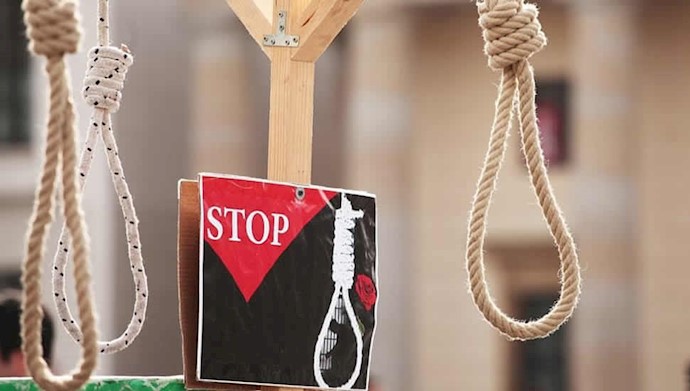
Iran’s Escalating Executions: Where Is the International Action to End Impunity?
Thousands killed, thousands facing execution, and systematic repression: the international community must end impunity in Iran.
Iran was in the international spotlight at the beginning of 2026. But has that attention translated into meaningful action as executions, political repression, and violence against protesters have escalated?
The continued killing of protesters and execution of political prisoners raise a fundamental question: what consequences will those responsible face if international condemnation is not followed by effective measures to end impunity?
As the authorities intensify their crackdown, the international community faces an urgent choice: take concrete steps to protect human life and uphold international law, or risk allowing impunity to facilitate further atrocities.
During the Iranian calendar year from March 2025 to March 2026, at least 2,657 executions were documented in Iran—approximately 130% more than the previous year. Among those executed were at least 60 women and six people who were children at the time of the alleged offense. Because the authorities conceal many executions, the actual total may be considerably higher.
Since March 19, 2026, at least 46 political prisoners have reportedly been executed, including people arrested during nationwide protests. More than 100 others face imminent execution under similar charges. Many defendants are denied meaningful access to legal counsel and fair trials, while reports describe forced confessions obtained through torture and proceedings lasting only hours.
The danger extends far beyond prison walls. During the November 2019 uprising, more than 1,500 people were reportedly killed and over 12,000 arrested. During the 2022 protests, more than 750 protesters were reportedly killed, with approximately 90,000 detained. The January 2026 uprising brought another devastating wave of violence: reports indicate several thousand people were killed and at least 50,000 arrested. Security forces reportedly fired on crowds, while wounded protesters were killed or abducted from hospitals.
Today, at least 7,000 prisoners are reported to be under death sentences, although the precise number remains uncertain. Thousands face the prospect of execution amid a judicial system characterized by arbitrary proceedings, vague security charges, and allegations of torture. The scale of these abuses demands immediate international scrutiny.
The authorities’ own statements underscore the threat. In March 2026, a senior military official declared: “Anyone on Iranian soil today who utters a single word that echoes the enemy has effectively signed their own shoot-on-sight order.” Such rhetoric, combined with calls for summary trials, raises grave concerns about further executions and the deliberate suppression of dissent.
These developments cannot be separated from the mass execution of political prisoners in 1988, when thousands were killed following summary proceedings. In July 2024, the UN Special Rapporteur on human rights in Iran described the executions of 1981–1982 and 1988 as crimes against humanity and genocide. In September 2026, the UN Fact-Finding Mission reported that acts of repression during the January uprising constituted crimes against humanity.
European countries must help turn international concern into concrete action. Silence and business as usual risk reinforcing a system in which those responsible for grave abuses remain beyond accountability.
The international community should demand an immediate halt to executions, particularly those of political prisoners and detained protesters. The United Nations should establish an independent international criminal justice mechanism to investigate alleged crimes, preserve evidence, identify those responsible, and pursue accountability. National courts should also consider prosecutions under universal jurisdiction where legally applicable.
The UN Security Council should be urged to address the situation and consider referrals to the International Criminal Court or other competent bodies. Independent UN investigators must receive unrestricted access to prisons, detainees, victims, and witnesses. Finally, governments should make their economic, political, and diplomatic relations with Iran conditional on measurable progress toward ending executions and the killing of protesters.
Decades of impunity—from the mass executions of political prisoners in 1988 to the killing and repression of protesters today—underscore the cost of allowing grave abuses to go unanswered. The question is no longer whether the international community is aware of the atrocities in Iran, but whether it will act to help stop them and hold those responsible accountable.